Dying For The Perfect Photo: The Selfies With Animals Epidemic

In recent years, selfies have become a global phenomenon. Worse, they’ve become a leading cause of accidental death for people all around the world. By some estimates (arguable, but still) the taking of selfies now causes more deaths per year than shark attacks. As disturbing as this is, it thus far has remained a sort of self-inflicted death sentence, an encapsulated phenomenon affecting only the humans taking the selfies.

That is changing.

Just in the last few weeks, a rare adolescent La Plata dolphin was killed when it became disoriented and beached itself. Instead of taking the animal back out into the surf and releasing it, hundreds of people began holding it aloft, and passing it around, all vying to take selfies with it. The dolphin quickly succumbed to shock and dehydration and died. After its death, the body was discarded on the beach, and–after a few more selfies with the corpse–it was left to rot. No charges have been filed in this case.

A man in Florida pulled a small bull shark out of the ocean, dragging it up onto the beach by its tail and then posing with it while onlookers eagerly snapped photos. Though the man eventually returned the shark to water, it reportedly sank out of sight without beginning to swim on its own, and it’s not known whether the shark managed to survive, or died of its injuries.

In China, visitors at a wildlife park–after being explicitly told to leave the birds within alone–not only grabbed several peacocks off the ground, but then pinned them against their chests while they took multiple selfies with the birds. Unlike humans, birds do not have a diaphragm, and they must rely on the expansion and compression of their chest cavities in order to move air in and out of their bodies. Pinioned tightly as they were, the peacocks were literally suffocated nearly to the point of death. What lack of oxygen began, shock finished, in the case of two birds. Both died shortly after the incident.

Now, a swan in Macedonia has become the latest victim of the ‘selfies with animals’ craze that’s sweeping the internet. Acclimated to the appearance of tourists, the swan did not shy away when a Bulgarian woman approached. Had the swan fled, it might still be alive. Instead, it allowed the woman to get close to it. She then grabbed the bird by one wing, and dragged it thrashing up onto the embankment. It’s likely that the swan’s wing was injured by the rough handling, but it was shock that killed it. Once the tourist got her selfie, she abandoned the bird on the beach where it quickly died.

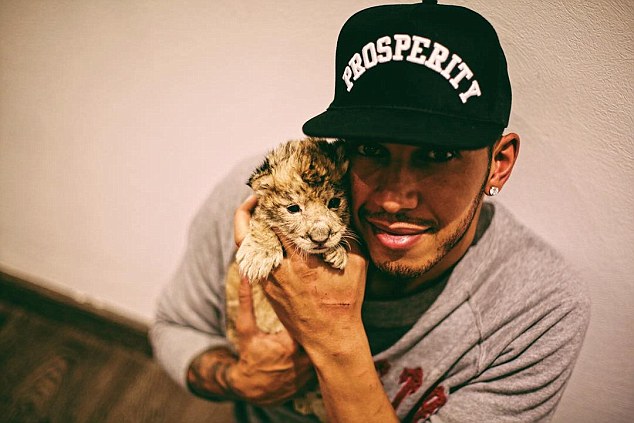
These are isolated incidents which have made Internet news forums and have been highly publicized. Still consistently overlooked in the game of animal selfies, is the million dollar industry of cub petting, and cub selfies, which relies both on the continued breeding of captive big cats, and the public’s belief that it is their right to take selfies with these animals, and their right to exploit them “just this once” in order to create a memory for themselves.

This widespread entitlement that the public at large embraces, is something fueled, at least in part, to our consumption-based society. Terms like “white privilege” and “male privilege” are commonplace within today’s discussions, but I’m going to add a couple more to the roster. “Human Privilege” and “First World Privilege”.

“Human privilege” can be applied to situations like those above, where anyone, no matter their monetary status perceives themselves has having the right to impose upon the animals they encounter in order to satisfy their own interests. We don’t go around picking up other peoples’ babies or children and taking pictures of ourselves holding them simply because they’re cute, and we want a photograph with them. Likewise, we don’t walk up to strangers and hug them while taking photographs of the interaction. People who jump into the path of celebrities only to snap photographs are considered to be assholes, even during their few moments of fame. But humans think nothing of snatching animals up and forcing them to participate in interactions which are then documented in a photo or selfie, and subsequently splashed across the internet. Often, the more unlikely the animal companion, or the more dangerous the situation, the more popular the resulting selfie becomes.

“First world Privilege” is applicable to any situation in which someone is monetarily able to provide themselves with disposable goods, but for my purposes, I’m applying it specifically to those who pay to hold, pet, and take selfies with captive wild animals which have been bred specifically for that purpose. Pseudo sanctuaries (which are not GFAS accredited sanctuaries) like Black Jaguar White Tiger, T.I.G.E.R.S., Dade City Wild Things, Virginia’s beleaguered Natural Bridge Zoo, the Zoological Wildlife Conservation Center, and many other establishments, exist on the dollars pulled in by charging the public to hold and take selfies with their animals. The exploitation of their animals for use in public photos and selfies is not a footnote within the operations of the aforementioned pseudo sanctuaries, it is the very foundation on which the businesses were built, and on which they continue to stand. Egregious institutes such as the Tiger Temple, exist solely to cater to the “first world privilege” of those who pay to use their services while vacationing. If monetarily possessed people refused to pay to be allowed to hold and take photographs with captive wild animals, the consumption would end, and the practice would as well. After all, such fads as paying for seances has largely died out. Now, if someone pays for the services of a psychic, the mainstream public sees it as a waste of money. But once, it was considered to be *the* thing to do.

So what can you do to help end this “selfie with animals” epidemic? Well, for one, check out anti-animal selfie movements, like Big Cat Rescue’s Tiger Selfie and educate yourself. Then, stop sharing wild animal selfies and photos on Facebook, and other social media sites.

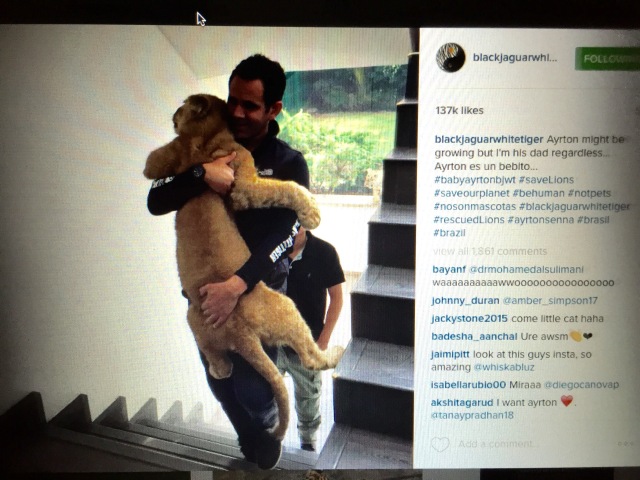
Black Jaguar White Tiger is the leading power behind the public’s obsession with sharing, and celebrating, photographs, videos and selfies of celebrity guests holding and coddling captive wild animals. Though closed to the public (you must be invited in, and/or donate $1,000 or more a month to be allowed onto te property) BJWT uses its 5 million+ followers on Instagram to promote activities like holding, playing with and keeping as pets, captive wild animals, big cats in particular. Eduard Serio defends himself, and his own actions insisting that his animals are not exploited and that he’s raising awareness about the plight of animals everywhere, and always hashtags the photos with #notpets despite that he’s blatantly treating the animals just like pets. The photos he promotes are those wherein he, or his many celebrity guests, are holding and playing with the animals kept on his property. These photos are subsequently liked, shared, and re-shared thousands and thousands of times. BJWT is beloved by millions, as I’ve said, and despite that the BJWT website recently, and without explanation, removed the ‘visit for two’ benefit to donating $1,000 or more a month (suspiciously after a number of articles publicly pointed out the fact that the chance to play with the animals was being used to garner donations) those millions of followers remain devoted to the pseudo sanctuary and its celebrity visitors.

Yes, the fans love BJWT. Problem is, only a few people ever get to go to the secretly guarded BJWT facility and “share Eddie’s special bond” with his pets–excuse me, “rescued” animals. So what’s an average Joe to do? Visit a more accessible “sanctuary” like T.I.G.E.R.S. or Natural Bridge Zoo(neither of which are GFAS accredited) where for what passes for today’s pocket change will get you some cuddle time with captive big cats who have been bred just so people like you can pay to get cuddle time with them!

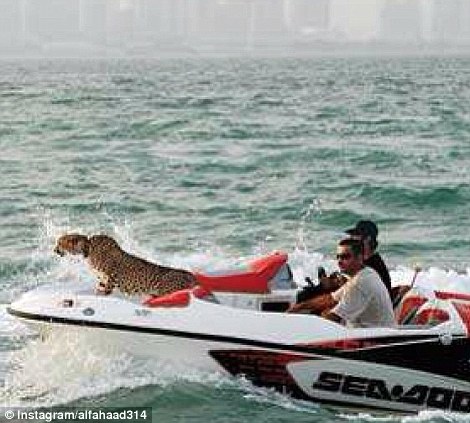
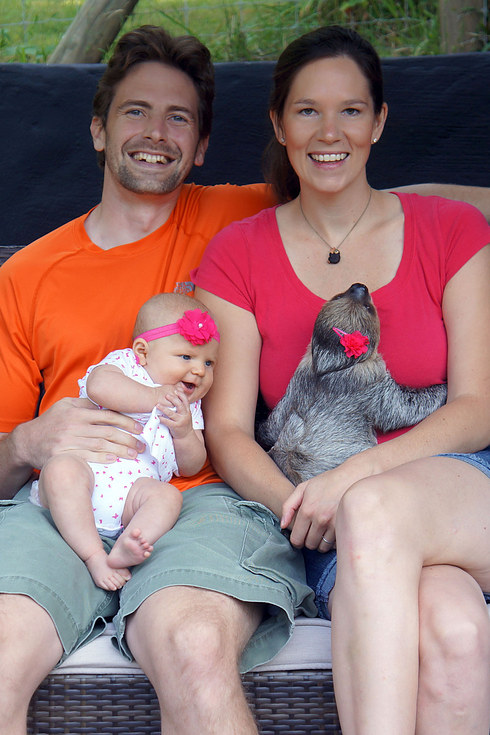
Or, if you’re more into the offhand encounters, you can head out into the countryside and start randomly grabbing and manhandling whatever sort of animal you come across. It bears pointing out that not *every* selfie in which and animal has been forced to participate actually looks like the animal has been forced, or is suffering. Some animals aren’t capable of defending themselves against unwanted attention. Sloths, and even animals like the Northern opossums, or common turtles are more inclined to simply go limp or freeze when trapped by a human. You can literally walk through a South American jungle and pluck sloths from the trees (if you can reach them) and the sloths won’t do anything to you. But that doesn’t mean you have the right to touch a sloth.

So the next time an oh-so-cute photo of someone coddling or hamming with a wild animal pops up in your news feed, take a moment to look at it closely before simply liking and sharing it. All of those likes and shares promote the activities shown in the photographs and videos so it’s vital to understand what you’re promoting.

Does the picture portray a celebrity at a “sanctuary” that is not GFAS accredited, and allows direct interaction between the public and its animals? Does it have a caption that somehow links the activities of holding or playing with the animals to conservation or awareness? Are the animals in the photo wild, or not the sort of animals you would ever expect to see in human hands? If the answer to any of these is “Yes” then more than likely the animals in the photographs are being exploited.

Only in cases wherein medical attention, or nutrition is being administered by accredited professionals is it acceptable to hold or manipulate a wild, or captive wild animal.

As tempting as it might be to scoop up a baby animal (or adorable adult, or awesome looking animal) for “just one photo” you have to understand that your actions will have an impact on that animal, and that animals do not perceive such things the way a human might. For them, being held against their will is emotionally, mentally, and sometimes physically, damaging.

And in some cases while people rationalize their actions by looking at it from the standpoint of “it’s just one photo” for the animals–depending on their situation–it might well be their hundredth, or thousandth photo. In cub petting situations, while you get a few minutes (maybe more, depending on what you pay) with a big cat cub, that cub often has to spend “a few minutes” with hundreds of guests each day. The same goes for animals such as the peacock killed by tourists in China, and the swan killed by tourists in Macedonia. Those animals had to deal with hundreds, or thousands of tourists passing through where they lived on a daily basis. And, chances are, they probably had to deal with people chasing, catching, or trying to catch them on a daily basis. We’ll never know if theses incidents were the first time the animals had been captured for photographs, or the hundredth time, because activities like this aren’t monitored, or noted.

In fact, the only attention and exposure this kind of abuse gets is after an animal is killed in the process.

So I implore you, don’t be part of the epidemic of animal selfies. Do your research and be part of the cure.

Author: Artemis Grey

The Big Cat Facts About The Big Cat Public Safety Act

Recently there was great excitement within the conservation community in regard to the Big Cat Public Safety Act, as it was officially introduced into the Senate. There was also a less than enthusiastic reaction from the owners of pseudo sanctuaries who currently possess, and/or display big cats for profit, and/or allow the public to interact with big cats, or big cat cubs.

Then a news report aired wherein Lori Ensign-Scroggins of Safari Sanctuary was interviewed, and wherein she detailed some of the “problems” with the BCPSA. Lori alluded to the possibility that if the BCPSA was passed, big cats who were currently in the possession of private owners would be released into the wild where they would starve, and die, or that they would be confiscated from their current owners, and relegated to a life inside “cement horse stalls” and that “sanctuaries” like hers will go out of business, leaving other big cats in need of rescue to suffer and die.

Such speculations and assertions are designed to elicit responses from both animal welfare groups, who want to protect big cats from such fates, and at the same time, from the public, who will be equalled abhorred at the idea of animals being left to suffer, and terrified of finding a loose big cat in their backyard. And let me be clear that it was Lori Ensign-Scroggins, owner of Safari Sanctuary, not reporter Sharon Phillips, who made these assertions. Lori did so intentionally to try and raise opposition to the BCPSA, and make herself, and the big cats in her care, look like victims.

As the facts of the BCPSA are much, much different from the portrayal offered by Lori, I, along with others, promptly emailed Sharon Phillips, conveying our concerns about it and the inaccuracies with its portrayal of the BCPSA. In my own email, I pointed out the fact that Lori, herself, lost her USDA license back in 2012 due to repeated infractions and failures to comply with the USDA standards for a wildlife sanctuary. There has been at least one fatal mauling at Safari Sanctuary which can be attributed to failure to adhere to protocol.

I received a reply from Phillips in which she asked if I would be willing to speak with her on the matter. I told her I would be pleased to do so, but that she might prefer speaking with Jessica James, the founder of ICARUS, who was part of a team that worked on behalf of the BCPSA bill, and thus was more familiar with it. She said she hoped to make contact with Jessica, but we have not yet heard anything more from Ms. Phillips. Hopefully, we will hear from her, or she will make further contact with others who have participated in the making of the BCPSA, and who can subsequently provide her with correct information regarding it. As of right now, links to the article and video have been disabled with no explanation. We can only surmise that this was done in an attempt to gather more information and then alter the report accordingly.

There is, very unfortunately, a huge pressure on today’s reporters to produce not necessarily the ‘boring’ facts of a matter, but instead, the emotionally galvanizing, and tantalizing stories relating to it. The reporters have no control over the contrived falsehoods offered by their interviewees which are often designed to further the interests of specific parties beyond the control of the reporter doing the interview or spotlight. A little more digging before stories run, however, will usually shed light on the truth of those so eager to go on record condemning bills such as the BCPSA.

So, here are the big cat facts about the Big Cat Public Safety Act.

Under the Big Cat Public Safety Act:

No member of the prohibited wildlife species currently held in private captivity will ever be released into the wild. Nowhere within the BCPSA is there any stipulation or suggestion that any member of the prohibited wildlife species currently held by private owners should be released into the wild. To suggest such would be both unethical, and in direct conflict with the entire purpose of the BCPSA, which is to maintain the safety of both big cats, and the public.

Nowhere in the BCPSA does it state that big cats who are currently in the possession of private owners will be taken from those owners. Big cats born before the bill, and currently being privately held (with certain exceptions, based on situation) will be ‘grandfathered in’ and allowed to remain where they are. Their owners simply will not be allowed to obtain, through breeding or rescue, any new members of the prohibited wildlife species.

Under the general terms of the bill: It is unlawful for any person—
(A) to import, export, transport, sell, receive, acquire, or purchase a live animal of any prohibited wildlife species–
(i) in interstate or foreign commerce; or
(ii) in a manner substantially affecting interstate or foreign commerce; or
(B) to breed or possess a live animal of any prohibited wildlife species.

This hardly needs translation, as it means exactly what it says. The general public will be prohibited from owning, or engaging in any of the aforementioned activities with any member of a prohibited wildlife species.

4) There are exceptions to these limitations.
Paragraph (1) does not apply to any person that–
(A) is an institution accredited by the Association of Zoos and Aquariums;
(B) is a facility that–
(i) has an active written contract with an Association of Zoos and Aquariums Species Survival Plan or Taxon Advisory Group for the breeding of prohibited wildlife species; and (ii) does not breed, acquire, or sell prohibited wildlife species other than the prohibited wildlife species covered by a contract described in clause (i);
(C) is a State college, university or agency, or State-licensed veterinarian;
(D) (i) is a wildlife sanctuary that cares for prohibited wildlife species;
(ii) is a corporation that–is exempt from taxation under section 501(a) of the Internal Revenue Code of 1986 and described in sections 501(c)(3) and 170(b)(1)(A)(vi) of such Code;does not commercially trade in prohibited wildlife species, including offspring, parts, and byproducts of prohibited wildlife species; does not breed the prohibited species; does not allow direct contact between the public and prohibited wildlife species; and does not allow the transportation and display of prohibited wildlife species offsite.
(E) has custody of the prohibited wildlife species solely for the purpose of expeditiously transporting the prohibited wildlife species to a person described in this paragraph with respect to the prohibited wildlife species.

This is a long one, but the meat of it is very simple. If your sanctuary is accredited by the Association of Zoos and Aquariums, the BCPSA won’t affect you. Similarly, if you have a contract with the AZA, so long as you do not exceed the boundaries of said contract you are in compliance. If you’re a university, agency or state-licensed vet, you are exempt. Most importantly, you  cannot breed, sell, trade, transport or allow the public to interact with your animals. To recap our recap, don’t exploit the prohibited wildlife species, and you’re in the clear. Easy peasy.

5) Five is really a continuation of four, but I wanted to break it up because four was already pretty long. So 5 or, in the bill as it’s properly listed, (F) is
(i) is in possession of a prohibited wildlife species that was born before the date of enactment of the Big Cat Public Safety Act of 2016
(ii) no later than 180 days after the date of enactment of the Big Cat Public Safety Act of 2016 is registered with the Animal and Plant Health Inspection Service;
(iii) does not breed, acquire, or sell prohibited wildlife species after the date of that Act; and
(iv) does not allow direct contact between the public and prohibited wildlife species;

Remember back up at 2) where I said that big cats who are currently in the possession of private owners would not be confiscated or–inconceivably–released into the wild? Well, above is the verbatim wording from the BCPSA itself. Anyone who is in possession of a member of the prohibited wildlife species that was born before the date of enactment of the BCPSA, and who registers with the Animal and Plant Health Inspection Service, and agrees not to breed, acquire, or sell those prohibited wildlife species after the enactment of the BCPSA will be allowed to keep their animals.

The stipulation of not breeding prohibited wildlife species after the enactment of the bill is vital to stopping the use of cubs for cub petting, which is one of the most prominent exploitations of big cats. Breeding cubs and allowing the public to handle them is never about conservation of a species, no matter what anyone says. It’s about making money by charging the public to handle the cats.

So, if the Big Cat Public Safety Act is passed, no captive animals will be released into the wild. No captive animals will be stolen away from their current owners and condemned to cement prisons. No big cats are going to be left to suffer or languish because there are no longer sanctuaries to rescue them. For as long as there are big cats who need to be rescued, there will be accredited and licensed sanctuaries to rescue them and subsequently house and care for them.

When viewed objectively, the Big Cat Public Safety Act seeks to end the continued breeding, selling, and exploitation of captive big cats, while curbing the illegal trade and trafficking of wild big cats, and eradicating the highly publicized and then instantly forgotten incidents of mauling and fatal interactions between captive big cats and those around them. All of these goals are rational, and reasonable goals.

The only people and industries that will be damaged by the enactment of the Big Cat Public Safety Act are those who subsist on monies derived from breeding, selling, trafficking, and exploiting the animals being protected by the Act.

I challenge anyone reading this article to research any person who has publicly spoken out against the Big Cat Public Safety Act. You will not do so and find a person who is not actively breeding, selling, or allowing the public to handle their big cats. You will not find anyone who has not either lost an USDA license or failed to ever obtain one, or who is already registered with the associations mentioned in this article. The only people who are fighting the BCPSA are the ones who are hurting the big cats now. Yes, there are private owners out there who love their big cats, but those owners are not going to lose their animals. They’re only going to lose the ability to breed or purchase more big cats. This is not a Federal “gun raid” wherein “big government” is treading on fundamental human rights.

This is about conservation, and protecting what wild animals we have left, while keeping them wild. It’s about protecting what captive big cats currently exist, and keeping them from being any more exploited than they already are. And it’s about protecting the public, who may not even know that their neighbor owns a big cat, until one day their child wonders next door and never comes home.

So please, do your research, decide for yourself whether or not the Big Cat Public Safety Act (HR 3546 / S 2541) is a good thing. And when you agree that it is, call your local Senator, and Representatives and ask them to support the bill. Every voice will matter, and every voice will make a difference. And remember, if someone is in opposition of the BCPSA, check and see if they’re a GFAS accredited sanctuary, or if they’re someone who actually uses their animals for making money through exploitation. If you need more information on how to contact your local Senator and Representative, check here.

Author: Artemis Grey

Special Snowflake Syndrome: The Truth Behind ‘Special Bonds’ And How Celebrity Conservationists Build Them On Assembly Lines

People love to witness–or even better, personally experience–a special bond with animals. It’s why we have them as pets, why we devote so much time, attention, and money to them. Spiritual bonds with animals are a very real thing, and they can enrich your life exponentially.

Not all bonds are equal, however.

The differences between how those bonds are created divides them profoundly between spiritual, and ritual. The words, spiritual, and ritual, might sound similar but their meanings are paradoxically opposite.

Spiritual is defined as relating to, or consisting of spirit, incorporeal. Of or relating to the spirit, or soul as distinguished from the physical nature. Closely akin in interests, attitude, outlook.

Ritual is defined as an established or prescribed procedure. A system, or observance of set forms. Any practice or pattern of behavior regularly performed in a set manner.

Scenario #1

The foal of a reclaimed wild horse is intentionally taken from its mother. Trailered hundreds of miles away, the foal, which is not yet even weaned, is placed in a high-walled pen. It can neither see out, nor escape. The pen is dirt, with no grass or water. The foal is left alone, screaming for its mother, for any member of the herd from which it was taken. After a day or two, a man comes and opens the pen. He offers the foal a bottle, but it’s too afraid to come close. The man leaves. By now, the foal has no voice left to scream.

The next morning, the man comes back, and the foal is so hungry and weak that it accepts the bottle he offers it. The milk tastes good, and the foal feels better. When the man comes back, the foal goes to him readily. As the foal grows, and stops drinking milk, the man begins bringing it hay, and water. When the man is not there, the foal has nothing. When the man comes, the foal has food and water and companionship. Eventually, the man puts a halter on the foal, and the foal grows into a horse. To the horse, the man is the entire world. The horse will do anything for him because it has no memory of a time in which the man was not there, no memory of a world in which the man was not the center of its existence.

If asked to, the horse will lie down and allow the man to climb on top of it. The horse will rear, walk on its hind legs, kneel. It will even jump through fire, or allow things that terrify it to happen, simply because the man tells it to stand still and allow it to happen.

5233872cbe3c9.image

Scenario #2

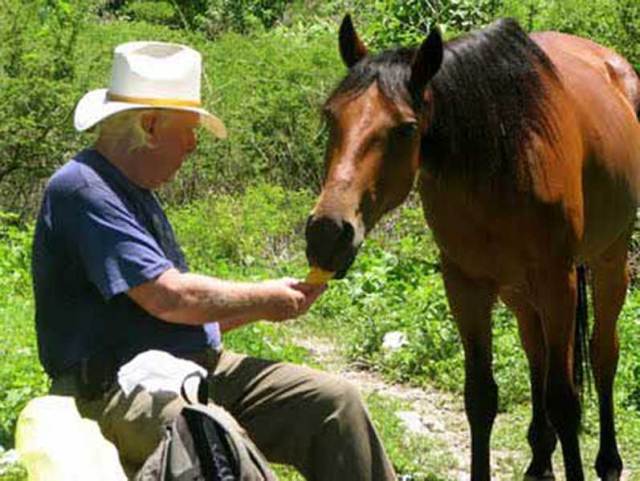
An adult wild horse is taken to live on a large ranch, turned loose in a large field, with plenty of grass and a creek running through it. Every day a man goes out and check on the horse, sometimes walking very far out into the field to find it. The horse always runs from him, and he never chases it. He walks the fence line, checking it for holes or debris. The horse often watches him, but never gets close. Sometimes he goes out into the field and sits in the grass eating his lunch. Occasionally the horse creeps closer. The man pretends not to notice, but he always leaves his apple core behind, and once he leaves the field, the horse ventures over, smelling the scent he leaves behind. It finds the apple cores, and eats them. Eventually, when the mans appears, the horse will come closer. If he puts an apple down, and backs away, the horse will approach and eat the apple. When the snow comes, the man returns every day and breaks the ice on the creek to make sure the horse can drink. He scrapes snow away from the grass, and leaves hay in its place. The horse watches from the shelter of the trees.

Eventually, the horse doesn’t look at the man with suspicion when he comes to its field. Sometimes it follows him as he checks the fence. Sometimes it doesn’t bother to stop grazing. It knows the man won’t do anything to hurt it, because he’s never done anything to hurt it. It understands that he lives here, and it lives here. He likes apples, and it likes apples. It has no herd, but the man is sort of like a small herd. He does things a herd would do. He keeps the horse company, and the horse keeps him company.

One day while the man is checking the fence line, he falls down. He can’t stand up. Coyotes hear him yelling for help. The horse hears him, too. It goes to see what’s happening, and finds the coyotes circling it’s man. It’s herd. Rushing in defensively, the horse fights the coyotes, off, kicking them, and driving them away until they leave entirely. But the man still can’t get up. It’s getting dark, and very cold. The horse stays by the man, making sure that the coyotes don’t come back. Eventually, the man stops trying to move. The horse lies down close to him, and when he rolls up against it, the horse doesn’t move. It lies beside the man for hours, and then as the sun rises, other people appear in the field. There are lots of them, and they’re all yelling. The horse leaps up and runs away, then circles back to watch as the people finds its man and takes him away. The next day, its man returns hobbling on sticks, and he brings lots of apples with him.

Chris-feeding-horse

Now, if I were to ask you which one of the men in these scenarios had a spiritual bond with the horse, I have little doubt that you would say the man in #2. It seems obvious, doesn’t it? He’s asked nothing of the horse, and yet when he needs help the most, the horse guards him, and then keeps him warm until he’s rescued.

The baldly honest truth, though, is that a person might foster hundreds of wild horses in exactly the same manner, and no one of them would ever see him as part of the herd, not one of them would protect him from coyotes or lie beside him and keep him warm.

I’ve worked with horses–both domestic, and reclaimed mustangs–for almost thirty years, and there has been only one horse who did literally save and protect me. That’s what makes the special bond special. The fact that it is so rare. Only one horse out of hundreds that I’ve ridden, trained, helped be born, or cared for actually did save me. And in that situation, there was also a newborn foal involved, and the mare saved the foal, too, so that might well have been a situation wherein I was saved by coincidence, not intention.

And that’s okay. That doesn’t mean the horses I’ve cared for and raised didn’t love me.

The sort of spiritual connection that would cause a horse to view you as if you were another horse, is simply exceedingly rare. The sort of ritualistic connection that allows horses to interact with humans with respect and appreciation can be created through consistent, daily routine. That routine might involve depriving the horse of basic needs, so that it has no choice but to accept a relationship, or it might involve the longer process of learning to trust each other. But in either case, the bond is real, it’s just not exceptionally unique.

So, how does all of this relate to conservation and wild animals? It relates vitally if you look at celebrity conservationists like Eduardo Serio and his Black Jaguar White Tiger Foundation.

Serio has–as he so often boasts–has gathered almost five million followers on Instagram, and he didn’t do it by rescuing big cats. He did it by posting videos of himself playing with adolescent big cats, and other celebrities holding and coddling newborn big cat cubs.

tumblr_nt9wwb3BGX1ue8ctao1_1280

Some of Serio’s cats have supposedly come from circuses, but you never see him interacting with those cats because he can’t interact with them. He possesses no “special bond” with those cats because he has not hand-raised them from birth, has not systematically forced them to develop within the conformity of his own expectations. He does not have the bonds he has with his cats because he’s special, he has those bonds because he’s trained the cats to have them.

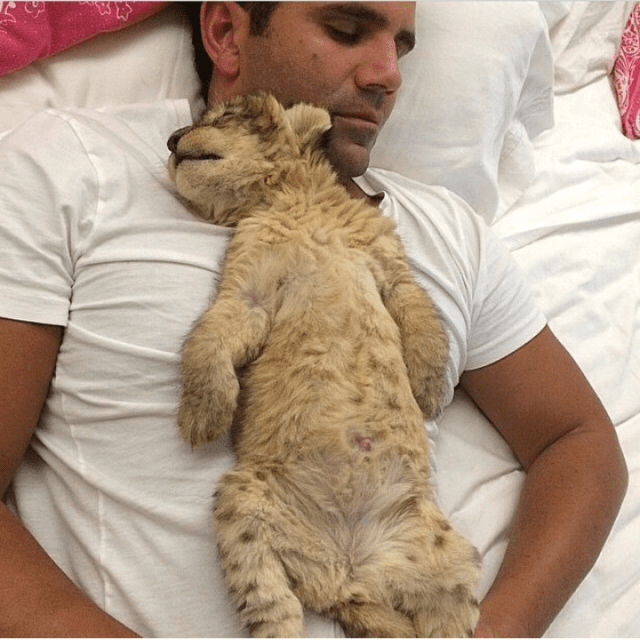
The dozens of newborn big cat cubs Serio constantly posts videos and photos of, are available to make those videos because they’re kept inside a house, locked in various rooms, and the only interactions they have with the outside world are interactions specifically relating to Serio or his staff. Those cubs–as Serio himself has admitted–are raised from shortly after birth, sometimes from before their eyes have even opened, living in Serio’s closet, sleeping in his bed, and being constantly handled by humans, indoctrinated into the ritual of human interaction. It is literally the only thing they know, the only thing they have ever been exposed to. When celebrity guests walk with the big cats in Serio’s possession, they are not being “brave” or “becoming part of the pride” they’re doing exactly what Serio and his staff have ritualistically done with the animals 24 hours a day, seven days a week since those animals were born. The animals don’t have a choice, they don’t even know they’re capable of refusing the contact.

1472072_10154816531670574_7744091280869348660_n

Serio vehemently denies “charging the public” to play with his animals. Instead, he offers them the chance to “sponsor” one of his ‘angels’ and with each level of sponsorship the donator receives certain benefits. Originally, and up until the recent spate of articles questioning the activities of Black Jaguar White Tiger, one of the benefits for those willing to donate $1,000.00 or more per month to his foundation, was a two day visit for two people to the Foundation–the location of which remains a closely guarded secret–and while there, handling and taking photos with the animals was part of the fun. Below is that donation page as seen in the ICARUS post titled Escaping the Matrix: Lifting the Veil on Black Jaguar White Tiger’s Pseudo Conservation of Big Cats.

Screen Shot 2016-01-12 at 12.06.48 PM

Now, here is a current screenshot of BJWT’s sponsorship page. The benefit of a two day visit for two people to the Foundation has been suspiciously removed. Is this a response to the recent publicity regarding Serio’s allowance of handling? There’s no way to know. And since Serio refuses to ever admit any wrong doing at all, we’ll likely never know why the terms for $1,000.00 sponsorship were suddenly changed. Just as we’ll never know why he’s suddenly referring to BJWT as a “sanctuary” instead of “the Foundation” when they still are not a GFAS accredited sanctuary.

FullSizeRender-2

With, or without, the enticement to visit the Foundation in exchange for sponsorship, Serio continues to post videos and photos daily of both himself handling his cats, and of celebrity guests handling his cats. And regardless of any recent articles criticizing him, people seem to feel as if Serio is somehow ‘sharing his special bond’ with them by allowing them to participate. Serio’s 4 million+ followers on Instagram readily agree. Anyone who questions the validity of Serio’s ‘special bond’ with his ‘kids’ is cut down with verbal assaults and assertions, often which are nor more than the accusation that these ‘haters’ are simply “jealous” of Serio’s “special bond” because the aforementioned ‘haters’ will ‘never have that bond’.

What these followers fail to grasp is that anyone who purchases wild animals as babies, and keeps them isolated with only the owner to ritually care for them, will end up with baby big cats who excitedly run to them for comfort and affection.

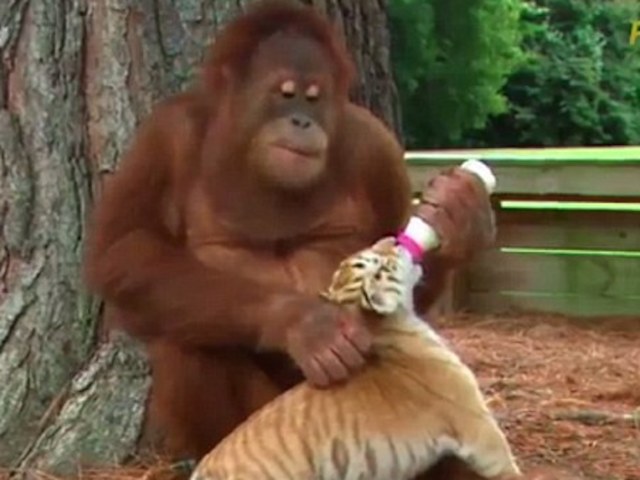
These same blindly supportive fans also help to share numerous videos of interspecies “friendships” without grasping the fact that these “friendships” are nothing by contrived and forced pairings of animal interaction. Yes, it is possible for unexpected bonds to occur between species which otherwise might not interact, but rarely is a camera ever there to document the activity. Only a few times has such genuine and naturally occurring bonds happened, and often they last only a brief time. Videos of orangutans bottle feeding newborn big cat cubs are strictly the figment of one’s imagination. Namely the one creating and posting the video.

orang1

‘Doc’ Antle of T.I.G.E.R.S. is no better than Serio. In fact, Antle is a main source for many of those “unlikely friends” videos so often shared by Serio’s fans.

Antle continuously breeds–and inbreeds–big cats, bottle feeding the subsequent cubs, and hybrid cubs, using food and intimidation to impress show routines onto his cats. By the time they reach adulthood, the big cats are so ritualistically bent to a specific behavior pattern that feeding them milk from a baby bottle is their standard reward for doing as instructed. The public finds this an adorable way of giving the animals a treat, and fail to recognize it as the lynchpin in a systematic conditioning of behavior.

tumblr_n2paavRjjy1qfmsqbo5_1280

For Antle, the matter of cuddling his cubs is more a tourist draw, while the training of his animals takes center stage. The principal, however, is exactly the same. Antle prides himself on making the breeding and training of his cats an entire lifestyle. Prospective interns are expected to study Antle himself, and his methods, convert to veganism, they must be single, and change their entire mindset to match precisely how Antle says they should think. It is, much the same as Serio’s followers’ obsession with his “special bond”, simply a forced, and structured, ritualistic pattern of behavior, continually reinforced by how the animals are raised and maintained.

doc_lion_bio

Similarly, Karl Mitchell has been breeding big cats for decades, regularly charging the public for the privilege of holding the subsequent offspring. Mitchell started out by training a house cat to ride a motorcycle. This is something that thousands of cat owners have done, but in Mitchell’s case, he believed that his success was a sign of his own innate ability to communicate with animals. He became a self-styled “animal guru” claiming to be able to train animals that no one else could, such as zebras and antelope. Eventually Mitchell moved on to big cats, which he insists are trained using ‘love’ as well as other methods he learned from his apprenticeships with various Hollywood animal trainers.

karl mitchell abuserBecause, apparently, feeding animals on your couch is how all the big time trainers do it.

Mitchell’s property “The Ranch” has been the host to music videos, magazine shoots, and commercials. Mitchell maintains that he’s sought out by directors because of his ability to get animals to do what he wants, because of his guru-like skill with them. The truth is that Mitchell is a man constantly fighting allegations of animal abuse and mishandling, virtually all of them related to his big cats, and how they are treated.

He also uses The Ranch to allow high paying celebrities to play with his captive big cats.

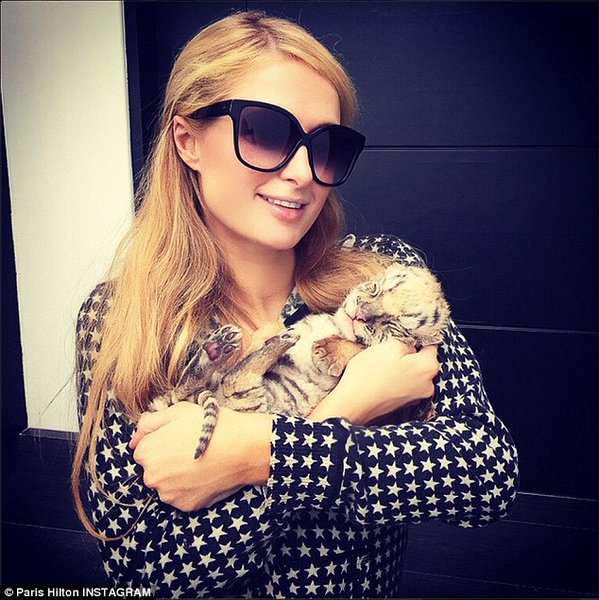
Karl_ParisParis Hilton just can’t seem to keep her hands off big cats, be it here in America with Karl, or down in Mexico at Black Jaguar White Tiger.

Bradley Cooper Spends Some Time With Annastazia
Bradley Cooper sporting a bad wig, and bad judgement as he coddles a 2 month old tiger cub belonging to Karl Mitchell.


Serio, Antle, and Mitchell all claim to have special bonds with their animals. They all claim to be special snowflakes, different from every other person who keeps big cats as pets and allows others to play with them.

*Serio loudly proclaims that most of his ‘angels’ have been saved from circuses or other situations, despite that a huge number of his animals are far too young to have even been in a circus or possessed as pets. He refuses to spay or neuter his animals, and talks about repopulating the wild with his cats. Calls his foundation a “sanctuary” though it isn’t GFAS accredited.

*Antle insists that his breeding, and inbreeding of hybrid big cats, is necessary to the preservation of the species, and says that one day, he plans to reintroduce his cats to the wild. Also calls his businesses “sanctuaries” though neither are GFAS accredited.

*Mitchell insists that his final goal in breeding and maintaining big cats is to return them to the wild, and that he’s currently in contact with sanctuaries in India in regard to reintroducing tigers there.

All three of these men claim to have the exact same goals, the exact same bonds with their animals, and the exact same reasons for allowing the public to handle them. Everything they do, and all the money they make, they insist is for the animals.

They do it all, they say in the name of saving big cats and spreading awareness about the plights of wild big cats.

This is their mantra.

Yet while these proclamations come out of their mouths, their hands are busily handing off yet one more big cat cub to a waiting patron, eager to coddle the kitten and ‘share the special bond’ that its owner has so carefully created via ritualistic training.

By the time that kitten becomes an adult, no longer suitable for handling, another kitten will have been ‘rescued’ or otherwise secured, and will conveniently be available to help share the ‘special bond’ just like generations of assembly line victims of the special snowflake syndrome before it.

And yet millions of people all over the world continue to believe in the fairytale of special snowflakes. They continue to share Serio’s videos, and tout the ‘special bond’ he has with all of his ‘kids’. They continue to believe that people like Serio, Antle, and Mitchell should breed animals so that they can repopulate the wild spaces that currently can’t support the feeble populations of wild cats that still exist.

Until they open their eyes a recognize the ritualistic abuse for what it is, the cycle will continue.

Author: Artemis Grey

Escaping the Matrix: Lifting the Veil on Black Jaguar White Tiger’s Pseudo Conservation of Big Cats

You know the part of the Matrix where Neo realizes that everything he thought was real and right was really just a continuous lie so skillfully fed to him that he accepted it because that was easier than trying to think any differently?

That’s where we are in the evolution of Black Jaguar White Tiger. Slowly, ever so slowly, news outlets on the internet are starting to notice the woeful few who have been speaking out against Eduardo’s dangerous pseudo conservation practices. The new outlets are noticing, and some of them are getting brave enough to post their own articles* on what seems like very obvious issues with a foundation that claims to have rescued over 200 big cats, yet releases daily videos of people doing things like twirling around with tigers draped over their shoulders, or chasing them around the dining room of a private home, and who only have a documented 8 acres on which to house those 200 big cats – though Eduardo claims to be ‘working on’ a ‘stage 3’ (which he already lists in his ‘Stages’ of rescue, despite not actually having a functioning stage 3)

From the BJWT FAQs page:

‘Stage 3 is coming soon. It will be hundreds, more likely thousands, of acres for our babies to live their lives happily, free of poachers, and safe from the other dangers and threats that society has placed on the environment.’

Never mind that ‘Stage 3’ has been ‘in the works’ since BJWT was founded in 2013.

With over 4 million Instagram followers, BJWT has attained so much mass that often times anyone who dares to speak out against them is instantly attacked, mauled, and cast aside. No pun intended. The animosity BJWT shows to those who oppose it is especially aimed at of any genuine sanctuaries (read, GFAS accredited, which BJWT is not) who speak out publicly against Eduard Serio, or his Black Jaguar White Tiger foundation. With all the maturity of a pre-pubescent trust fund baby (Eddie is big on announcing that he’s got millions with which to sue “haters”) who believes themselves above reproach, Eduardo digs up photographs that are decades old, posting them to his Instagram along with snide comments and instructions for his follows to “look for themselves” at who his attackers really are. He then links to websites run by mysterious entities who have been called out by 911 Animal Abuse for their unsubstantiated claims against different sanctuaries – the same 911 Animal Abuse which has called out BJWT for their own activities.

In Eduardo’s own words from a recent (in the last four days) Instagram rant:

‘I rarely try to respond to the haters because it takes away from all the hard work I do for my kids and the Sanctuary and other people, almost 5,000,000 followers around the world who believe in BJWT however once in a while I feel compelled to respond to the one-sided, self-serving people that call themselves reporters but really mask as “bullies” and “haters”. Thanks to your blind hate and mediocrity, you just called almost 5 million people stupid.’

For the uninitiated, his ‘kids‘ are the some 200 big cats he claims to have rescued. And again, although he now regularly refers to BJWT as “The Sanctuary” it is not accredited by the GFAS.

He goes on to say:

‘We have also been accused of being a petting zoo for celebrities. First of all, we don’t charge for this, but how on Earth can you change the world without getting everyone involved?’

Here is a screenshot of BJWT’s ‘Sponsorship’ page wherein they list the various options for ‘sponsoring’ the animals in their care.

Screen Shot 2016-01-12 at 12.06.48 PM

So, no, they don’t have a ‘price list’ stating: Play With Our Cats – $1,000. However, if you pledge to ‘sponsor’ a cat for $1,000 a month, you *do* get a 2 day visit for 2 people to the sanctuary where you can – wait for it – play with the cats! Apparently, for BJWT, ‘getting people involved’ means soliciting monthly payments in exchange for the chance to handle and play with the seemingly inexhaustible supply of newborn-adolecent big cat cubs in BJWT’s care.

Just where that inexhaustible supply of baby big cats comes from is one of the questions that will get you swiftly blocked from any and all BJWT social media sites, and subsequently criticized by them for “hating” on all the good they do.

Also from BJWT’s FAQs page under the heading ‘Does the Black Jaguar-White Tiger Foundation spay/neuter their kids?’

‘ABSOLUTLEY NOT. None of our kids are spayed or neutered unless they come to us like that. We prefer to use less invasive methods and technology, the oldest method is to separate the female from the male when she is in heat, our most usual option is giving birth control injections every six months. Nobody knows what tomorrow will bring, we would Love that someday in the future our Angels could help repopulate the Jaguar, Lion, Tiger and Leopard population in México, Africa and Asia. It is very easy to spay or neuter a rescued Angel, but perhaps in 10 years or so things will change and we would have recovered their natural habitat. ALWAYS THINK BIG. ALWAYS…’

The problem with this is that injection contraceptions are something still actively being developed. Even zoos do not entirely understand how they act on the animals who are injected. In other cases, implants are injected for contraception. What isn’t widely discussed in regard to implants is that unless the animal is cut open every six months, and the prior implant removed, a new implant is simply inserted alongside the old one. Meaning that over the course of the its lifetime, a cat might wind up with dozens of contraception implants under her skin. And no one is sure what sort of side effects this might have on their health.

Eduardo uses the term “injections” however, in my own research on the matter of contraception, I found that the term ‘injection’ was used interchangeably between literal injections of fluid contraception, and implants which are injected under the skin with a large gauge needle, so there’s no way to know for sure which type BJWT uses. What we do know, is that chemical contraception for big cats in general is considered tricky, with dosages requiring constant adjustment, and the long term side effects remain unknown. Overall, if one is trying to reduce the population of captive, privately owned big cats, it remains much more cost effective and efficient to simply spay and neuter the animals.

In regard to Eduardo’s desire to repopulate the wild with his ‘Kids’ in the future, at this point in time, it remains very questionable as to whether captive-bred animals released into the wild will meet with long-term success. Sustainable reintroduction practices of captive-bred big cats is tenuous at best, and likely decades away, at the minimum, something Eduardo admits when he says ‘perhaps 10 years or so things will change’ . Which means that the cats that BJWT refuses to spay/neuter now, will be far past the feasible breeding age in a decade or more when it might be possible to attempt captive breedings for wild release. There is also the question of muddied bloodlines. In short, there is no valid reason not to spay or neuter the animals he’s rescued.

Yet BJWT’s legions of fans remain blindly enamored of their practices. Thus it is refreshing to see news outlets beginning to report on the problematic actions of BJWT, rather than offering fluff highlights of whatever celebrity visited the foundation most recently and has plastered photos of themselves hoisting just days-old, vulnerable cubs around like they’re stuffed animals and not living things…

2377ED7D00000578-2847718-image-14_1416852723979

CWqskadUsAA1cYj

2E232C1500000578-0-image-a-90_1446732883478

Yes, hopefully the days of highlighting BJWT with articles exclaiming over the adorableness of mishandled cubs, and dangerous interactions with adolescents, and adult animals are finally coming to a close. Hopefully people are beginning to understand the inherent hypocrisy of a man and foundation who post multiple photographs and videos showing big cats being treated like house cats on a daily basis and then add the hashtag of #NotPets.

Maybe, just maybe, people are starting to wake up and “escape the Matrix” that Black Jaguar White Tiger has so carefully constructed via social media.


Author: Artemis Grey


Wildlife in Crisis: An International Think Tank

The ICARUS crew is absolutely thrilled to announce that we will be hosting an International summit in 2016 titled Wildlife in Crisis: An International Think Tank. It is our goal for this summit to bring together some of the greatest and most influential minds in the world of conservation today, and to develop strategies for further conservation efforts in the future.

The only thing the members of ICARUS want it to protect the animals and world we live in, and to educate those around us about the challenges involved with world wide conservation. When you choose to donate to ICARUS through this page, or our Facebook page, you aren’t paying us.

Your money goes directly to helping fund animal conservation through rescues, rehabilitation, and things like our 2016 International summit. The members of ICARUS are volunteer only, so all of our articles, and information is gathered and produced around full time jobs and late night hours devoted only to the conservation of the animals.

This is one reason that we took such a hard and forthright stance against hugely popular establishments such as the Black Jaguar White Tiger foundation, and Eduardo Serio 5 months ago when we first opened our WordPress account.

As a group devoted to hands off conversation, the ICARUS team does not condone the unnecessary handling or interaction with any wild animal. Sometimes during the rehabilitation process, handling is required, and as the members of our group have all been involved with wild animal rehabilitation, we understand this.

However, when one posts photographs on social media, or use social media to build themselves into a Celebrity Conservationist who is famous for no other reason than the fact that they post photographs and videos of themselves playing with big cat cubs, or adult big cats, they are not rehabilitating those animals, they are actively participating in their exploitation.

This Social Media Conservation, which so often highlights pseudo conservation is only one of the many global conservation issues that will be addressed at the 2016 International Summit which the ICARUS group will be hosting. Wildlife in Crisis: An International Think Tank will bring together conservationists from all over the world with the goal of addressing such issues as captive big cat ownership, wildlife crime, pseudo conservation groups and sanctuaries, rehabilitation ethics , legislation, and similarly the laws that govern exactly what foundation can describe themselves as rescue group or sanctuaries without actually obtaining the accreditation associated with being a sanctuary or rescue. Only through education can the public learn to see the difference between conserving wild animals in the wild, and exploitation of them by Celebrity Conservationists.

Author: Artemis Grey

Like A Bug On The Windshield Of An a380 Airbus

Do you remember high school? Okay, maybe some of you reading this post are stilll in high school. But if you’re older, do you remember what it was like? I mean, do you really remember?

Everyone experiences high school (or any level of school, for that matter) differently. Some of us have a great time, others barely survive, but one thing is certain: The longstanding tropes of Jocks, Cheerleaders, Nerds, It Girls, Outcasts, Drama Freaks, Rednecks, Art Dorks, and the most loathed of all, the Clingers, haven’t become tropes without reason. There are always a variety of stereotypes that kids either naturally fall into, or get pushed into. It’s not fair, but it’s been this way since the beginning of time.

While you’re in high school, everything social hangs on which group you fall into. Even if you don’t want to be in a certain group, you suddenly find that your entire life gets judged by which group you’re in, or at least by which group everyone else perceives you to be in. And if you can’t get into a group, you’ll be just a Clinger, and that’s social suicide because then you’re just fodder for everyone else.

Maybe you’re a badass on the trumpet, and love music, but then all of your friends go out for JV football. You don’t want to be the lame-o who didn’t try out when they did, so you feel like you have to go, even if you’d rather be in band. Also if your don’t go with the guys, you’ll never be able to hang out together because JV practices after school, so the Band Dweebs have to meet before school starts, and then they sit in front of you in math and smell like grass and old sneakers because they didn’t get to shower before school started. Besides, if your buddies make JV, and you throw in with the Band Dweebs, you’ll never hear the end of it when you do get to spend time with the guys. Bros stick together, after all, and you’ll be the one who ran out on them. Or, worse yet, if you don’t try for JV, and then you flub your band try out, you won’t be anywhere. You’ll be nothing but a Clinger. who doesn’t fit in anywhere, and just has to do their own thing.

So you go out for JV football, and you make the team with all your friends. And just like that, you’re a Jock. Even if you quit the team, it’s a done deal. Jock is your tagline for high school. And it does have its perks. Cheerleaders and It girls are all on the table, now. The Clingers, too, since they don’t even count because they’re always doing their own thing, so you can have your pick of them, and then still take Selena, that 9.5 Cheerleader, to Homecoming, because, well, Clingers aren’t real GF material, but they’re fun, once in a while. Yeah, let the Nerds and Drama Freaks duke it out for the Art Dorks and Band Dweebs, the real lookers are in your league, now. At least, the girls that everyone is into are in your league.

It’s a decent system, really. No crossing the lines. You always know where you stand and what’s at stake and how things are supposed to work out. Kind of like that book you were supposed to read in English this year but didn’t because none of the other guys wanted to. You did catch the movie version, though, just so you’d be able to answer the questions on the pop quiz that everyone knew  was coming. The Outsiders, that’s the one. Yeah, there are more groups at school than just the Socs and Greasers but it’s the same idea. You stick to the rules and play whatever role you got handed and you’ll make it out just fine.

Fast forward a decade–maybe only a few years– and you pause while walking to the office and look back on your high school years. And you start laughing. Laughing  like crazy laughing. Crazy laughing like people on the sidewalk around you start to go extra wide to either side, unwilling to cross the street entirely, but making sure that some other person is more in reach, just in case you lose your shit and start grabbing at folks.

Why are you laughing like a maniac?

Because high school–and which clique you were in–had no more significance in the scheme of your life than a bug on the windshield of an a380 Airbus flying at 35,000 feet.

You can’t know more than you’ve experienced. If you’ve never made it through high school, or through the age at which most of us go through high school, you literally can’t know what’s beyond it. You can daydream about it, or theorize, plan, make achievement lists, or set goals like becoming the owner of your own law firm. But until you actually get on the other side of things, you can’t see what’s going to be there waiting for you.

Now here you are, standing on a sidewalk, still laughing, and you’re going to be late to work, which means the guy at the front desk will be sure to tell the third-rate clerk who works for you that you’re late and the clerk will ‘accidentally’ let that slip to your boss who does, incidentally, own the law firm where you’re just a junior partner. But all you can think about right at this moment is the fact that your boss, the guy who owns the law firm, has fifteen framed photographs of him playing the piccolo in marching band, and he never played a single game in football in his entire life.

It doesn’t matter that he was a Band Dweeb in high school. It doesn’t matter that you were a Jock. High school was four measly years in the span of what–gods willing–will be twenty times that over the course of your life. Maybe more, if you’re lucky. Who belonged to what clique fades into complete irrelevance.

Fads are exactly like that. And the phenomenon that I think of as Social Media Conservation is the hottest fad on the planet right now.

A fad is defined as “an intense and widely shared enthu- siasm for something, especially one that is short-lived” (Oxford English Dictionary 2013) and likely to fade away once the perception of novelty has gone.

Now, parts of social media are great, and serve to make a genuine difference in the world, and social media itself, is not likely to go anywhere anytime in the near future. However, the phenomenon of Social Media Conservation can’t die soon enough, if you ask me.

Just what is Social Media Conservation?

Besides being a pox on genuine efforts to conserve our planet and all the things living on it, Social Media Conservation is the phenomenon of thousands, hundreds of thousands, or even millions of people taking to social media en masse to champion Celebrity Conservationists.

Not conservationists who happen to be movies stars, like Leonardo DiCaprio, but Celebrity Conservationists who, without their ‘conservation angle’ would not be celebrities or known names at all. Unfortunately, the majority of these Celebrity Conservationists often do far more damage to animals and conservation efforts than they do good.

Eduardo Serio of Black Jaguar White Tiger is the reigning king of Celebrity Conservationists. What he posts to his Instagram, and other accounts is completely irrelevant to conservation in any form and some of the posts are blatantly detrimental to the animals he claims to have rescued. His “sanctuary” is not accredited by the GFAS, though it is supposedly a sanctuary under Mexican law (I’ve seen no evidence of this, but since he threatens to sue and destroy anyone who claims otherwise, there it is) Yet his followers eagerly cheer the posts on, share them repeatedly, and basically flood the internet with them.

The content of Black Jaguar White Tiger’s Instagram account ranges from adolescent lions peeing on the walls of Eduardo’s own home, to Eduardo randomly spinning around in circles with an adolescent lion over his shoulders to Eduardo himself lying on the floor of his own bedroom (the cubs literally live in his walk-in closet until they’re a month or two old) covered in young lion cubs.

Not one of these videos serves any purpose in the world of conservation, or to raise awareness in regard to the plight of wild lions, or wild big cats. However, they do have a function, and that function is to make Eduardo–and his Black Jaguar White Tiger foundation–look like the coolest place on earth. And the videos work. Each of those three videos has been ‘liked’ by Instagram users anywhere between 68,600 (first video)  78,200 (second video) and 128,000 (third video) times and thousands of comments have been made on each one.

68,600 people have liked a video showing a captive lion cub pissing on the wall of a home lived in by humans

And these followers actually believe that the guy who owns that captive lion cub, and the house it’s pissing all over is somehow saving lions, saving our planet, and not keeping them as pets, as per the hashtags #SaveLions #NotPets and #SaveOurPlanet, which are very carefully included with virtually every photograph and video uploaded to the Black Jaguar White Tiger Instagram and other social media accounts. And there are tens of thousands of those photographs and videos, all carefully hashtagged #SaveLions #SaveJaguars #SaveTigers #SaveOcelots and most the most asinine claim #NotPets

Not pets? 

The guy is videoing exotic big cats and other exotic animals running around inside his house, pissing on the walls, sleeping in his bed, lying in his lap, rough-housing with the select high-name guests he brings in for more exposure and swimming in his in-ground swimming pool. 

But they are not pets. Right. I have a bridge I’ll sell you, too.

But dare to question the edict that the animals being exploited by Black Jaguar White Tiger are not pets and are not being exploited? Be prepared for personal attacks ranging from the mild ‘You’re an idiot, Eduardo is saving them from a horrible life!’ to the more heated ‘Fuck off, you’re a stupid cunt who’s just jealous of Eduardo’s bond with his cats’ to the unhinged ‘Keep it up, bitch, and someone’s gonna come piss on your walls!’ *These are not actual threats I’ve received, but a sampling of actual responses made to other, similar to what you’ll get if you have the gumption to actually question Black Jaguar White Tiger and what they’re doing.*

Unsurprisingly, when such gang-ups occur, the commenter who challenged the status quo is often battered vehemently, and then the entire post is immediately deleted, and the original commenter blocked. Unless you take screen shots as it’s occurring–something that most people don’t think to do while they’re trying to defend themselves and their position–there is no evidence it ever happened at all, leaving a situation of ‘he said she said’. This is the savagery of Internet bullying and assault. And, tragically, it is incredibly typical within the circles of Celebrity Conservationists. This is how they insulate themselves from answering questions or being held accountable for their actions. They gather devotees and then simply let those mindless followers do all the dirty work of defending them.

Social Media Conservation is a self-fullfilling phenomenon. The ‘cooler’ a Celebrity Conservationist is, the more followers they get, the more exposure their foundation receives–even if it never produces any tangible evidence of conservation efforts–the more their name and that of their sanctuary or foundation is spread, the more followers it gathers, the more those followers talk about it, the more they share posts, the more unimpeachable the Celebrity Conservationist becomes until their presence is so immense, their influence so insurmountable that to speak out against them is to invite the unified wrath of the millions who worship them.

And suddenly, we find ourselves stepping back through a wormhole into the era of high school cliques. Instead of Jocks or Cheerleaders, there are Celebrity Conservationists, and a planet full of people obsessed with getting into the cliques formed by those Celebrity Conservationists. And if you aren’t in those cliques, then you’re immediately degraded to being just a Clinger hanging around the edges and taking potshots at them simply because you’re jealous that you’re not involved. Your facts, and science, and utterly valid arguments are devalued and belittled by accusations of personal vendettas and ignorance. You’re either jealous of the Celebrity Conservationist, or you don’t understand them.

But this is the incontrovertible truth about these Celebrity Conservationists and their social media empires:

They’re no more significant in the scheme of conservation and the survival of the planet and the animals on it than a bug on the windshield of an a380 Airbus flying at 35,000 feet.

Yeah, Black Jaguar White Tiger has 4.3 million followers on Instagram, and almost 10,000 posts on Instagram. Big fucking deal.

What has Black Jaguar White Tiger done to help wild animals in wild habits, in real life situations? Not what have they talked about doing, or discussed doing, or promised to do, but what have they actually done?

The answer is nothing.

He can’t even get a GFAS accreditation. In all Eduardo’s supposed fundraising, and supposed efforts at conservation, the only thing he has actually done is con 4.3 million people (and countless backers and Hollywood celebrities) into thinking he’s the best thing since sliced bread, while amassing a hoard of some 180+ captive big cats which are currently crammed into a residential house (location unknown) and caged on an 8 acre plot of land (location unknown) and with a promised several thousand acre ‘paradise’ to be built for them in the future.

Just like high school, this fad of Social Media Conservation is going to pass. In another five years, no one is going to be infatuated with how many followers they have on Instagram. No one will even remember Instagram. All of the popularity that is so vital to Celebrity Conservationists will disappear. And without the 4.3 million followers worshiping every inexplicable farce they engage in with their ‘rescued’ captive wild animals, these Celebrity Conservationists will fade away. If they’re lucky, they’ll become a nothing name. If not, and if our laws in regard to animal rights and protection increase, maybe they’ll be in jail for all the damage they’ve done to the animals they claimed to be helping.

But no matter what happens to the Celebrity Conservationists, the animals they used to attain their brief throne will remain. Likely thousands more animals will remain, since places like Black Jaguar White Tiger maintain a constant stream of newborn animals, and do not believe in the practice of spaying and neutering.

And all of those captive wild animals will still need to be cared for, on top of all the wild animals still in the wild who need to be protected so that they might remain in the wild.

A crisis that will fall onto the shoulders of genuine conservationists who toil tirelessly in the shadows, without any expectation of public thanks, because simply seeing wild animals in the wild where they belong, or seeing captive wild animals properly housed in spacious wild-like enclosures, unbothered by humans, is all the thanks we need in order to feel good about ourselves. 


Author: Artemis Grey


Black Jaguar White Tiger, The Jim Jones of The Conservation World

Something the ICARUS group repeatedly talks about is the method of hands off conservation. It is one of the foundation stones of our ideology, which focuses on keeping wild animals wild. No, not every animal that is rescued or saved can be returned to the wild. Many are habituated to humans, and would never survive in their natural environment, and others, tragically, have no environment to even be returned to, were it possible. One reason that the ICARUS group is so vehemently against the handling of wild animals (as usual, excluding the handling necessary to rehabilitation and to medical attentions) is because it is impossible to justify handling in one instance, and condemn it in another. It is also why we so strictly consider only GFAS accredited sanctuaries as being genuine sanctuaries. The public has proven time and again that it is incapable of watching someone handle wild animals, and then refrain from engaging in the same behavior if given the opportunity to do so.

After reading the best article to date calling out Black Jaguar White Tiger, by Jacalyn Beales, I decided to write an ICARUS article on the subject. My articles are not nearly as analytical–though I do research them– and instead my writing contains a more visceral component. One which is intended to set the reader back and make them think about what they’ve just read. Perhaps if several articles are released closely together, we can do better than making page 7-8 on a Google search regarding the failings of the foundation.

Major case in point: The vastly growing empire that is Black Jaguar White Tiger. Within the span of just two years, this foundation has become a world wide phenomenon touted as the leading edge of conservation, endorsed by dozens of celebrities, and monopolizing social media to the point of being able to shut down sites like Instagram just with the traffic associated with their account. If you Google the foundation including words like ‘abuse’ or ‘criticism’ or ‘controversy’ be prepared to flip an average of 7-8 pages over through your search before you find any article that actually contains legitimate criticisms about the foundation, rather than bait and switch wittily worded endorsements of it. Instead, what you’ll find is a “sanctuary” which only meets the barest minimums required by Mexican law.

The terrifying part of all this support and lavish praise? It’s all in regard to a man who raises lion cubs in his walk-in closet and allows them to run rampant inside his house. No, I haven’t accidentally started talking about Siegfried and Roy, I haven’t accidentally referred to a retired circus performer who hoards ‘rescued’ big cats in his central Texas cape cod home. I’m not being sarcastic, or overly dramatic.

Eduardo Serio, the owner and founder of Black Jaguar White Tiger keeps newborn big cat cubs in his walk in closet so that they can receive ‘around the clock care’ from him personally. Once they’re a few weeks old, they move from the closet into a ‘communal area’ in the main section of the house wherein they’re all fed together–something that can often result in dangerous fighting, and even mortal wounds in larger animals. Eduardo talks candidly about his grossly incorrect handling of his animals, and shockingly, the public hangs on his every word.  In fact, people pine for the chance to visit the foundation and join in the glorified mishandling.

A master of selling ideas, Eduardo runs multiple social media accounts followed by millions of people all over the world and they worship him for his exploits.

I mentioned the other day to someone that my personal house cat, Ari, who is dealing with end stage heart failure, now sometimes has trouble making it to the litter box. The person wrinkled their nose in disgust and suggested that it was ‘probably time to put him down, then, because he could live comfortably for months, yet, and think of the mess.’

However, Eduardo posted this video with the caption  ‘And of course, Ayrton’s signature pee on my wall…’ and within two weeks, it’s received 64,500 likes. Aytron is a wild animal trapped inside a house spraying on walls–repeatedly, and everywhere–to mark his territory, and in 14 days 64,500 people have liked the video and inundated it with comments like ‘That boy is so spoiled.’

Spoiled indeed. As well as continually mishandled.

FullSizeRender-2

Similarly, in the summer of 2015 Dade City Wild Things came under severe fire (and rightly so) for allowing guests to swim with tiger cubs. Meanwhile, Eduardo posts videos like this and is rewarded with 30,500 subscribers to his YouTube channel. Often, his commenters compliment his “sanctuary” without realizing that it’s not actually an accredited GFAS sanctuary because of how he houses and exploits his animals.

Article after article after article lavishes praise on Eduardo and his Black Jaguar White Tiger foundation, all of them overlooking the simple basic failings of the situation. This article, dated in May of 2015 states that Eduardo has purchased 100 acres to house his growing group of rescues. However, this article, dated October of 2015 states that ‘Stage 3’ of Eduardo’s ‘rehabilitation program’ is ‘in the making’ and will eventually offer ‘thousands of acres’ for the cats. This same article lists ‘Stage 2’ as 8 acres where the older animals can run and play. This article also mentions that ‘Stage 3’ is ‘in the works’. But it also states that Black Jaguar White Tiger currently has 152 big cats in its care.

On 8 acres.

You can’t properly care for 8 horses on 8 acres, never mind 152 wild big cats. Every article I have cited, thus far, was published in 2015 and according to these articles the number of animals in Eduardo’s care varies (and let me remind you, Eduardo himself is giving these interviews) from 45 animals, to 152 animals. Meanwhile, Black Jaguar White Lion’s own website claims to have rescued and be houses 180+ animals. On, let me repeat this one more time, 8 acres. And one house.

If I told you that an Arizona housewife living on 8 acres had 180 house cats, you’d suggest I call animal control because she couldn’t possibly care for all of them properly. Even if she had help, there just isn’t room in one house and 8 acres for 180 house cats. But Black Jaguar White Tiger claims to be ‘rescuing and properly caring for’ over 180 200-500+pound exotic cats, inside a house that’s lived in by humans, and with just 8 acres of land. Yet, the praise and hero-worship continues in articles like this.

Aside from Jacalyn’s article, I was able to find only one other article (I did not include articles I’ve written for ICARUS) that cited the problems and misplaced trust in Black Jaguar White Tiger.

‘What if someone told you that animals treat us as equal as long as you give them love?’

‘And the multitude of them that believed were of one heart and of one soul.’

Both of these are inspirational quotes, provoking a deep reaction of unity with the world around us.

The first one is a summary of Eduardo Serio’s beliefs about big cats, taken from an article that goes on to wax poetic about the kindnesses he’s done for the 180+ animals crammed on 8 acres and how love is the end all when it comes to helping animals. The article ends with this purple prose humdinger: ‘All you need is a few minutes on the Black Jaguar, White Tiger Instagram account to feel like a better person. Eduardo and his team share moments of love, between feline and human, that we never thought were possible. He shares the stories of each lion, tiger or jaguar that lives in the organization, showing us time and time again that all is possible with love.’ And, of course, there’s a link for donations!

That second quote, such a mirror image to the first in proclaiming that we’re all one and the same with love? Yeah, that’s from one of Jim Jones’s sermons. If you’re under the age of about 35, you’re going to have to Google Jim Jones. I’ll save you some time and put in a link here. But if you don’t want to even bother with that, I’ll give you the high points.

Jim Jones was a preacher who did something no other church in his time (mid 70s) had done. He ran a church wherein everyone–literally everyone–was equal. I’m talking black, white, illegal immigrants, gays, lesbians, bisexual, transexual. Everyone was welcome and seen as equal in the People’s Church. The entire point of Jim’s ideals were that we were all the same inside, just like Eduardo claims we’re all the same. It was great. Up until Jim Jones lost his shit and orchestrated the largest mass suicide you’ve probably never heard of. 914 died that day, 5 of them shot to death as they tried to escape via airplane to warn the government of what was happening. 909 people died because they drank the cyanide-laced Kool-Aid Jim Jones told them to drink.

I can almost hear your eyeballs rolling around in your head now–those of you who support Black Jaguar White Tiger, anyway. You’re thinking ‘How could 909 people be so stupid as to listen to one guy telling them to kill themselves?’ Meanwhile Eduardo’s supporters are sharing the photos and videos and every other social media shareable thing of a man who has anywhere from 45-180+ captive big cats crammed onto 8 acres of land the location of which is a closely guarded secret. They might as well be giving money to the government to help feed the aliens living at Area 51. They’ve got the same level of proof that the cats in Eduardo’s care are alive and well as they do that aliens are hiding at Area 51.

This is the danger of social media in 2016. If enough people–especially wealthy, celebrities– say something, then it must be true. So a few dozen celebrities have gone down there to Black Jaguar White Tiger. *If* they saw abuse, how many of them do you think are going to come back up here and announce that a man who basically owns Instagram, among other social media outlets, is a liar and fraud? Do you really think these celebrities are going to ruin their careers over this? How many celebrities have kept silent for decades about sexual assaults or worse because the perpetrators were people in high places who could ruin their careers?

It’s up to us as individuals to not get sucked into the social media frenzy. Think of Instagram as the supermarket tabloid of the internet. Not everything you see on the cover is the truth. Now go read Jacalyn’s article again, and think twice about sharing that oh-so-adorbs photo of what’s-her-fabulous-face cuddling a baby lion or tiger at Black Jaguar White Tiger.


Author: Artemis


New Year, New Opportunities to Advocate for Animals

The ICARUS blog has been rather quiet this last month. I’ve been dealing with some serious health issues (I won’t offer details, but google Adenomyosis, and Factor II Deficiency and you’ll understand) At the same time, I’ve been dealing with major health problems associated with one of my cats, Ari. He’s been diagnosed with Restrictive Cardiomyopathy, which is a terminal condition. At 13/14 he’s not what I’d call an ancient cat (Old Lady Cat is rocking it out at 18) but in human years, he’s around 75, and while I adopted him from the ASPCA and we don’t know his breeding, this heart issue is prevalent among Maine Coon cats, and large exotics, and Ari is very large, with markings and mannerisms that point to those sorts of cats in his background. It’s been touch and go, and he’s had fluid drawn from around his lungs several times. *Right now* he’s responding very well to the diuretics and heart medicine, so hopefully we’ve attained a plateau of comfort. Ari, for his part, has never slowed down, and remains his cheerful, playful self. Between Ari’s health, and my health, I haven’t been a whole lot of help to the ICARUS team the last month, but with both of us more stabilized, I intend to get back into the swing again.

I’m not one for New Years Resolutions, as I feel like they just set you up for a failure. Instead of embracing the new year, the new opportunities and the turning of the seasons, you get so focused on achieving the goals you’ve created that you don’t enjoy life. That said, I love when the year turns over and you can see the endless possibilities stretching out before you. All of those chances and opportunities to go out and do good in the world. All those animals waiting for us to help them. All the people waiting to be taught how they can help animals all over the world.


Sometimes the best way to help animals is simply to teach people about them, and about how to help conserve and protect them. Team ICARUS is a proponent of what’s called ‘hands off conservation’. This means that unless an animal is being given medical treatment or rehabilitative therapy, we do not touch or handle them. We do not believe in playing with wild animals, neither babies, nor adults, nor do we believe in keeping them inside homes or other inappropriate housing situations.

There are situations in which it is necessary to touch or handle wild animals. Very young animals must sometimes be bottle fed. Some species, like sloths, or fruit bats must be carried from feeding areas to housing areas, or kept swaddledFlying fox rehabilitation centre expands in Sydney in order to mimic their natural situation. The ICARUS groups considers this sort of handling to be part of the rehabilitation process, and thus unavoidable. However, romping around with big cat cubs, or dressing young primates up in clothing and carrying them around as if they were human children, crosses the line into pseudo-conservation. Continuing intimate contact with animals after they have matured beyond the necessity of that interaction is no longer caring for them as if they were wild animals, but instead, is treating them like a pet.
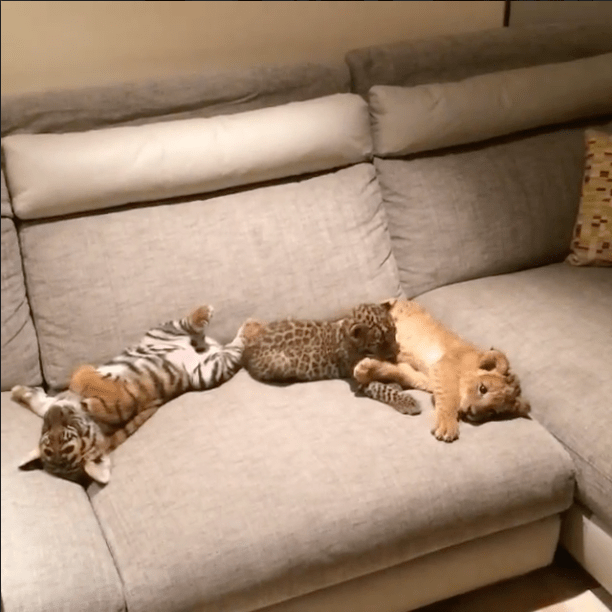
There are many groups who publicly present themselves as being focused on the conservation of a species, or multiple species of wild animal, while at the same time engaging very publicly in acts of exploitation of the very animals they claim to be protected. Despite that many of these groups describe themselves as “sanctuaries” if they directly interact with their animals, or allow the public to directly interact with their animals, they are not, and cannot be a GFAS accredited sanctuary. And for the ICARUS team, that’s the only genuine sanctuary. Many of them closely mimic the presentation of other legitimate sanctuaries or rescues specifically with the intention of duping the public into believing that they have the same goals. Often times this enables them to con large corporations and entities into ignorantly funding them even though they are not aiding in conservation in any way.

Sometimes, these pseudo-conservation groups can be sorted from the genuine organization simply by careful research. For example, an elephant orphanage dedicated to the rescue of baby elephants whose mothers were killed by poachers will not be a tourist destination. Human contact will be kept as minimal as possible, and though the young elephants must be bottle fed, the end goal is for those animals to be released onto preserves where they can successfully function as animals not dependent on humans. Any elephant ‘orphanage’ which allows the public to play with the baby elephants or that maintains a breeding program has much more in mind than rescuing orphaned babies.

Similarly, big cat “rescues” which maintain a steady stream of young animals–without being able to document where those young animals came from–or that allows public handling of the animals in their care, for either a fee or donation is not concerned with saving animals, but rather, making money.

The ICARUS group has been attacked before by those attempting to defend the organizations we call out for their pseudo-conservation activities, and we’re sure to be attacked again. It will not change our belief that these organizations are causing nothing but harm to the animals in their care, and skewing the public’s perception of what conservation really is.

Hundreds of thousands of people share the misleading and eye-catching videos of Black Jaguar White Tiger on a daily basis. The seemingly innocuous and adorable interactions of jaguar cubs leaping off beds, or romping through living rooms Captura de pantalla 2015-01-27 a la(s) 21.34.02or playing inside houses with celebrity guests
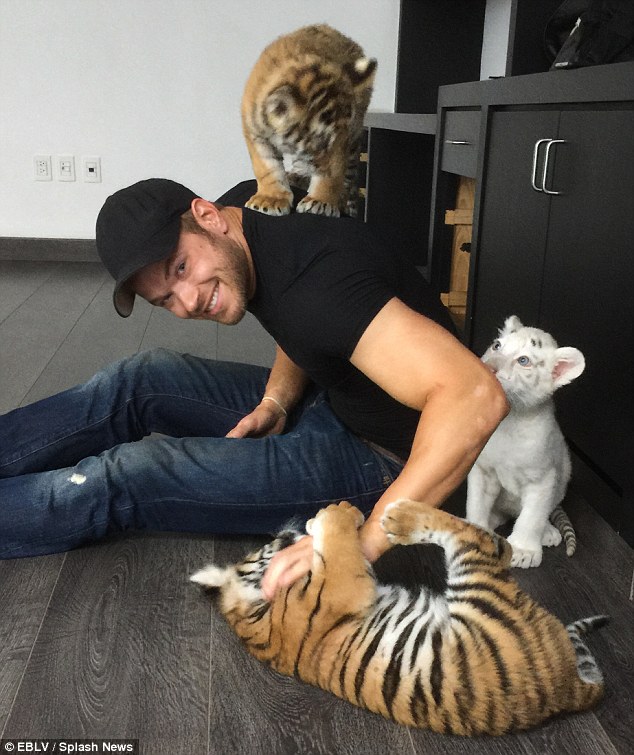
2845026_orig

capture the public’s imagination and devotion. For the devotees of such organizations, the idea of preserving habitat, or subspecies, researching genetics and reintroducing of animals into the wild or the halt of illegal animal trafficking has nothing to do with conservation. Rather, for those devotees, conservation is distilled into one simplistic act of ‘saving’ big cats from being ‘used’ by ‘bad people’.

The facts that these ‘rescued’ animals are kept inside of houses, used to entertain celebrity guests, improperly handled and left intact and able to breed more captive animals are consistently explained away by the ignorant, and often highly indignant phrase ‘But he rescued them from a worse life.

Here’s what those BJWT devotees fail to grasp: He’s helping to create and maintain that worse life from which he’s rescuing his animals.

Of the animals under the care of BJWT there is little to no documentation on where they came from, how they were actually rescued. Even the foundation story of the group changes on a regular basis. Their founder has admitted openly that he buys cubs and cats to ‘rescue them’ from their plights, which means that the breeders of those cats only have to breed more in order to make more money by selling the new cubs to BJWT. It is privately owned, privately funded, and while not ‘open to the public’ celebrities are regularly invited to the grounds–the exact location of which is carefully guarded–where they are allowed to play with animals, handle cubs which are often much too young to be handled, and have their photographs taken with the animals, all in exchange for donations and publicity. Despite that the group insists that most of its animals come from circuses, virtually all of the ‘rescues are incredibly young-too young to ever have been used in a circus-but are perfect for playing with the next round of guests who visit the foundation. Despite that BJWT is, apparently a “sanctuary” in Mexico, it is not GFAS accredited. It can’t be because of his handling of the animals.

Hundreds of thousands of people who follow the foundation on social media fail to see the fundamental failings of a group who treats the big cats in its care the same way that backyard owners treat their own exotic animals. If it is wrong for a woman in Iowa to keep six tigers in her house and allow her children to play with them, it’s also wrong for a wealthy man in Mexico to keep six dozen big cats in his mansion and allow people to play with them.

This is not the face of conservation:

BJWT+GQ

Advocating for animals and conservation means reaching out to, and engaging the public. There are countless ways to do this that do not include allowing the public to handle and pet the wild animals you’re discussing. Advocacy is an argument often used by groups to justify their allowance of humans directly interacting with animals. This is just another red flag to watch out for. If a group is offering you the chance to touch or hold a wild animal in order to teach you about how that wild animal needs to be protected in the wild, then they’re not focused on the plight of the wild animals, but on making money off of you playing with their captive ones.

This new year is bringing new chances to advocate for wild animals in a responsible fashion. We hope that you’ll join the ICARUS group in supporting those groups who utilize hands off conservation in order to protect wild animals everywhere.


Author: Artemis Grey


It’s Not About The Person, It’s About The Animals In Their Care

Hands off conservation is one of the fundamental ethical foundations of the ICARUS team.

It’s something we’ve posted about before, and it’s something we’ll post about again. Every blog post which contains certain ‘celebrity conservationists’ and which criticizes the way they treat their animals gets quite a few comments (not all of which get posted, because while we’re open to differing opinions, we’re not going to entertain baseless poop-slinging) and while some of them agree with us, many argue that for *insert whatever reason* it’s okay for a particular celebrity conservationist to pet/play with/hold/whatever their wild captive animal.

Most of the unpublished comments accuse us of being “jealous” of the celebrity conservationist, of being ignorant as to the fact that they’re “special” and thus can do these things without hurting the animal, or that we’re being paid to attack them, or that the attention they bring to conservation outweighs any stuff that they shouldn’t be doing.

Here’s the point all of these avid defenders are missing: It’s not about the celebrity conservationist. It’s about the animals they’re exploiting.

When we name names in our posts, citing how certain people directly interact with the captive wild animals in their care, or how they allow the public to directly interact with them (and subsequently how they cannot attain GFAS accreditation no matter how awesome they are) people rush to the defense of these (or some of these) celebrity conservationists. People get angry when you call out those whom they idolize. While we have yet to get any death threats, we’ve definitely gotten some, colorful, shall we say, comments, in defense of these celebrity conservationists. What these defenders fail to understand is we aren’t after their idols because they’re awesome and we’re jealous, or we’re getting paid to go after them, or because we’re just mean. We’re naming their names because we’re concerned about the animals in their care.

Our number one focus is the ethical and responsible treatment and care of animals. Most specifically wild, and captive wild animals. Our basis for believing in, and supporting, hands off conservation isn’t that we don’t believe you can have a special bond with a wild animal, or because we don’t have access to captive wild animals, so we don’t think others should, or anything else. Our belief is based in science, concern for the animals, and in existing laws, including the Global Federation of Animal Sanctuaries.

Yes, some of these celebrity conservationists have raised the animals since birth. Yes, they’re experts (self-proclaimed, or with actual degrees) on these animals, and their behavior. Yes, they speak about conservation, and engage the public. None of that, however, gives them the right to treat the animals in their care any differently than they expect the public to treat them. And none of it guarantees that they, or their animals, will not suffer immensely for it in the end.

Let me use myself as an example.

I’ve been riding, training, breeding, foaling-out, showing, and caring for horses for 27 years. Almost three decades. I have more experience than some of those who have served on the Olympic team.

Several years ago, there was a cold born on the farm. I knew his mother, and his father. I personally assisted in his birth. The colt touched me, smelled me and saw me before he even saw his own mother. I raised this foal from birth, worked with him daily, and when he was old enough, began his training. He was a very ‘brain stem’ horse, meaning that he responded to body language, and silent communication more than verbal. I was his boss mare, so to speak, and he was my beta. He submitted to my authority readily, and without any physical domination on my part. I spent hours with this animal every single day.

One day, when he was about three years old, I had him in the crossties for a routine vet appointment. There was another colt in a nearby stall. My guy was fussing, where he was standing in front of us, because he didn’t like that he couldn’t turn around and be involved in what was going on. He was nosey, like most little boys are. I gave him a pat and told him to cut out the complaining. After that, I had approximately three tenths of a second to dodge or otherwise defend myself when the colt threw his hind end into the air, and lashed out with both hind feet.

I was incredibly lucky. His right hind foot hit my right breast, while his left hit my left arm. Less than an inch to one side, and he’d have broken my sternum, bruised or ruptured my heart, torn my descending thoracic aorta or my superior vena cava. Less than an inch the other way, he’d have broken ribs, punctured my lung or ruptured my liver. Farther down, and I’d have received gross damage to my internal organs, and farther up could have broken my neck, caused a depressed skull fracture, torn my lower jaw clean off, or even worse. The fact that I had space behind me, where I could be flung back without absorbing the full force of the kick helped, too. Basically, there was only one or two ways to survive the sort of kick I received, and I was lucky enough to manage one of them.

The really crazy part? That colt wasn’t trying to hurt me. What he did was the equine equivalent of saying ‘Get off my case, lady.’ He was a small, 700 pound herbivore just giving his ‘boss mare’ the brush off. If I had been another horse, I would merely have grunted and bitten his ass to put him in his place. As it was, he got a sound whack, and submitted in apology, and then stood there quietly without further fuss, because he wasn’t being mean, or attacking me in the first place. He was just mouthing off, horse style.

WARNING GRAPHIC PHOTOS taken directly after the incident, then later.

IMG_3185.JPG IMG_3184.JPG

The colt’s left hind foot grazed my elbow, causing my arm to swing back and hit the corner of a stall. I required X-rays to assure nothing was broken.

IMG_3202.JPGMy right breast, just moments after the impact.

IMG_3274.JPG     IMG_3273.JPGDespite scrubbing the wound immediately with disinfectant from the vet, an infection set up, requiring antibiotics.

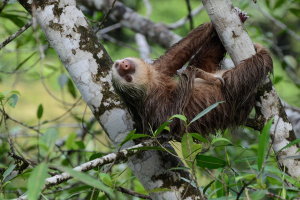
IMG_3313.JPGAfter a week of antibiotics, the infection retreated. But the wound took more than a month to fill in.

IMG_3267.JPG My breast required pain meds, and had to be noted in my records, due to the internal scar tissue created which will show up on future mammograms.

I am a professional, and I knew what I was doing, and I wasn’t doing anything inappropriate. Neither was the colt. He was just being a colt. Almost any owner/trainer of captive wild animals will say the exact same thing about their animals after an incident.

However, there are some major differences between this horse and me, and captive wild animals.

The biggest of those, is that even if I’d been killed, no authorities would have shown up and confiscated the horse, and possibly euthanized him. No news crews would have shown up to discuss the problem of ‘captive horses’ being kept in ‘back yard zoos’. Horses and their owners all over the globe would not fall under fresh scrutiny, and there would be no sudden push for legislation to protect horses from being held in captivity.

If the colt had been a captive lion or tiger or other wild animal, all of those things would have happened, or could have happened. Maybe even worse things would have transpired. All because the animal acted like an animal, and I happened to be too fragile to withstand it.

Private owners are killed or maimed by their captive wild animals on a regular basis. This isn’t something new. Celebrity conservationists and animal trainers are also killed and maimed by their captive wild animals on a regular basis. It’s also nothing new.

Yet hundreds of thousands of members of the public continually try to categorize these incidents into neatly labeled boxes like ‘They were amateurs, and didn’t know what they were doing.’ or ‘They mistreated their animals, and the animals fought back.’ or ‘It was just a freak accident, that no one could have prevented.’ or ‘It was the fault of someone else present, not the the fault of the animal, or its celebrity conservationist.’ when the truth and absolute fact is that none of the incidents would ever have happened if someone was not directly interacting with a captive wild animal.

Here are links to just a small sampling of documented attacks and incidents involving captive wild animals with trainers. Here’s a PDF file compiled by the Human Society documenting hundreds of circus related incidents. It happens in the film industry, with trainers who have ‘perfect safety’ record. Even owners who start out thinking that they’ll be able to communicate with their animals, and be successful interacting with them often learn the truth, sometimes, they’re lucky enough to learn it without dying.

The one, single defining fact shared by these incidents, is the direct interaction between humans and captive wild animals.

This is why ICARUS maintains a strict hands-off approach to conservation. When you directly interact with a captive wild animal, it is not a matter of if something will happen, but when it will happen. And when it does, it will be the animal who suffers. There is no free pass for celebrity conservationists. They run the exact same risks as someone who’s raised and trained animals in their backyards. The only difference is in how the public chooses to justify one, while vilifying the other. For the ICARUS group, however, there is no difference at all. Our focus is the well being of the animals, and therefore we will continue to speak out against direct interaction with captive wild animals for any reason beyond rehabilitation and medical treatment.

As gratifying as it might be to interact with captive wild animals, it simply is not worth the risk of what could happen to those animals if something went wrong.

Author: Artemis Grey

Feature photo credit: Peter Lawson

Sloths & The Pet Trade in America

6360289637_4dff19c33f_b

In the Middle East there are plenty of instagram accounts where the Middle Eastern rich have a crazy array of pets. But they are not alone in this, it’s certainly easy over there but in the US it is just as simple (state dependent). In fact you can also get pretty much any pet that you wish for in the good ole Westernised USA too.

article-2509151-197a3bb900000578-785_470x423

Last year I visited Big Cat Rescue in Florida with my good friend and now co-worker Jessica James of ICARUS. If you get a chance to go you should, they are really doing conservation and animal care the right way. One thing I was shocked to learn on my visit there that there are more tigers living in people’s backyards in Florida than in the wild. How is that even a thing?? If your tiger escapes you don’t even have to notify your neighbours!! People have literally woken up with a stray tiger in their back yards. This is just an example of the craziness of the pet trade in America. A tiger…as a pet…

sloth-sanctuary (1)

So clearly you can have anything from a tiger to a kangeroo to a sloth as a pet. Nearly all of these will have been stolen from the wild for the pet trade (or for Zoo’s – this still happens!) or they come from dubious ‘breeding programs’. I’m sure I’m not alone in thinking that this is not ok. Either these animals are taken directly from the wild for immediate sale or they are implemented in a breeding program straight off the ship. These places are akin to puppy mills where their young will be taken and sold off at the youngest age possible and then bred again. With Sloth babies you can earn a cool $2000-$5000 per Sloth. Looking at you Oregon “sloth sanctuary” by the way. This delightful place has been researching Sloths for 20 years and yet doesn’t have a single scientific paper to it’s name. Suspicious already. Not only that but they have over FOUR HUNDRED Sloths in their care and allow their guests to have Sloth SLEEPOVERS. Sloths are classed as dangerous mammals in zoos and having worked with both wild and captive Sloths for years I can categorically say that this is not a good idea, not just for the animals but also the people who are paying to do it. The ‘sanctuary’ owner is well known for selling Sloths on forums and considering Sloths are not native to Oregon, guess where they get their Sloths from. Yep, the wild. Most of the animals won’t survive the journey and some will die once they reach the shores of the USA. It amazes me that this country was once seen as a land of freedom, but for these animals it will be a new prison from their old jungle homes. This kind of makes my blood boil, especially as this place is perpetuating itself to be a conservation center.

grid-cell-5692-1416922679-21

I also find it confusing that people calling themselves “conservationists” can have a sloth as a pet as well (or other exotic animals). Last year I saw some articles and a Buzzfeed list on these guys. First I was annoyed that my friends baby, Daisy, would not be the first baby to meet a Sloth, but then I thought about it and realised that they have a Sloth… as a pet. They are apparently Sloth conservationists by the way but, again, have a pet Sloth. They also seem to like dressing it up in human clothes and making it wear flower hair clips, super natural right? This one makes me sad more than angry, as lovers of Sloths in the wild they should know better. Unless conservation is actually now about taking animals from their natural habitat? As much as I would love to have a Sloth as a snuggle buddy they would a) hate it b) be miserable and c) THEY’RE WILD ANIMALS NOT A TOY! Most of the people who seem to be writing about having a Sloth as a pet and giving people advice, even more worrying, also seem to have no idea about Sloths in the slightest. I came across this beauty earlier who suggests that Sloths love to play peek-a-boo and have parasites. I just…can’t.

nycticebus_tooth_removal_01

Like Slow Loris’s who have their teeth removed for the pet trade often causing infection and death, Sloths also suffer a similar fate. Usually their claws are removed so they don’t hurt their new owners. SLOTH FACT: Sloth claws are actually BONE. They are basically having their fingers removed so they will make cuddly pets. Remember I mentioned that most of the animals will die when transported from the wild so it’s best to ship more? That death rate is around a 80-90% chance of not making it, all so you can have a cool pet.

1d3e6bd2df588d9abeb26cab02edf9536109a2091aa33ac9bb43c015ef7c459a

Please remember that even if you are buying an exotic animal from a breeder that the original ones will ALWAYS have come from the wild. You are literally supporting animals being stolen from their natural habitat just so you can have a status symbol. Spend your dollars on visiting them where they live and seeing them in the wild and not taking them for your own selfish enjoyment and pride. They may be very cute but that doesn’t give you the right to make them an effective prisoner.

Sarah