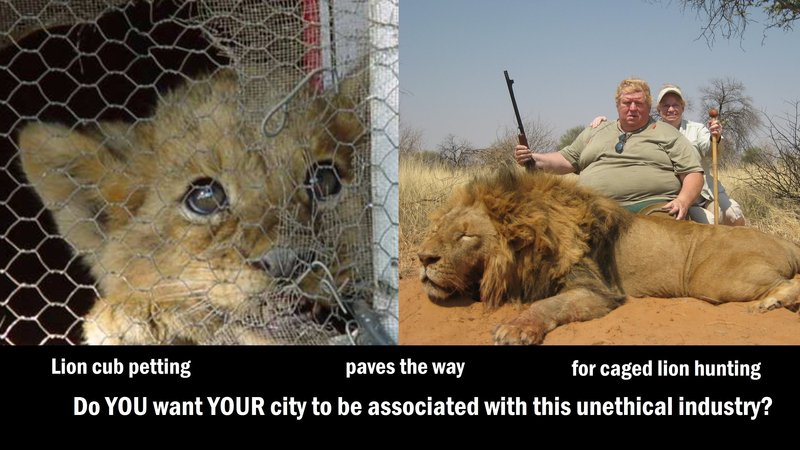
Why The End Will Never Justify The Means When It Comes To Conservation

Conservation is a complex issue, with complex answers, and complex situations, and very rarely can matters within it be distilled into a single, rigid policy. However, the single issue on which there is no room for discussion, is the subject of handling, and directly interacting with captive wild exotic animals. Aside from issuing medical attention or for purposes of rehabilitation, there is no benefit for the animal, in having humans handle or touch it. For the members of team ICARUS, this is nonnegotiable.

It is not, under any circumstances, acceptable for anyone, regardless of their supposed expertise, to play with, or directly handle, or socialize with captive exotic animals. This ‘special bond syndrome’ is most prevalent in big cat species, and is the leading reason so many big cats are privately owned by citizens. Every well-meaning owner believes that they have a special bond with their animals. Tragically, this very often results in injuries or death to the owners, or their acquaintances, and subsequently to the big cats themselves, who are nearly always euthanized after being involved in an attack.

Even more disturbing than the private citizens are the highly publicized ‘self-described animal behaviorists’ (traditionally a true animal behaviorist is someone who has obtained a graduate degree in related fields and has obtained a post-graduate certification) who routinely handle and interact with big cats, claiming that they do so through a special bond. The most easily recognized of these is the so-called ‘Lion Whisperer’ of South Africa. One needs only Google the title to find hundreds of pages, all filled with videos of him cheerfully playing with full grown lions or leopards, as well as spotted hyenas. The Lion Whisperer has been hosted on nearly every major network, all of which focused on his ‘amazing bond’ with the lions and animals of his sanctuary. They show a plethora of clips of him interacting with the lions, napping with them, and fondly dictating the story of each one – nearly all of whom he’s raised from either adolescence or cub-hood. It’s always mentioned that his sole purpose is to ‘bring attention to conservation matters’ and to ‘end the cub-petting industry’. The fundamental problem here, is that he’s participating in cub-petting with adult animals.

Conservation is not, and never will be, aided in any way by publicizing the act of playing with an animal. If one goes to Youtube and searches for the Lion Whisperer, they’ll be greeted with pages and pages of him playing with the lions. Where, in all of that dream-worthy special bondness is any conservation of remaining wild lions? All of the animals featured in the programs live on one of his reserves, or in his sanctuaries. Many of those have actually been imported from other places, and were not rescued, or rehabilitated. Not one animal, in the history of his sanctuaries, has ever been released into the wild. They cannot be released because they are thoroughly habituated to human interaction. A habituation that is continually reinforced through daily interactions. The fact that he has, indeed, rescued many animals from deplorable conditions, is completely overlooked by the fans who fixate on his highly publicized videos of playing with the animals.

The Lion Whisperer has thousands of loyal fans and followers who will defend him and his actions vehemently, but for the ICARUS team, actions speak louder than words. Despite all of his claims of being focused on conservation, and the fact that he has actually rescued animals, he also maintains private reserves and sanctuaries, he plays and interacts with the animals in his care, and he trains them for use in movies that he writes and produces. And those actions keep his sanctuary from being GFAS accredited. In this case, the good he does, is vastly overshadowed by the fantastical persona of Lion Whisperer who plays with lions, other big cats and wild animals. It is that persona that the public worships.

If he were a civilian who owned ten big cats and made movies with them, much of the public would consider him to be part of the problem with animal exploitation. However, they embrace the Lion Whisperer and his ‘amazing bond’ with his animals, and seem to find nothing wrong with his behavior because he’s ‘doing it for conservation’. But how many people actually associate the term ‘conservation’ with the term Lion Whisperer? The title Lion Whisperer is synonymous with the image of a man playing with a pride of lions, not with the ongoing plight of Africa’s wild animal population.

You cannot teach people that wild animals are not pets by producing movies wherein you treat wild animals like pets. You cannot teach people that wild animals should not be bred in captivity, or held in captivity, while you stroll through a created pride of captive-bred lions. There are no ‘buts’ in the terms of conservation. Experts do not have the luxury of doing things that they are actively trying to ban the public from doing. If cub-petting feeds canned hunting, and harms big cat conservation, you cannot claim that producing multiple movies that highlight your own adult-petting aids in conservation.

This is why the members of team ICARUS have a strict policy against cub-petting and direct interaction with wild exotic animals, and why we look to the standards for GFAS as a guidline. What Dade City Wild Things is doing by allowing the public to swim with tiger cubs, is no different from the Lion Whisperer swimming with adult lions. In both cases, humans are interacting with captive wild exotic animals not because it benefits the animals, but because it makes the humans feel special.

In the words of Jane Goodall, “What you do makes a difference, and you have to decide what kind of difference you want to make.”

The question is, do you want to create a world where it’s acceptable for certain people to exploit animals in order to bring attention to animal exploitation? Or do you want to create a world wherein there is no animal exploitation at all?

The ICARUS team hopes that you will choose to become the latter. Don’t be dazzled by those who make a name for themselves by using the animals they should be caring for. Don’t allow them to convince you that it’s acceptable for them to treat animals in a way that no one else should, simply because they’re special. Remember, the animals they claim to have a special bond with have been hand-raised from birth, no differently than the cubs in cub-petting schemes. They’ve been conditioned to accept human interaction. The only difference is that while the cub-petting schemes sell their cats into the canned hunting industry, people like the Lion Whisperer simply continue to make money off their adult animals.

Author: Artemis Grey
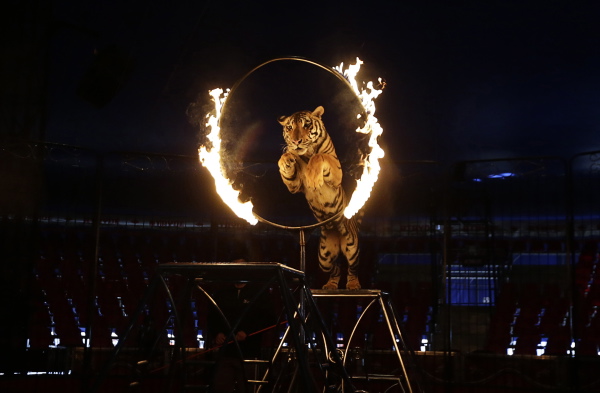
The Greatest Act On Earth

With the events currently taking place at the Missouri State Fair in regard to the tigers being exhibited there, the ICARUS team felt that it would be a good idea to address a few things relating to the matter. During this investigation there have been varying opinions as to the condition and treatment of the tigers involved. The USDA has received hundreds (at minimum, full numbers have not been disclosed) of complaints about the tigers, but at the same time the trainers of the big cats claim they are well cared for, and numerous attendees of the show, have claimed that the cats look fine, and seem to love their handlers. So, how does a member of the public decide whether or not an exotic animal being used in a show like this is, or is not, suffering from abuse or mistreatment?

Firstly, don’t be afraid to do research. Google can be a very good source of information, so long as you are careful to ‘check your sources’. Don’t take one webpage and use it singularly, check out a number of pages or results. If you find numerous pages stating the same problems, then likely, there are legitimate issues. The best thing to do if you have questions in regard to a certain group, or animal’s condition is to take a few moments on your smart phone to research the subject. This could be as simple as a google image search for ‘healthy elephant’ You can then look at the resulting photographs, while looking at the elephant standing in front of you. It will, at the least, give you a basic idea of whether whatever you’re seeing that seems strange is, in fact strange, or if you’re finding dozens of different animals which all look similar. In the same vein, it’s often fairly easy to learn whether or not specific shows or animal trainers have a history of violations or issues by simply Googling their name. Likewise, if the questionable trainer or owners claim to be aiding with conservation by owning the animals, a quick Google search can counter that. Many times trainers will claim to be aiding in the conservation of white tigers, or ligers when, in fact, there has never been a wild population of white tigers, or ligers. The truth is that white tigers are a genetic mutation achieved through extreme inbreeding (and for every white tiger you see, dozens of normal colored tiger cubs, or grossly deformed white tiger cubs have been destroyed) and ligers are created by the forced crossbreeding of a lion and a tiger, which, again, often results in genetic maladies and deformities, and a very shortened lifespan for the cats.

Do not look at the subject of captive wild animal welfare in terms of ‘I’m just a member of the public and they’re the experts’. It’s not the mindset you’d have if you were going to a car dealership to buy a car, is it? You would educate yourself on the car you wanted and its features. It’s not the mindset you would have when buying a house, or booking a vacation, either. Instead, you’d research the housing market or the area you’re planning to go on vacation. Most people aren’t professionals at everything they do. You don’t need to have decades of experience in order to have a basic understanding of situations. So if you feel that something is amiss in a situation involving captive exotic animals, but the owners/trainers assure you that everything is fine, don’t feel like you have no choice but to accept their answers.

Remember this very important fact when it comes to traveling shows that involve captive exotic animals: The trainers for these shows are actors. They might have a experience with the animals involved, and they might have raised those animals from adolescence, but they are, first and foremost, actors. And the show is just that. A show. Their number one priority is to make money from people like you who are paying to watch, just as a television show’s number on priority is viewership. Keep in mind the times you’ve seen a movie wherein the onscreen chemistry between two actors was electric, but long after the blockbuster was done with, the public discovered that in real life the two actors absolutely hated each other, and nothing of the ‘electric chemistry’ that seemed to exist on screen, actually existed at all. It was simply an illusion created by two very talented actors. So the truth is, these trainers might not care about the animals in their show at all. Maybe they do, but it’s completely possible that they are simply putting on an act.

Another vital thing to consider is the fact that the animals in these shows do not have a choice in where they are and what’s being done to them. Many times, the public sees these animals ‘showing affection’ to their handlers, and they take those actions at face value. What bears remembering is the fact that from the time these animals enter the ‘arena’ for a show, to the time they exit it, they are performing and following commands from their trainers. Therefore, any ‘show of affection’ is likely nothing more than yet one more subtle trick performed for the audience. People often find such a suggestion offensive, but when one objectively looks at the fact that the animals are wholly dependent on their trainers for food, shelter and any other need, and that they’ve been trained to respond to commands – sometimes through violence – then it seems much more reasonable to think that their ‘affection’ might simply be trained response. If a human child is kidnapped and raised by someone other than their parents, they’re still considered prisoners by the public. They often remain with their abusers, even if they’re suffering, and will lie to authorities and tell them that their abusers are kind and caring. We understand innately that in the case of human children, this is a direct result of the abuse they’ve suffered during their captivity, but for some reason, much of the public does not make the same connection in the case of captive wild animals.

But why should you believe groups like ICARUS instead of the trainers and exhibitors of these captive exotic animals? What makes us qualified to assert that the animals in these situations might be suffering? The truth is, only you can decide who to believe. All we can do is present you with scientific facts.

However, some things to consider in situations like the one out at the Missouri State Fair, or any similar situation include:

Is the person, or persons in charge of the animals in question using the animals to make money?

Does their business depend directly on exhibiting the animals?

If an institution calls itself a sanctuary, do they allow the public to have direct contact with the animals, holding and playing with them in exchange for either monetary donation, or publicity?

Does the person or persons in charge of the animals claim that they are breeding and exhibiting them to ‘promote conservation’?

Does the person or persons in charge of the animals claim to have a special bond with them? Do they claim that the animals perform because they want to? And that the animals enjoy performing?

In the case of groups who are opposed to captive exotic animals, do the members act openly hostile?

Do they engage in violence, and reckless acts, like opening cages and setting animals free?

Do they promote violence in general?

If the answer to any of these questions is Yes, then there is cause for concern. Justifying the exploitation of captive exotic animals is a clear sign that those doing the exploiting do not feel like exploitation is wrong if the ‘right’ people are doing it. And in contrast, if those who do not believe in animal exploitation endorse or call for violence agains their opponents, then they are more interested in making a political statement than they are in the welfare of the animals.

Responsible animal advocates, like the members of team ICARUS, will calmly state why they are opposed to the exploitation of animals, and will offer supporting facts. They will be willing to work with others to solve the problem, and will never suggest that violence or slandering is the answer. We might vehemently disagree with the actions of trainers and private owners, but we will never condone harming or otherwise attacking those persons. The way to create change is through outreach and the spread of information. We don’t want the public to agree with us because they believe what we’re saying, we want them to believe in us and what we’re doing because it’s the right thing for the animals.

There is no function for the public performance of a captive exotic animal other than for human entertainment. There is no need for them to ‘earn their keep’ because there is no reason for them to be ‘kept’ at all. The only thing that requires a wild animal to be held captive is for purposes of exploitation. This is why the ICARUS team strongly disagrees with the practice of allowing the public to have direct contact with cubs or adult animals – even by well meaning sanctuaries. Such activities cross the line into exploitation.

We understand the need for sanctuaries to support themselves, and public tours which do not involve touching the animals are a great way to do that. There are many ways for people to support the protection of captive wild animals, that doesn’t involve exploiting them, you just have to look. In fact, GFAS accredited sanctuaries must abide by strict regulations in regard to how their animals are kept or handled.

For more information about captive exotic animal and how to protect them, check out the Facebook page of ICARUS for links to reputable sanctuaries and rescue organization. And remember you have the power to educate yourself, make informed decisions, and help animals in need.

Author: Artemis Grey

With Great Celebrity, Comes Great Power

Following yesterday’s post in regard to making mistakes, and the fact that everyone makes them, it’s how we learn from them that matters I’m going to share an open letter written by our founder, Jessica Janson. It’s been published several locations, but unfortunately, the number of celebrities partaking in – and then posting on social media about – cub-petting has only continued to grow, despite that the cubs used in these situations outgrow their usefulness within weeks, and are subsequently sold into the captive breeding, or canned hunting industry.

246EABDE00000578-0-image-a-106_1420565862448

Beyonce and husband Jay Z in Phuket

So much damage to animals committed in only a few minutes of media. As long as celebrities with millions of fans continue to support, and subsequently advertise, the pay-to-play game, it will remain an uphill battle to counteract. But then, the ICARUS crew happens to be accustomed to hard work, so we’re prepared for the task! Please take a moment to follow the link and read Jessica’s open letter and then share it, to help us in our climb to conquer the mountain of pay-to-play schemes!

http://www.examiner.com/article/open-letter-to-beyonce

Author: Jessica James

The Innocence of Ignorance

One of the main things that the members of the ICARUS project want to counter, and eventually eradicate, is the practice of handling and playing with wild animals of all kinds. We, as a group, do not endorse private ownership of wild animals, be they native or exotic, dangerous, or benign. It is a complex subject, but the fundamental keystone of the matter, is that humans should not in any way exploit wild animals. Exploitation of wild animals includes owning one as a pet, paying for the opportunity to hold/play with/swim with/take photographs with an adolescent or adult animal, riding elephants, or owning and utilizing a wild animal for profit, or hunting them for sport or pleasure.

Most of us have either dreamed of getting the chance to directly interact with a wild animal, or have actually done so. As children, there was nothing more magical than the circus, and who hasn’t gone to the zoo? Movies and books only feed this primal desire that humans have to somehow commune with wild animals. The media has always been littered with imagery displaying human/wild animal interactions. But this is an instance in which reality is starkly different from fantasy. Captive wild animals will never be wild the way they were born to be, nor will they ever be truly domesticated. Rather, they exist in a dangerous limbo between the two. The list of how captivity adversely affects wild animals is extensive, and not something to be addressed in this particular post.

Instead, what we want to focus on here, is the fact that directly interacting with captive wild animals is something that has become so ubiquitous that few of us have gotten through life without participating in it in some fashion. The ICARUS team wants to change the way people perceive this problem, and teach them to recognize such interactions as the animal abuse that it is. But that doesn’t mean we condemn anyone who’s ever attended a circus, or held a big cat cub. People make mistakes. That’s how we learn. All of us have made them in the past, but now that we’ve learned better, we try to do better. Mistakes made in innocence can be forgiven. But learning from them is important, because there is a distinct difference between making an innocent mistake, and making an informed excuse.

People who do not understand the depth of suffering that goes on behind the scenes of cub-petting situations, or circuses, or road side attractions cannot be expected to know that they’re participating in a form of animal abuse. But people who have been exposed to the scientific facts behind these situations, and still choose to endorse certain institutions involved with them, are no longer innocent, they are actively supporting the problem.

The goal of the ICARUS team is to teach the public about the differences between beneficial sanctuaries, and damaging ones, but we never want those who follow us to feel guilty or shamed for having visited a harmful institution, or having participated in things like cub-petting or elephant rides. Rather, we want them to be inspired to act in support of animal welfare. There is no debt to repay for making an innocent mistake, but they can now help the animals still suffering by supporting groups like ICARUS who are fighting to remove animals from abusive situations.

A term we like to use in regard to wildlife in general is ‘If you love us, leave us wild.’

It’s simply the best way to protect the animals. Wildlife should never be owned or handled by members of the public, and no reputable sanctuary or rescue institution will participate in activities that allow the public to directly interact their wildlife. It’s vitally important that our children have the opportunity to appreciate wildlife, and embrace the very wildness which makes the animals so special, but there are ways of doing it without supporting things that harm them. GFAS (Global Federation Of Animal Sanctuaries) accredited sanctuaries are the standard to which we refer when we say “accredited sanctuary” and the GFAS guidelines are that to which we prescribe.

The members of team ICARUS are excited to engage the public, young and old, in helping to keep wildlife wild, contact us on our Facebook page, or through Twitter to find out how you can be a part of the movement.

Author: Artemis Grey

Don’t Wait For A Better Tomorrow When You Can Create A Better Today

For many the future is, well, the future. It’s something that will happen eventually. Something they’ll face when tomorrow gets here. Something they don’t want to waste today worrying about. For others, the future is something they strive to shape and change, something that they spend all of their todays working on, so that they can make a better tomorrow.

The ICARUS team sees the future slightly differently. We see the future the way animals see it. We see the future as now.

For the hundreds of thousands of captive exotic animals, and suffering native wildlife across the globe, the word ‘future’ is meaningless. Animals do not concern themselves about what might happen, about how someone might help them, about how laws might change in order to protect them. The concept of a future, is a purely human one. For animals, there is only now. Thus, the ICARUS team looks at conservation in the terms of ‘What can I do now, this very instant, in the name of animals and conservation?’

Don’t be mistaken, we plan for the future. The ICARUS team sees the long term changes we want to make, how we want to effectuate the evolution of conservation until the evolution itself negates the need for conservation to exist at all, and we have plans for how to aid in that evolution. But every movement, every step, begins with the flexing of minute muscles, which happens now, to drive and perpetuate the larger motion that follows.

In conservation terms, that means little actions done today are every bit as vital as the huge events which might occur as a result later. By now, you’ve heard of Cecil the lion, and the tragedy of his death. If you’ve shared a post about him, you’ve done something to aid conservation. Don’t shrug and say ‘It was just a post I shared.’ In our world of social media and Internet activity, sharing one post can potentially  create an interaction with thousands of people. If you saw a post about someone defending trophy hunters, or worse, suggesting that canned hunting is acceptable, and could somehow ‘fix’ the problem of trophy hunting, and you took a few minutes to calmly and concisely rebut that post, then you’ve done something to aid conservation.

Think of the future the way an animal does. Think of it as now. Help a turtle cross the road. It takes a few minutes out of your life, but those few minutes might be the difference between a lifespan of seventy-five years or seventy-five seconds for the turtle. If you see a garden spider in your window, choose to leave it alone. Simply not removing it and its web means the difference between survival and death for the garden spider, and you didn’t have to do anything except allow it to share the outside of your window. Never underestimate how much one small act might have an immense effect on the world around you.

A prime example of this is the recent phenomenon of celebrities taking selfies with captive big cat cubs, or even adult big cats, and then posting them to their Instagram and Facebook accounts. It’s takes little more than a few seconds to do this, yet the ramifications are exponential. With millions of fans around the world, the celebrities are setting the precedent that wild animals are a commodity, an accessory to be flaunted, a toy to be played with and coddled, photographed and subsequently forgotten about. The truth is that fully 100% of the big cat cubs you see in these celebrity selfies will live a life of caged captivity, a life often grossly shortened by either malnutrition, disease, or the fact that once the cubs make it to adulthood, they’ll be sold into the canned hunting industry, or used as breeders to produce more cubs for more selfies with celebrities and tourists for however long their bodies can hold out. And then they’ll die. A disposable commodity no different from last year’s had-to-have purse style. It is an irrefutable truth, despite that the self-proclaimed sanctuaries who allow this behavior argue against it.

It’s the nature of social media to allow for this massive spread of ideas and information, and the grand part is that everyone has the capacity for achieving it. One small act began the popularity of these ‘big cat selfies’ and small acts can help to counter it. To this end, the Tiger Selfie app was developed. It’s just $0.99 at the App Store, and 50% of profits from the sales go to Tiger Sanctuaries in the U.S. many of whom were rescued from ‘pay-to-play’ schemes.

Simply buy the app, and use it to create your own ‘big cat selfie’. Then share it on Facebook, or Twitter, and help spread understanding about how taking selfies with real big cats doesn’t actually help conservation, but rather feeds the underworld of captive big cat breeding, and subsequently canned hunting and other abusive situations.

It only takes a few minutes out of your day, but it can make a difference. It’s something small that you can do now. And now is the only thing that exists for the animals who are suffering across the globe. Don’t wait for a better tomorrow when you can create a better today. 

Author: Artemis Grey

Welcome to The International Consortium For Animal-welfare United In Stewardship – Project ICARUS. The Future of Conservation Starts In The Present.

One of the greatest travesties of the conservation movement is the fact that a large portion of those involved are actually failing in their endeavors. Some of the most acclaimed rescue centers provide opportunities, to select members of the public, to play with and hold big cat cubs – something that in itself feeds the vicious cycle of captive breeding of big cats to be used in pay-to-play exploitation schemes. Videos of elephants dancing on command gain thousands of shares across social media by animals lovers who do not understand the abuse those elephants endure off camera. Radical reality shows such as Whale Wars gather thousands of viewers, yet convey no digestible information to the public on how to affect the change needed in order to stop whale hunting. Actions such as these have twisted the public’s understanding of what true conservation is all about. ICARUS wants to change that. 

In addition to going to the leading animal conservatories, and conservation centers, the ICARUS team will also visit and study the worst conservation centers, and rescue centers. By doing this the team will experience firsthand not only what works and why it works, but also the parts of the system which are broken, and how those continue to avoid taking responsibility for those failings. The ICARUS team will travel to different countries, visiting these centers and gathering information that will then be utilized to establish an infrastructure for dealing with native wildlife and exotic foreign animal conservation within the United States as well as being shared with other countries. Only through international communication can we globally change the ongoing conservation crisis that is present in every country in the known world, to a greater, or lesser extent.

The struggles of both native wildlife conservation are largely seen by the American public as something that happens in other countries. Places like the Tiger Temple, or the Indian Elephant tourist trade make the news, and while disturbing, the plights of the animals remains safe ‘over there’. Few Americans realize that for first responders, the chance of encountering captive exotic animals while aiding the public is an everyday possibility. With an estimated 10,000-15,000 captive big cats and an estimated 3,000 captive great apes, in the United States, the risk of first responders facing them while serving the community is higher than ever before.

The estimated number of private big cat ownership varies widely because there is little to no oversight. Laws change by state, and papers are easily forged Many times the existence of privately owned animals remains unknown until they’re discovered by first responders, or escape and are subsequently seen. Despite recent widely-reported events, such as those in Ohio, Wisconsin, and Oklahoma, the majority of the public does not realize how many captive native wildlife and captive wild exotic animals reside within the U.S. Nor do they understand that virtually every zoo participates, to a greater, or lesser degree in the practice of canned hunting by quietly selling overflow animals to private brokers who then resell the animals to canned hunting outfits right here on American soil. The devastating recent events surrounding the death of Cecil the lion have drawn the eye of the world toward international conservation, and there has never been a better time to make forward steps in creating a global network to help prevent similar tragedies form happening in the future.

In the last century alone the world has lost 70% of the African Lion population. Some subspecies of lion have as few as 250 members left in their gene pool, which means that unless fully 75% of those 250 members is save, there will not be enough animals to grow their population back to a sustainable level. Cecil’s loss has become a world-wide incident, but an average of two lions die every day in South Africa alone. The numbers of lions killed within the United States cannot even be estimated because while huntings lions in Africa is a known sport, the world of canned hunting on U.S. soil remains an insidious subculture, hidden from the public eye, and government regulation.

The ICARUS team has already begun to line up a travel itinerary for conservation centers and sanctuaries starting in South Africa with Panthera Africa and The Jaguar Rescue Center in Costa Rica. Both centers are very excited to be working with the ICARUS team and are eager to share their experiences with us. However, by helping the ICARUS team in their research, these centers will be giving up time and housing dedicated to volunteers, so in order to work with these centers without burdening them, ICARUS must be able to compensate them for their aid in our project. Their bottom lines benefit the animals first, and thus avoiding infringement of those bottom lines is of paramount importance to ICARUS.

Project ICARUS will help to usher in a new era in native wildlife and foreign exotic animal conservation. By showing the American public that these conservation issues are not merely the problems of ‘other places’ but are, instead, also a problem in our own country, then we can provide the public with a nexus of information regarding what can be done to effectively change the situation of native wildlife foreign exotic animals in our country, ICARUS will provide pathways to meaningful change in the way that such animals are guarded from exploitation.

ICARUS is the next logical step in the evolution of conservation. Humans are the primary cause of wildlife decimation, but humanity is the only global solution. We hope you will join us in our journey toward a better future.

Authors: Jessica James, Artemis Grey, Sarah Kennedy, Margaret Morales