Don’t get me wrong I LOVE Costa Rica and it is one of the most beautiful places in the world, but something dodgy is going on. Costa Rica is portrayed as being a green, safe haven for wildlife. But what most people don’t seem to realise is that alongside this protect the world image they are also the number one user of pesticides in the world. It’s not a small number either. Costa Rica use over 50kg of pesticides per ha in comparison to number two on the list, Colombia, who only use 16.7kg per ha. That’s a BIG difference.
Out of all of the producers here in Costa Rica, Chiquita International are probably the worst. Supposedly they are environmentally friendly on 100% of their farms according to The Rainforest Alliance. It seems The Rainforest Alliance must have been high on the fumes from the pesticides they use (or the smell of thousands of dollars) to have given them this status. A dark history has plagued Chiquita International and for good reason. One of their most famous evils was genuinely funding terrorism in Colombia, no I’m being serious, this actually happened. They were even fined $25 million by the US government for doing this and sued by 4000 Colombians whose relatives had been straight up murdered. How is this company even around still let alone one of the main producers in Costa Rica?!
The three producers; Dole, Del Monte and Chiquita have been sued over and over again. Remember me mentioning about the pesticides making their workers infertile? Dole was one such company famously sued for this and ended up paying some of the workers in compensation. Chiquita have been constantly accused of violating it’s workers basic rights and endangering them (also don’t forget the actual mass murder) and just last month a lawsuit has been filed against them for polluting local water sources and then COVERING IT UP.
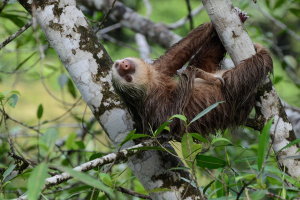
It’s not just the human populace that this is effecting, the animal population is also suffering. Fish are constantly seen floating upside down in droves when it rains and the pesticides flow from the plantations into Costa Rica’s natural water sources. Crocodiles in the local areas have also been noted as being in poor health compared to other areas. To utilise all of that land for banana’s and other fruits also means chopping down a lot of pristine rainforest – not good for the planet or the animals that live there. That brings me round to Sloths (of course), I have seen multiple sloth babies with varying degrees of deformities. Although full research has not been completed on this it’s not a big jump from crop dusting banana plantations and the surrounding area to sloths eating the leaves with pesticides on to babies being born with genetic deformities. It doesn’t take a scientist to work out the correlation. In fact a study last year showed that wild sloths in the area had pesticide residue embedded on their hair, nails, teeth and skin. How does a country that perpetuates itself as being green and a haven for wildlife allow this to happen? Unfortunately a different kind of green $$$ is always more important.
All of this makes me rather sad, Costa Rica is such a wonderful country. It seems that just because all of this isn’t happening in a Western Country no one really seems to give a crap. Out of mind out of sight eh? Well let’s put it another way; the banana’s that YOU are eating from these companies are not only destroying natural habitats, violating people’s basic human rights, polluting water sources and making animals ill are also pumping tons of poison into those yummy banana’s that you eat everyday. Those banana’s are covered in pesticides before they start growing and are then effectively fumigated in the heaviest toxins while they grow for weeks in pesticide bags. How are you feeling about that banana now? To put this into even better perspective for you – Costa Rica isn’t the richest nation in the world, sometimes a truck breaks down full of bananas and they are left by the roadside while it gets fixed. Despite the offer of free food, even the poorest Costa Rican’s will not eat banana’s grown by Dole, Del Monte and Chiquita. They would rather starve than put that poison in their stomachs. And that’s food for thought.
There is a lot going on with the ICARUS group right now. Some of us are in the field working on both ICARUS stuff, and other conservation projects, others are working on contacts and financial backers, while others are getting ready to head into the field for research…. and one of us is getting ready to go camping on vacation… *crosses fingers nothing goes amiss between now an then*
But the one thing that all of us share, no matter how far apart we are, or what we happen to be doing, is that we all live our lives as conservationists. You don’t need to stand on street corners with picket signs in order to live as a conservationist – though, honestly, sometimes standing on street corners with picket signs is completely warranted and a good way (if done calmly and concisely) to help spread awareness.
However, you don’t need to do that, in order to spread conservation awareness. All you need to do is to act and think like a conservationist. Signing and sharing petitions can help, but the truth is that many petitions have little impact on matters of conservation. Hug conglomerates have entire divisions devoted to getting around those petitions, and unless there is proof of violations of law, simply petitioning them to do something differently, will not actually force them to change. However, if you see an individual harming the environment, you can politely and concisely say something to them about it, and discuss what they could do differently.
This could be in regard to anything at all that effects the world around us or the animals in it. If a friend has found a baby animal and decided to try and raise it as a pet, let them know how damaging that is to the animal if they aren’t a professionally trained rehabilitator. The fact that they’re your friend should make it easier to talk to them, rather than harder. If you see someone throwing trash down, don’t simply shake your head and pick it up. Call their attention to the fact that you saw them do it. Yes, they might respond sarcastically, or tell you to mind your own business, but what you have to remember is that anything which hurts your environment, and the world you live in is your business. The person throwing trash out and walking away isn’t thinking in terms of the fact that that trash is going to be someone else’s problem for anywhere from a few months to a few thousand years, because it’s not going to just vaporize the moment it hits the ground.
Conservation is a mindset and way of life. It means speaking out – respectfully, but passionately – whenever you’re given the opportunity to spread awareness about something. It means seeing yourself as the voice of the animals and planet, even though it might be difficult. The little actions are every bit as important as the larger ones. If you confront someone about throwing out garbage, and then pick it up, and a child witness this, you are influencing that child – anyone, really – who watches the interaction. It is easy to say you are a conservationist, but it is much more difficult to live as one, because it means you must be conscientious of the world around you.
That said, acting conservatively does not mean you can’t go out and have fun, it just means you need to think about the things most people never spare a thought for. Heading to a local high school football game? If they happen to be one of the shockingly many teams with a live big cat (or other exotic animal) on the sidelines as a mascot, reconsider going to the game. Or attend, but also write a letter to the school board, or local representatives explaining why having a live mascot like that is animal cruelty, and animal exploitation. While you’re at the game, if people around you are exclaiming how awesome it is for the kids to have a live mascot, speak up, and explain that it’s not awesome for the animal at all. You will likely meet with argument, but you don’t have to agree with it. The very fact that you speak out will influence people, even if it doesn’t seem like it at the time. Children, in particular, are sponges for information. Even the child of someone who believes that the live mascot is a great thing, might hear your opposition to it, and in our world of technology, go home and research conservation.
Remember, you cannot know something until you learn it, and you cannot learn until someone teaches you. It’s up to all of us to spread our knowledge to others. The information might lay fallow within the minds of some, but in others, it will grow into a vast forest of understanding, and continue to influence them, and subsequently whoever they spread that understanding to, for the rest of their lives.
So as we go about our lives, researching subjects in the field, making contacts, or enjoying nature, remember that conservation is not a passive word. It is an active, growing and evolving one, and we all are responsible for feeding it, and promoting that growth and evolution.
Featured photo is from my last trip west, which included Yellowstone, and Hebgen Lake. Yellowstone was a unique conglomeration of avid conservationists, and completely opposite and grossly ignorant tourists, who often had to be stopped from doing things like wondering off trail, or trying to touch the bison or shoo them off the road. Lots of information was offered during that trip…
I had other photos but WordPress wouldn’t show them for some reason.
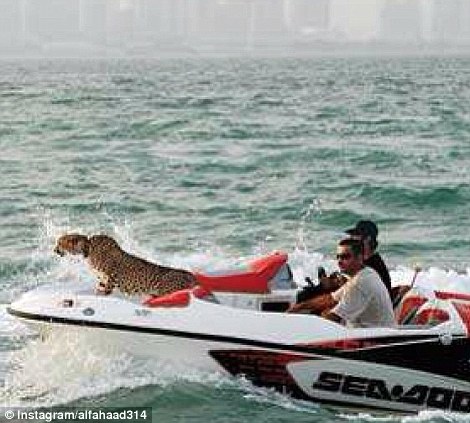
In the Middle East there are plenty of instagram accounts where the Middle Eastern rich have a crazy array of pets. But they are not alone in this, it’s certainly easy over there but in the US it is just as simple (state dependent). In fact you can also get pretty much any pet that you wish for in the good ole Westernised USA too.
Last year I visited Big Cat Rescue in Florida with my good friend and now co-worker Jessica James of ICARUS. If you get a chance to go you should, they are really doing conservation and animal care the right way. One thing I was shocked to learn on my visit there that there are more tigers living in people’s backyards in Florida than in the wild. How is that even a thing?? If your tiger escapes you don’t even have to notify your neighbours!! People have literally woken up with a stray tiger in their back yards. This is just an example of the craziness of the pet trade in America. A tiger…as a pet…
So clearly you can have anything from a tiger to a kangeroo to a sloth as a pet. Nearly all of these will have been stolen from the wild for the pet trade (or for Zoo’s – this still happens!) or they come from dubious ‘breeding programs’. I’m sure I’m not alone in thinking that this is not ok. Either these animals are taken directly from the wild for immediate sale or they are implemented in a breeding program straight off the ship. These places are akin to puppy mills where their young will be taken and sold off at the youngest age possible and then bred again. With Sloth babies you can earn a cool $2000-$5000 per Sloth. Looking at you Oregon “sloth sanctuary” by the way. This delightful place has been researching Sloths for 20 years and yet doesn’t have a single scientific paper to it’s name. Suspicious already. Not only that but they have over FOUR HUNDRED Sloths in their care and allow their guests to have Sloth SLEEPOVERS. Sloths are classed as dangerous mammals in zoos and having worked with both wild and captive Sloths for years I can categorically say that this is not a good idea, not just for the animals but also the people who are paying to do it. The ‘sanctuary’ owner is well known for selling Sloths on forums and considering Sloths are not native to Oregon, guess where they get their Sloths from. Yep, the wild. Most of the animals won’t survive the journey and some will die once they reach the shores of the USA. It amazes me that this country was once seen as a land of freedom, but for these animals it will be a new prison from their old jungle homes. This kind of makes my blood boil, especially as this place is perpetuating itself to be a conservation center.
I also find it confusing that people calling themselves “conservationists” can have a sloth as a pet as well (or other exotic animals). Last year I saw some articles and a Buzzfeed list on these guys. First I was annoyed that my friends baby, Daisy, would not be the first baby to meet a Sloth, but then I thought about it and realised that they have a Sloth… as a pet. They are apparently Sloth conservationists by the way but, again, have a pet Sloth. They also seem to like dressing it up in human clothes and making it wear flower hair clips, super natural right? This one makes me sad more than angry, as lovers of Sloths in the wild they should know better. Unless conservation is actually now about taking animals from their natural habitat? As much as I would love to have a Sloth as a snuggle buddy they would a) hate it b) be miserable and c) THEY’RE WILD ANIMALS NOT A TOY! Most of the people who seem to be writing about having a Sloth as a pet and giving people advice, even more worrying, also seem to have no idea about Sloths in the slightest. I came across this beauty earlier who suggests that Sloths love to play peek-a-boo and have parasites. I just…can’t.
Like Slow Loris’s who have their teeth removed for the pet trade often causing infection and death, Sloths also suffer a similar fate. Usually their claws are removed so they don’t hurt their new owners. SLOTH FACT: Sloth claws are actually BONE. They are basically having their fingers removed so they will make cuddly pets. Remember I mentioned that most of the animals will die when transported from the wild so it’s best to ship more? That death rate is around a 80-90% chance of not making it, all so you can have a cool pet.
Please remember that even if you are buying an exotic animal from a breeder that the original ones will ALWAYS have come from the wild. You are literally supporting animals being stolen from their natural habitat just so you can have a status symbol. Spend your dollars on visiting them where they live and seeing them in the wild and not taking them for your own selfish enjoyment and pride. They may be very cute but that doesn’t give you the right to make them an effective prisoner.
I’m sure a lot of you have now seen the movie ‘Blackfish’. A film which documented the life of whales in captivity at SeaWorld and other marine parks. This film really has done a lot to publicize and educate the general public about how wrong, inhumane and cruel it is to keep these animals in such awful conditions. Before that however there was a little film called ‘The Cove’ (it even won an Oscar). However this film has not received the publicity nor the views that it deserves because people cannot bring themselves to watch it. I myself had to force myself to sit down and watch it, not because I necessarily wanted to, I knew that it would be awful to watch, but because I knew I needed to know the truth. I have always loved dolphins, I think there is a huge global love for them. However being that person that cries the most when an animal dies in a film (30 whole minutes when the dog dies in ‘I am Legend’) I knew it would be awful, and it was, but this is not just a story – this is real life.
I can understand why people cannot bring themselves to watch it, it’s an honestly heartbreaking documentary, but underneath the horror there is a smart, educational and yes, even funny sometimes, film. Today marks the day when the dolphin murdering, and it can be called nothing else but murder, begins in Japan for yet another unnecessary year. So to honor those poor unfortunate animals that will be killed in their thousands again I wanted to write this for them and for all of you who want to know the facts.
Dolphin killing in The Faroe Islands
Where does it happen:
I would like to start by saying that this dolphin hunt does not just start and end in Japan. This is still happening all over the world; in the Faroe Islands, Norway, Greenland and in Taiwan to name a few. And I’m not here to bash the Japanese, there is a large portion of the population who do not agree with the hunts in anyway, in fact by the end of ‘The Cove’ you discover that most people don’t even know this is going on in their own country and they are just as appalled. But still an estimated 20,000+ dolphins and whales are killed every year in Japan alone, around 1,500 of these are killed in Taiji where ‘The Cove’ is set.
Why do they kill so many dolphins and why does the hunt happen?
There are multiple reasons given for why they do this. Of course they start off with the age old ‘It’s our heritage and customs’, but then why the need to kill SO many? Not only is the custom excuse completely fabricated, the hunts only originally started around 40 years ago, but custom is NEVER an excuse for the inhumane treatment of animals. As per usual the actual reason for these drives is MONEY, not too shocking really. This is because, although the large majority are killed, quite a few of these wild dolphins are actually sold to marine parks. They can fetch up to $200,000 or more per dolphin, and once the pretty ones are selected and bought, then the rest are murdered. Sometimes they have been tortured for days on end before they are killed like this instance in 2014.
Dolphin meat is also sold in Japan but it is actually highly dangerous for human consumption. Dolphin meat can cause mercury poisoning as it contains not just mercury but other toxic chemicals such as PCB’s. This meat in Japan is not even labelled to say it could be dangerous despite mercury having known health risks especially to pregnant women and children. In fact dolphin meat has been found packaged as whale meat (which is fairly healthy for you to eat) but it is actually the cheaper dolphin meat inside. So not only are they killing thousands of dolphins a year but they are also endangering peoples health at the same time! Good work guys.
Looking at all of this there really can only be one reason for the continuous killing of these animals – money, money, money. Heritage doesn’t even come in to it.
Supply & Demand:
This, as you may have read in my previous post on Sea World, is why I now refuse to go to any type of marine park with whales or dolphins. Not only are the marine parks keeping these animals in tiny spaces and forcing them to perform tricks, but they are funding this horrendous annual dolphin drive and are the main reason why it continues. Again, these dolphins can get up to $200,000 or more for just one dolphin, it’s therefore a lucrative business for the people of Taiji.
Employees from dolphin parks have also been seen to be taking part in the killings and these are the people who are supposed to be looking after these animals?! If there is no one to come and buy the dolphins then there isn’t the need to keep doing the drive hunts.
“Dolphin trainers have tormented the dolphins for hours. Some are in shock. Others are seriously injured, and they can’t breathe. Now, they are going to be killed and slaughtered. Not even pregnant females or young calves will be spared. But the dolphin trainers, who claim to “love” dolphins, don’t try to save any of them. It is the cruelest scene we have ever witnessed.”
What happens every year in Taiji?
So I’m not going to go into an entire films worth of information for you but this is what happens every year in the cove. Pods of dolphins are ‘herded’ into Taiji’s cove by confusing them with sound, a steel pipe is struck with mallets to herd them towards land. Once they are in the cove they are shut in and the buyers from marine parks arrive to select their favorites. Mothers are ripped from their young and families are broken apart. The ones that aren’t picked are herded again into a naturally blocked cove that is not visible at any point to the public (I wonder why). If you try and get anywhere near this cove then you will be arrested. The dolphins then spend a night locked in this cove hyperventilating and constantly searching for a way out for hours on end. The panic and stress that is caused to these intelligent animals during this time can be be described as nothing less than torture.
The humans involved have a good reason for leaving them in this state though. Firstly they have been there all day and are probably exhausted, poor things. The actual killing of the dolphins can take up to 8-9 hours and they want to go home at the end of the day. They also know that it takes a long time for the blood to wash away and they are trying to keep this hidden from the general public. By doing it early the next day there is no one there to witness it.
Come sunrise the boats arrive and the killing begins. They still maintain that the way they kill them is humane. Read this and see if you agree:
“Just before sunrise, the fishermen herd the trapped dolphins into shallow water, close to the rocky beach. Here, they kill the dolphins with long, sharp spears. Often times, they stab the dolphins with sharp fishermen’s hooks and haul the still living dolphins onto their boats. The cruelty is enormous. The dolphins thrash about in their own blood, and the air fills with their screams. The fishermen push a sharp metal spike into the dolphins’ necks just behind the blowholes, which is supposed to sever the spinal cord and produce an instant “humane” death. In fact, we have film footage from hidden cameras that show the dolphins thrashing for minutes on end in agony. The fishermen even push wooden corks into the wounds to prevent spilling blood into the Cove, again to prevent us from filming blood-red waters.”
After watching ‘The Cove’ I have to admit I was hyperventilating crying, it is to this day one of the worst things I have ever witnessed. Yet I am strangely glad that I watched it. It certainly changed my views on a lot of things, I was the girl who loved SeaWorld, had done a swim with dolphins and spent HOURS at the cramped dolphin pool at SeaWorld. I hope that this article alone has changed yours or at least had some kind of impact on you. If it hasn’t then please, PLEASE watch ‘The Cove’ (I’d love you all to anyway), it really will open your eyes. Dolphins are potentially as intelligent and emotive as humans and the mass murder of these wonderful animals is nothing short of barbaric, cruel and unnecessary. Please help be the change, they deserve to be free.
What can YOU do to help?
Firstly, for the love of dolphins, PLEASE stop visiting marine parks and funding them. You are helping to pay for this kind of practice to continue. It is again supply and demand, as long as they are making tons of money with dolphin shows then they are going to keep buying dolphins from places like Taiji, it is a vicious, brutal circle
Secondly: SPREAD THE WORD! Get people to read this, get people to watch ‘The Cove’, tell people what you have learned. The only way we can make a change is by trying to affect as many people as possible. If the facts and the pictures in this article have made you horrified and sad then I have done my job.
Who doesn’t love baby animals? Hands in the air if you don’t find baby animals to be the cutest darn things you have ever seen! Nobody?
That’s not surprising. Most of us spend an amazing amount of time on the Internet watching videos or sharing pictures and articles on those tiny bundles of joy. Most of us are overjoyed when a zoo announces the birth of yet another healthy baby wild animal, especially the exotic cats! We are glued to the screen and happily share newly released videos of newborn cubs and kittens all over social media.
What if I told you for every healthy litter born, many healthy adults are labeled surplus and sold off in an effort to conserve space and cost? Now, what if I told you one of the many terrible places these animals could end up is in an industry referred to as canned hunts?
It’s very possible you have never heard of a canned hunt and perhaps it’s hard to imagine how our beloved zoo animals, each with a name and often a fan following, ending up being hunted at all. A canned hunt is, for many, a sport in which they can pay thousands of dollars to hunt within a fenced in space, assuring a kill and, in the end, a trophy and bragging rights. Most often these animals have been reared by humans so that when a hunter approaches, they are in no way terrified for their lives, the way an animal born in the wild would be. The loving trust that was developed between a captive wild animal and its caregivers is twisted into a gruesome mechanism of its death. Because the animals have relied on their human caretakers all of their lives, they often excitedly greet the hunters who have paid for the right to kill them.
It’s estimated that the canned lion hunting industry brought in nearly 70 million dollars in South African alone, just last year. On average 60% of all the lions slaughtered in Africa each year come back to America as skins and trophies. And those are just the statistics for one type of big cat in one area of the world. Considering how many ‘trophy animal’ species there are, the accompanying numbers would be staggering, if you could find them. But statistics on canned hunting are difficult to come by.
It’s an industry that thrives on ignorance, and remains largely hidden from the public eye. It’s easy to pass off canned hunting as a problem that occurs only in third world countries, but sadly it also happens in many, many states throughout America.
Perhaps, not too far from your own home town.
I was fortunate enough to share correspondence with a former under cover agent with the Humane Society of the United States. Mike Winikoff , devoted most of his undercover work to canned hunt investigations. He was kind enough to answer the following questions for me in an effort to educate the public about this nefarious industry. ◦What animals are at risk?
That varies widely from state to state. When I did my research, there were some states including Texas and Missouri where you could hunt pretty much any species you want, including in some places endangered species, whereas others would limit it to only exotic (non-native) species, and still others would limit it to only native species. Limitations in some states were almost always based on disease control concerns rather than any sort of ethical or animal protection concerns. ◦ What’s the average age of these animals?
The ones who come straight from zoos tend to be very elderly – i.e. of no “economic use” to either the zoo itself or any sideshows (i.e. circuses, roadside zoos, game farms). But there is also a supply of the progeny of zoo animals from breeding farms, often via auctions, and those animals can be of any age. ◦ Why do zoos keep breeding animals if they don’t have room for them? Do they do it on purpose to make money?
There’s no draw for the gate like babies. Note all the news stories whenever a cute baby is born at any zoo. It vastly increases attendance and often related marketing (i.e. things like stuffed animals depicting the baby.) A baby equals free, positive media and advertising. Few people think about what happens to the older animals who need to be moved out to make room for the babies. ◦ Zoos actively hide their associations with canned-hunting companies, how? Shell companies? Secondary brokers?
When I did my work on this, they did it by not selling directly to known “bad guys” or hunting ranches. They sell to a dealer or breeding ranch, and those places would then sell the animals either directly to hunting ranches or at auctions. The auction system allows animals to pass through several hands, several layers of “legitimate” dealers before they end up at the hunting ranch. A few really stupid (or redneck-led) zoos did sell directly to hunting ranches, but that became much less after we generated media on it. The San Antonio Zoo was always (back then) the most brazen, as they had owners of hunting ranches sitting on the board of the zoo, who would buy animals straight from the very zoo where they sat on the board. ◦ Is it there any zoo that has not ever participated in selling to canned-hunt agencies, or to a secondary party known to supply canned-hunt agencies? Are there any examples of the ideal zoo who plan for the long term, not the next year?
You’re basically asking if there are zoos who accept that they have a cradle-to-grave responsibility for all animals in their care, and their progeny. When I was working on this, The Detroit Zoo led by a guy named Ron Kagan were the leaders on this. I don’t know where they are on this today, and also I think Kagan is now at a different zoo, which is probably continuing his progressive policy. Other than Detroit, the best I could find back then was some zoos who were sincere about not letting their animals go DIRECTLY to hunting ranches, but with much lesser conviction about making sure they don’t end up at a hunt after passing through several other hands. And, again, the much bigger problem was the progeny – many zoos would sell their “surplus” to ranches where they would probably live safely while providing many offspring who would get sold to hunts. ◦ How can I find out if a zoo I enjoy takes part in selling to canned-hunting establishments?
Zoos are bad for many reasons, only one of which is canned hunts. I’d try to talk someone out of supporting zoos regardless of their connection to canned hunts. But the way to learn would be freedom of information act requests, or speaking with a local group that has already done FOIA requests, both state and federal. ◦ There are many ‘game preserves’ and ‘hunting preserves’ listed within our country that claim to provide a ‘real hunting experience’ and breed their own animals. Are these actually preserves? Or is that a cover for canned-hunting establishments?
If there is any fence at all, it is a canned hunt. It is just as easy to corner an animal against a fence in a 2000-acre enclosure as in a 5-acre enclosure. Additionally, even if there is no fence, if a captive animal is released in a situation where there is no real chance of escape even though there may not be fences, that is a canned hunt. An example would be where an animal is released from a transport cage in an area where he/she is already surrounded by hunters or dogs as soon as released. One way to gauge how much of a canned hunt it is is whether they guarantee a kill. ◦ When did canned-hunting first become popular? And is it a growing industry, or just holding steady?
In the US, early 1970s, following an enormous breeding boom in zoos and the inability of zoos to place all the animals bred. ◦ What is the most important thing for the public to know and do to help stop the practice of canned-hunting?
Lobby state and federal legislators for anti-canned hunting legislation. ◦ Who can the public contact if they suspect a center in their area of supplying canned-hunting establishments with animals?
Either HSUS or PETA, usually, unless they live somewhere with a very active (and intelligent) local Animal Rescue group.
It is shocking to know that every click and share of a newly born zoo baby might help to promote the death of an existing adult animal who has been raised to depend on humans for their care. It is a sickening thought, that animals who look into our eyes and the eyes of our children today, could one day in the future look into the eyes of a ruthless killer who paid money for the chance to exploit their trust and kill them. Last year’s precious zoo babies and Internet sensations face an uncertain end as animal parks and zoos struggle to make room for the next babies to arrive. Animals raised to expect compassion and care from the humans around them will, instead, receive a death sentence.
Public awareness is the first step in assuring that exotic animals are not simply bred to create eye-catching babies. If we understand that the babies we so enjoy visiting might not get to live long and happy lives, we can ask zoos and other animal parks to stop breeding them. Everyone loves a baby, but we must love the adult animals they will become, as well, and demand that they be cared for responsibly, instead of sold to proprietors of canned hunts. A baby animal is a lifelong responsibility, whether it’s wild or domestic. We don’t buy kittens and puppies, only to give them away or sell them when they grow up, and we shouldn’t do that to captive wild animals either.
If you would like to learn more about Mike’s experience undercover within the canned hunts he has written some incredibly eye opening exposes. Please visit his website
In an earlier post titled ‘Why The End Will Never Justify The Means When It Comes To Conservation’ (which you can read here) ICARUS wordsmith Artemis Grey focused on the issue of ‘hands off’ conservation, particularly citing the world famous ‘Lion Whisperer’ who insists that his main focus is animal advocacy and conservation, even while he, himself, interacts with the lions under his care, and engages in the exact activities that he condemns as animal exploitation in other situations. As expected, we received a great deal of defensive response from fans and supporters of the Lion Whisperer, every one of which contained some version of the statement ‘He does those things, but…’
But he raises awareness. But the animals are well cared for. But he does more good than bad. But he has a special bond. But the only reason you’re attacking him is because secretly, you’re jealous of him. But you can’t compare what he does to ‘real’ cub-petting. But he didn’t breed his lions (up for debate) so it’s not the same. But other experts do it, so it’s not fair to single him out. But, but but….
After consideration, Artemis decided to write a second post on the matter of hands off conservation, expanding it. After all, she did, indeed, focus primarily on the Lion Whisperer, and he isn‘t the only ‘expert conservationist’ who mishandles the animals in their care, and he’s not the only well-known “sanctuary” which fails to qualify for GFAS accreditation because of direct contact with animals.
The ICARUS group maintains a strict policy against handling captive wild animals, except for the purposes of rehabilitation or medical treatment. Have the members of ICARUS made mistakes? Yes, you can read one of the first posts we ever published wherein we acknowledge that we’ve made mistakes, and subsequently learned from them, and strived to do better, here. It’s human to make mistakes. It’s exploitive to continue making those mistakes and label it as conservation.
It might be best to start with the original ‘Father of Lions’ himself, George Adamson. There is virtually no one on earth who hasn’t heard of Elsa the lion, and her offspring, or of Joy and George, the folks who raised Elsa and other lions. What isn’t well known, is that Elsa herself died tragically young (widely believed because of a tick-borne illness, but the truth might have more to do with human predation, though the pressure to cover it up is immense) and all of her offspring also died within a few years, killed either by game wardens for predation on livestock or attacks on humans, or killed by farmers as they were attacking livestock. In addition, one of the very lions used in the making of the famous movie Born Free, injured staff during filming, and was subsequently shot by George himself after mauling a child, and then killing one of George’s assistants, whom the animal had known since birth.
Joy with Elsa, considered ‘Conservation’
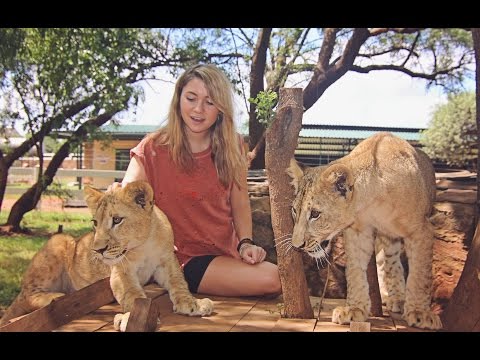
Tourist who paid to play with lions, considered exploitation.
It’s possible that if they were alive now, both George and Joy would have regrets about their inadvertent exploitation of the lions in their care (and of course, GFAS accreditation did not exist while they were alive). Actress Tippi Hedren shared similar experiences with lions as a young woman, but Tippi, now 85, advocates against ever possessing a big cat as a pet or otherwise exploiting them.
The word ‘but’ in regard to conservation is a dangerous, and insidious thing. When you are dealing with a public looking to you for examples of how to protect wild animals, you must make yourself an ideal example. A child who witnesses domestic violence, even if as a child they are told that hitting people is wrong, is at a much higher risk to subsequently abuse their domestic partner. While this statistic does not directly relate to animal abuse, it does represent the scientifically accepted fact that a child who witnesses something they understand to be wrong is more likely to engage in that behavior at some point, than a child who witnesses correct behavior. Applied to conservation, this means that children who idolize adults mishandling animals in their care might understand that the animals shouldn’t be handled that way, and yet still engage in that behavior themselves. It is far better to simply refrain from doing things you don’t want the public at large to do.
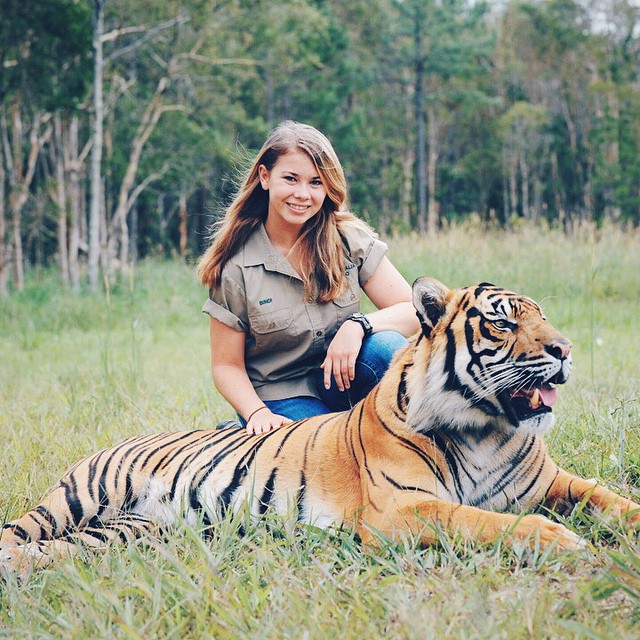
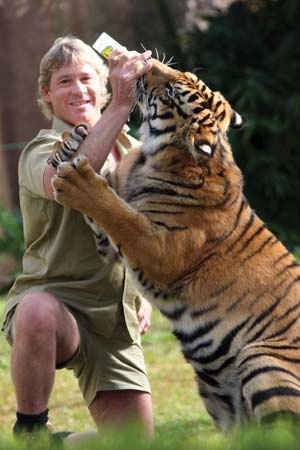
The late Steve Irwin is another example of someone with the best intentions, who did not necessarily set the best example. I adored Steve, I still adore Steve and his family. I think they have the best intentions, and they’ve certainly helped to bring conservation into the limelight. However, Australia Zoo continues to allow the public to walk with, take pictures with, and feed tigers and other wild animals, for a starting price of $400.00. I would never slander Steve. I simply do not condone the behavior of his Australia Zoo.
Bindi, with one of Australia Zoo’s tigers. Bindi remains a leading name in conservation.
Tourist paying to play with an adult tiger, considered exploitation.
Steve feeding a tiger at conservation-based Australia Zoo
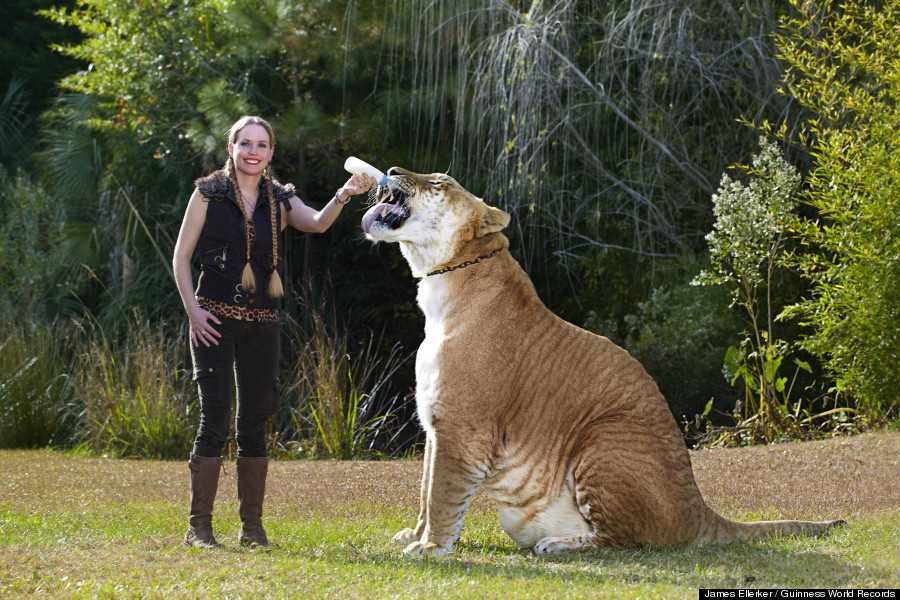
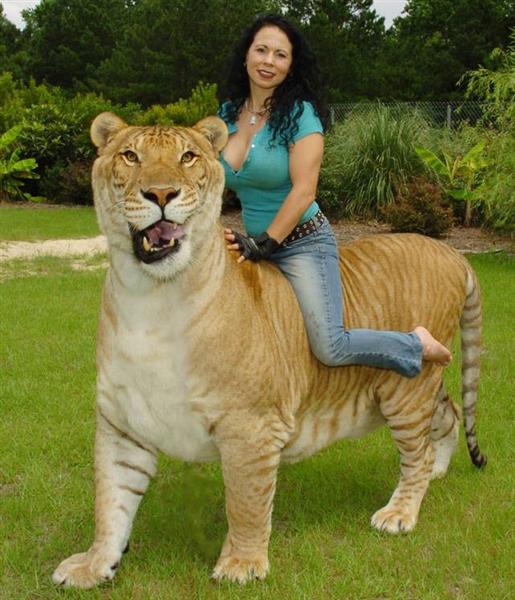
Trainer feeding Hercules (a hybrid animal called a liger) at T.I.G.E.R.S, a group devoted to the conservation and preservation of rare and endangered species
Tourist participating in a pay-to-play scheme.
The human capacity for rationalizing is inexhaustible, much to the detriment of the animals in their care. Often times, ‘experts’ with a comparable amount of experience with their animals are differentiated by how they’re presented, not what they’re actually doing. Humans will rationalize away blatant similarities simply because they like one expert over another, or because they feel that what one expert is doing with their animals is somehow more righteous than what another is doing, when in fact both experts are exploiting their animals.
Siegfried & Roy pose with Pride, the Magical White Lion. Many members of the public feel that Roy finally ‘got what he deserved’ after years of exploiting his big cats in his show.
The Lion Whisperer relaxing with one of his white lions, vehemently defended by his fans as a ‘conservationist with a special bond with his animals’. His television shows depicting such interactions are not considered animal exploitation by his fans, but rather, advocacy.
It is not merely individual highly visible people who engage in this sort of ‘It’s okay for me to do it, I’m an expert’ behavior. Dade City’s Wild Things has been in the media recently after coming under fire for allowing tourists to swim with tiger cubs (for a price) but the park adamantly defends its decision to allow public interaction with its animals as outreach and conservation advocacy that gets the public involved.
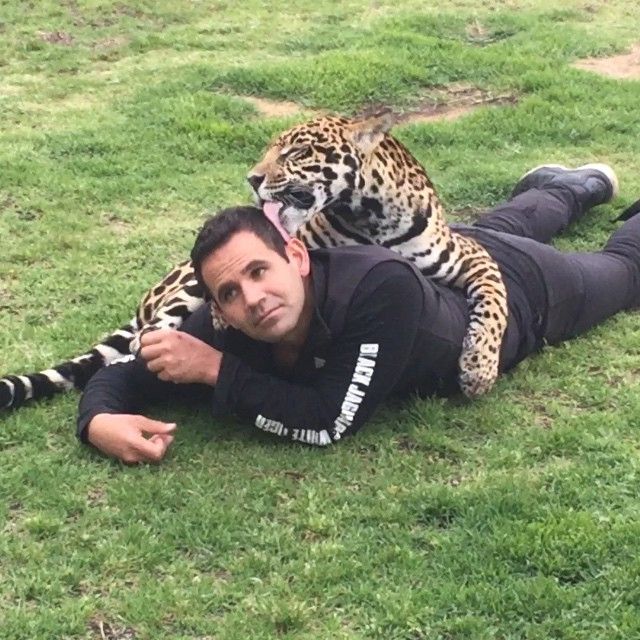
Black Jaguar White Tiger Foundation is an extremely recognizable foundation which claims to be a rescue center and a sanctuary. However, while it is a private organization, celebrities are often invited to come visit and play with the many young animals, and it is not a GFAS accredited sanctuary. Despite that the group advertises itself as a conservation center, the animals are uncut and allowed to breed at will. With hundreds of thousands of defending fans, Black Jaguar White Tiger is acclaimed and its founder, Eduardo, is worshiped as a savior of the animals in his possession. The truth is that he permits breeding, and handling, using the massive draw of adored celebrities playing with captive wild animals to provide constant social media exposure. This, in turn, brings in huge donations which he uses to maintain his facility.
Eduardo’s foundation is strictly for conservation and rescue, he claims.
Eduardo, and various celebrities, at the Black Jaguar White Tiger Foundation. The large number of cubs is not maintained through ‘intentional breeding’ Eduardo and his supporters insist, but rather, through ‘allowing nature to take its course’.*
T.I.G.E.R.S. (The Institute of Greatly Endangered and Rare Species) of Myrtle beach fame is another group that runs multiple parks, and multiple opportunities for the public to hold and play with the animals the group is supposedly breeding and raising in the name of conservation. Though their very name insinuates that they deal in endangered and rare species, one of the animals they’re most famous for, Hercules the liger, is not a naturally occurring species at all, but rather, a hybrid created by humans through the forced breeding of a lion and a tiger. Though T.I.G.E.R.S. says it donates a great deal of money to conservation, most of that money is made by allowing the public to play with captive big cats, and there is little evidence that any of it actual goes to conservation. They are also not GFAS accredited, despite their use of the word “sanctuary”.
Hercules, of T.I.G.E.R.S. with a trainer. They advertise themselves as experts helping to preserve endangered and rare species.
Hercules of T.I.G.E.R.S. with another trainer.
The Lion Whisperer, defended as an expert conservationist with a ‘special bond’ by his fans, riding one of his ‘fellow pride members’.
Tourist participating in a pay-to-play exploitation of big cats.
Lion tamer during his act, something that everyone who supports conservation would condemn as exploitation.
And there are many, many more groups and people who engage in behavior that is damaging to their animals. It would literally be impossible to include every single one in one post. There will always be one more person or group who is ‘worse’ or ‘less responsible’. It remains an uphill battle to speak out against such activities, as fans and followers will always defend those they adore, but the ICARUS group remains firm in their position. It is entirely possible to love a person or group, and yet not condone what they do. It is possible to disagree with their actions openly without slandering them. It is also possible to feed and shelter an animal, and still do it a terrible injustice by exploiting it.
The photographs in this post are designed to highlight the dangerous problem with using the word ‘but’ in regard to the handling of animals by people, experts or otherwise. This is one reason that the ICARUS group is evenhandedly against ever handling captive wild animals aside from giving them medical care, or rehabilitative therapy, and one reason that we chose to embrace the strict guilders of the GFAS. Humans will always attempt to rationalize why it’s acceptable for one person to carry out exploitation while it’s unacceptable for others to do the same. Thus, we take the stand that it is never acceptable. The justification of an expert’s behavior is a slippery slope the ICARUS team refuses to even start down. Instead, we choose to approach conservation and preservation by setting an example of what the public should do in regard to both wild animals, and captive wild animals, rather than showing them what they should not do.
In the words of Thoreau ‘Wildness is the preservation of the world.’
If you love wild animals, keep them wild. Support groups like ICARUS who are working to keep them wild, not treat them like pets in the name of conservation. Actions speak louder than words. If someone is receiving money in exchange for allowing public interaction with captive wild animals, or receiving money in exchange for their own interactions with captive wild animals, then they are not acting in the name of conservation, even if they are speaking about it.
Author: Artemis Grey
*This statement has been removed from the foundation’s website since the publication of this article.
*original article posted in 2013 by author here: https://richcoast.wordpress.com/2013/08/11/what-is-so-bad-about-sea-world/
With the release of Blackfish, a film about the state of killer whales in marine parks, it really has brought to a wider audience the poor quality of life for whales and other mammals at sea life parks. India declared dolphins to be a non-human person and banned them from being allowed in captivity. Costa Rica is another place that has declared the same but until the mightiest of sea parks has folded this is not something that will happen worldwide. The truth is that SeaWorld keeps its animals for entertainment and money and helps no one but themselves.
I of course waded into this argument because cetaceans is something I have always been passionate about. I have also made plenty of mistakes with wildlife (see above) so I’m not here to make you feel bad if you have been to SeaWorld or had a ‘swim with dolphins’ experience. As a starry eyed 15 year old I too visited SeaWorld on a family holiday. I’m not going to lie to you, I loved it there. I loved being able to feed the dolphins and I physically had to be dragged away from the dolphin pool by my parents. Of course at that age I had no realisation of the kind of life the creatures I was so enamored with were subjected to. I believed the ‘facts’ that SeaWorld only took in animals that wouldn’t survive in the wild and I didn’t see anything wrong with the whole place. I went back a year later and had the same opinion. I, at the same age, also had a ‘dolphin experience’ in Malta at a marine park. At the time I thought it was amazing but now I look back at it in horror as I recall the size of the pool (kind of a hotel sized pool) that housed two dolphins.
The result of the wild dolphin trade for marine parks
Up until a few years ago I didn’t really have a negative view of SeaWorld and other marine parks, then I watched The Cove and it really opened my eyes. Learning that wild dolphins were being herded into a cove in Japan, the handsomest stolen for marine parks and then the rest murdered (and it really is nothing but cold blooded murder) was shocking. I vowed never to go to SeaWorld again and begged my friends and family to do the same. I tried to get them to watch The Cove but was met with complaints that they thought it would be too horrible to watch. It is, but it’s also a brilliant documentary and the fact that the information provided is so brutal is alone a standing reason why you SHOULD watch it. I was also met with the same question, “What is so bad about SeaWorld? Don’t they rescue animals?” The sad truth is no and one person vowing never to go there again is not enough.
Whales of course have the same deal as dolphins in these parks. Both are kept in tiny environments, not just because of their size but because the endless ocean is their natural home. Both are forced to learn and do tricks for food. Something that certainly isn’t in their natural behaviour, whatever Sea World tells you. The film Blackfish focuses on specifically orcas in marine parks, in particular Tilikum, a male killer whale who has been involved in a lot of violent incidents, including the deaths of 3 human trainers.
Beautiful but dangerous Tilikum
Tilikum started life as a free orca before he was taken from his mother and his home at the age of 2. He then lived in a cruel environment where they used food deprivation to teach him tricks and he was kept in 20×30 foot container for 19 hours at a time till his next show. Before even arriving to SeaWorld Tilikum was involved in the death on one of his trainers at this park. SeaWorld vowed that he would only be used for breeding purposes (don’t get me started on breeding into captivity) and would not therefore be forced to perform alongside humans. Of course within a short time span he was a star attraction in one of SeaWorlds ‘educational’ shows. We all know the end result and Tilikum famously killed his trainer Dawn Brancheau in 2010. The film argues that in the wild killer whales have never been known to harm humans and are actually intelligent and playful rather than psychotic killers. Tilikum is not the only example and killer whales in captivity attack not just their trainers but each other, sometimes fatally. The captive killer whales grow slowly madder and more bored at their existence of swimming around the same small area every single day of their lives eventually lashing out and injuring or killing themselves or others.
The tiny enclosure Tilikum was kept in after Dawn’s death
Nothing SeaWorld does is for the benefit of the animals they keep. They have had no new scientific knowledge released on any animals in their parks for decades, so they are not contributing to the science of whales in any form. Nor, like other species, do whales and dolphins thrive in captivity and well out-live their wild counterparts. In fact they live a much shorter life in captivity and die of diseases that they would never get in the wild such as St Louis encephalitis, a mosquito borne disease. Fin collapse also rarely occurs in the wild but is common in captive whales and many young calves that are born into captivity sadly die at an early age. Yet SeaWorld’s incestuous breeding program continues, for absolutely no good reason. So what really is SeaWorld contributing to the livelihood and welfare of these animals? The answer is quite simply, nothing.
One of the more horrifying whale deaths at Sea World: “Kandu slammed her head into Corky, severing a major artery in Kandu’s upper jaw. A ten-foot geyser of crimson spouted from Kandu’s blowhole. Over the next forty-five minutes Kandu bled to death as Sea World staff and the audience looked on in helpless distress. In the wild, these whales travel hundreds of miles with the whole ocean at their disposal. When enclosed in a small area, there is nowhere to run.”
Considering all of this why exactly are places like SeaWorld continuing to hold these animals captive when it clearly has no benefit to them? The reason: MONEY. Instead of welfare and knowledge SeaWorld and other marine parks in fact are concerned only with earning money at the detriment of these incredible animals. Many of them could easily be rehabilitated if they did indeed arrive injured or ill but the majority of them are stolen from the wild not rescued or bred into captivity and then stolen from their mothers at a young age. However the ones that are able to learn the tricks quickly have no chance of ever being rehabilitated. Instead they become like elephants in circuses, forced to perform tricks and living in sub-par environments. The sad truth is although SeaWorld is clearly neglecting and abusing these animals it is it is probably one of the better marine parks in terms of animal welfare. Many others keep the animals in smaller pools and treat them far worse than SeaWorld do. Still in all of these places money trumps education and rehabilitation especially when you’re making profits of over $300 million a year (and famously not paying tax either).
The bottom line is they are deceptive; they mislead the public, saying that they rescue animals and educate people. In their shows for example they tell the audience that whales live to around 25 to 30 years, in captivity yes, but in the wild it can be up to 90. They mislead their trainers who are brainwashed into believing they are doing something good. Many previous trainers have come out to say they are ashamed for the information they have given to people and that Sea World put their lives at risk by not even telling them that Tilikum was involved in the death of a previous trainer when he arrived there. The most important fact remains that they are doing absolutely nothing that contributes to helping animal species and are instead hoarding wild animals simply to earn a buck. Many bucks at that. But of course isn’t that the sad truth of it, these places will continue to run as long as people go there and are also brainwashed into believing that SeaWorld are actually doing a good thing. You believe that they are helping the animals, because that’s certainly the view they give when you are there. I was one of those people who believed everything I was told when I visited. Thankfully with the release of Blackfish more and more people are beginning to realise that instead of helping they are in fact torturing these animals into madness and keeping them in conditions that remain utterly inadequate for beings so intelligent. And SeaWorld’s shares and visitor numbers are showing the backlash of Blackfish.
So on the behalf of at least two species, who are nearly as intelligent and emotional as you, I beg you to never enter a sea park again. Get your family and friends not to go too, spread the word! I know how amazing it is seeing these beautiful animals up close and personal but I can promise you it’s 100 times more magical seeing them in the wild. If you go to places like SeaWorld you are just continuing to fund organisations that steal animals from their natural environments and make them live awful lives in tiny tanks and forcing them to perform tricks for your entertainment. In short you are helping to support animal cruelty. Please don’t do it.
I have linked a lot of articles in this blog too for more information the best ones however are:
Many people hear the words ‘animal advocacy’ and picture picket lines, or protests in the street, or petitions to ban trophy hunting, whale kills, or the sale of animal body parts, but the truth is that animal advocacy is so much more.
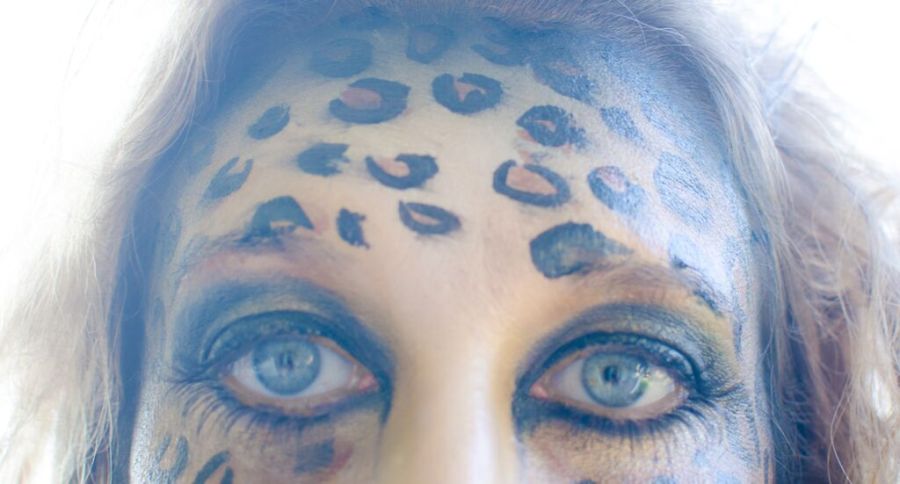
One great way to advocate for animals is through art. One project that ICARUS is currently involved with, and extremely excited about, includes multiple forms of art. Namely, photography, and body painting. We’ve been incredibly blessed to have photographer Melinda Caubarreaux and body painter extraordinaire Brittney Pelloquin join our cause. They’ve teamed up with our founder, Jessica James, as well as hair stylist Lindsey LeBlanc and several talented models, like Alyson Clark, for a project that is going to take both the art world, and the advocacy world by storm! Beneath Perceptions: The manacles the fleshed create to subdue the furred is shaping up to be an amazing experience. All of the artists involved have donated their time and hard work simply for the sake of the animal, and in the name of advocacy. I’m not at liberty to say too much just yet, but trust me, it’s going to be amazing! Until then, check out the these sneak peaks.
We’ll also be looking for a special someone to help us by lending their voice to our cause to help with a PSA which will be part of Beyond Perceptions. A voice is an incredibly recognizable and moving thing, and we would be immensely grateful if someone of note was willing to help us by allowing us to ‘borrow’ theirs in the name of animal advocacy!
People have the ability to advocate for animals in virtually everything that they do. It’s simply a matter of how you do something, or, in some cases, of going just one extra step in order to make animal advocation a part of whatever you’re doing. It can be as simple as supporting groups like ICARUS, whom you already follow on social media, by sharing their page on your wall and inviting your friends to like them and share their posts. You can also donate money to support research, like that being carried out by members of the ICARUS team. Or, if you don’t have a lot of money to spare (and many of us don’t these days) you can help in other ways, like by donating sky miles. That’s what Melissa Olivadoti did recently. Because of Melissa’s generous gift of sky miles, the ICARUS research team is that much closer to the start of their journey toward better conservation! So if you’ve got sky miles lying around about to expire, consider following Melissa’s lead, and donating them to ICAURS. Supporting groups who advocate for animals is a great way to participate in advocacy. We couldn’t do what we do without the help of folks like you.
If you want to advocate for animals in a more direct fashion, there are plenty of ways to do so. When purchasing products, look to see if the companies from which you’re buying support conservation. Vacation in places where tourism helps to support conservation, but be careful that it supports it in a way that doesn’t exploit animals. Some groups which offer the chance to pet or hold wild animals under the guise of conservation when really, they’re just supporting themselves through animal exploitation. Sanctuaries, or rescue centers that do not allow the public to play with their animals are ideal. Or photo safaris can be immensely fun.
Some people prefer to work conservation into what they already do. For me, that’s writing. By joining the ICARUS team as the resident wordsmith, I can aid conservation by donating my time and effort to writing blog posts for the group, or drafting letters or other written media. Even my novels tend to have advocacy worked into them, conveyed through the actions of the characters.
Stay tune for more updates about Beneath Perceptions! Until then, share our posts and spread the word about ICARUS, and be sure to check out the websites and pages of our incredibly talented cohorts in conservation, Melinda Caubarreaux and Brittney Pelloquin!
If the title of today’s post startled, you, it was supposed to.
Thanks to a world-wide media storm, Cecil is the poster child for conservation, and his name is directly linked to numerous petitions to ban trophy hunting, and lion hunting, and countless other issues. The public is a fickle lover, becoming instantly and utterly enamored of an ideal, or focal point. In this case, the focal point is a lion named Cecil, and the ideal is that there should be laws to protect animals like him. What the ICARUS team is afraid that the public at large fails to grasp, is that Cecil wasn’t special.
Recognizable? Quite. Memorable? Most definitely. But special? No.
The ICARUS team is all too aware of the fact that Cecil was merely one of the 665 lions that are killed on average each year by trophy hunters alone – many of those in canned hunts. 208 Leopards are killed every year in India, about four animals a week. Almost 1,000 Rhinos are poached every year worldwide. Conservatively 1,000 tigers are killed each year worldwide, and only about 3,200 wild tigers exist in the world today. In the last 3 years 100,000 African elephants have been killed. More than 1,000,000 Pangolins have been poached, killed or sold into the illegal animal trade in the last 10 years. Approximately 28,300 freshwater turtles are traded within the pet industry EACH DAY. The illegal animal trade is a $20,000,000,000 a year industry, while the South African hunting industry nets an average of $744,000,000 every year.
Cecil’s death has garnered international attention, and has been hailed as an international tragedy. The real tragedy, however, is that the only thing special about Cecil, is that he, and his death, became an internet and social media phenomenon. For the millions of other wild, and captive wild animals, killed by sport hunters, or poachers, or captured into the illegal animal trade each year, there is no such international outrage. They remain hidden behind the veil of ignorance.
The Care2 petition demanding justice for Cecil was the fastest growing petition ever hosted by Care2, gathering tens of thousands of signatures per hour. The danger of things like electronic petitions, social media, and the Internet itself, is that people join in, and subsequently feel ‘involved’ in their chosen cause. Petitions can be a great thing, but the ICARUS team would encourage you to do more than just sign the petitions showing up in your Facebook feed.
You don’t need to travel across the world to have an impact on stopping the illegal trade of animal. It can be as simple as demanding to know where local pet stores secure their exotic birds. Where do they get their turtles? There exotic lizards, or snakes? Do you know someone who has an exotic pet? Where did they get the animal? Often times exotic pets such as Bushbabies (Galagos) various breeds of Sloth, Kinkajous, Squirrel monkeys, Hyacinth McCaws and Fennec foxes are not captive bred, like many people presume. Rather, these animals are poached as babies, and sold into the illegal animal trade to be imported only to be sold again, many times to owners who do not fully understand the needs of their new rare pets. Simply not endorsing the ownership of such animals will help to stop their importation. If every member of the public refused to support the exotic pet trade, there would be no revenue to be made off the illegal importation of such animals.
In the greater scheme of things, don’t stop with your support of justice for Cecil. Demand more than that. If you travel to other countries, and enjoy going on photography safaris, research your destinations carefully. Choose to support institutions which only host photography safaris. If you find that the resort you’re planning on visiting allows cub-petting or hosts paid hunting expeditions, cancel your reservations, and send the corporate offices an email, or letter, letting them know that you’ve chosen to take your business elsewhere, and why, you’ve chosen to do so. Yes, you are only one family, but if enough families choose to do this, the corporations will notice.
Too often, people who don’t necessarily endorse animal exploitation, still support those who commit it. Disney’s Dolphins in Depth is a prime example. About 11.2 million people visit Disney’s Epcot Center each year. Of that number, only a fraction – about 3,000 – participate in the Disney’s Dolphins in Depth. But if you visit a Disney park, you’re still supporting their exploitation of animals. While DDD takes pains to stress that they do not force the dolphins to interact with the guests, the fact remains that this is a version of pay-to-play, wherein captive wild animals are exposed to the public in order to make money. Think of it as Sea World on a smaller scale. For a closer look at exactly what goes on behind the scenes at large scale water parks the ICARUS team suggests checking out Blackfish. Though the Disney parks are not part of the movie, Blackfish is an exemplary example of everything wrong with the captive marine animals, in both large parks, and small.
To learn more about Africa’s canned hunting industry, check out Blood Lions an amazing campaign to end canned hunting.
Conservation begins at home, with the simplest of actions. Plan vacations either with establishments who do not exploit animals, and subsequently inform establishments who do, that you will not patronize them so long as they participate in such exploitation, or plan vacations in local National Parks, or other areas. If you want to get a pet, consider adopting a domestic from a rescue, or local shelter. Instead of owning an exotic pet, the ICARUS team suggests you explore the possibility of volunteering at a local wildlife rescue center. Volunteering offers you the opportunity to learn, and be around the animals, yet does not feed the illegal animal trade.
Be vocal. Do not fear taking a stand on matters. Too often those who strive to protect animals are viewed as radicals. The truth is much more mundane. We are pet owners, animal lovers, idealists, and even hunters and farmers. The difference is in our drive to act, and to speak about the causes we’re seeking to further. In the immortal words of Edmund Burke: “The only thing necessary for the triumph of evil, is that good men do nothing.”
The ICARUS team hopes that you will join us in action to help ease the suffering of wild animals everywhere, whether your action is simple, like sharing this post with your friends, volunteering, or adopting a pet, or whether it is large, traveling to other countries to help promote conservation, every single action matters.
And if the arts are something that interests you, then keep your eye on ICARUS, as our team has some exciting projects in the works which involve both the arts, and conservation. What better way to support two birds with one hand, than by purchasing a piece of art, the sale of which will go to aid in conservation? What kind of art, you ask? Ah, that is a mystery better left for another post, but we hope you’ll stay tuned to find out! Until then, be sure to share our post, to help spread information, and follow us here, on Twitter, Facebook and Instagram. The ICARUS team wouldn’t get far without our supporters! We appreciate you greatly!
Conservation is a complex issue, with complex answers, and complex situations, and very rarely can matters within it be distilled into a single, rigid policy. However, the single issue on which there is no room for discussion, is the subject of handling, and directly interacting with captive wild exotic animals. Aside from issuing medical attention or for purposes of rehabilitation, there is no benefit for the animal, in having humans handle or touch it. For the members of team ICARUS, this is nonnegotiable.
It is not, under any circumstances, acceptable for anyone, regardless of their supposed expertise, to play with, or directly handle, or socialize with captive exotic animals. This ‘special bond syndrome’ is most prevalent in big cat species, and is the leading reason so many big cats are privately owned by citizens. Every well-meaning owner believes that they have a special bond with their animals. Tragically, this very often results in injuries or death to the owners, or their acquaintances, and subsequently to the big cats themselves, who are nearly always euthanized after being involved in an attack.
Even more disturbing than the private citizens are the highly publicized ‘self-described animal behaviorists’ (traditionally a true animal behaviorist is someone who has obtained a graduate degree in related fields and has obtained a post-graduate certification) who routinely handle and interact with big cats, claiming that they do so through a special bond. The most easily recognized of these is the so-called ‘Lion Whisperer’ of South Africa. One needs only Google the title to find hundreds of pages, all filled with videos of him cheerfully playing with full grown lions or leopards, as well as spotted hyenas. The Lion Whisperer has been hosted on nearly every major network, all of which focused on his ‘amazing bond’ with the lions and animals of his sanctuary. They show a plethora of clips of him interacting with the lions, napping with them, and fondly dictating the story of each one – nearly all of whom he’s raised from either adolescence or cub-hood. It’s always mentioned that his sole purpose is to ‘bring attention to conservation matters’ and to ‘end the cub-petting industry’. The fundamental problem here, is that he’s participating in cub-petting with adult animals.
Conservation is not, and never will be, aided in any way by publicizing the act of playing with an animal. If one goes to Youtube and searches for the Lion Whisperer, they’ll be greeted with pages and pages of him playing with the lions. Where, in all of that dream-worthy special bondness is any conservation of remaining wild lions? All of the animals featured in the programs live on one of his reserves, or in his sanctuaries. Many of those have actually been imported from other places, and were not rescued, or rehabilitated. Not one animal, in the history of his sanctuaries, has ever been released into the wild. They cannot be released because they are thoroughly habituated to human interaction. A habituation that is continually reinforced through daily interactions. The fact that he has, indeed, rescued many animals from deplorable conditions, is completely overlooked by the fans who fixate on his highly publicized videos of playing with the animals.
The Lion Whisperer has thousands of loyal fans and followers who will defend him and his actions vehemently, but for the ICARUS team, actions speak louder than words. Despite all of his claims of being focused on conservation, and the fact that he has actually rescued animals, he also maintains private reserves and sanctuaries, he plays and interacts with the animals in his care, and he trains them for use in movies that he writes and produces. And those actions keep his sanctuary from being GFAS accredited. In this case, the good he does, is vastly overshadowed by the fantastical persona of Lion Whisperer who plays with lions, other big cats and wild animals. It is that persona that the public worships.
If he were a civilian who owned ten big cats and made movies with them, much of the public would consider him to be part of the problem with animal exploitation. However, they embrace the Lion Whisperer and his ‘amazing bond’ with his animals, and seem to find nothing wrong with his behavior because he’s ‘doing it for conservation’. But how many people actually associate the term ‘conservation’ with the term Lion Whisperer? The title Lion Whisperer is synonymous with the image of a man playing with a pride of lions, not with the ongoing plight of Africa’s wild animal population.
You cannot teach people that wild animals are not pets by producing movies wherein you treat wild animals like pets. You cannot teach people that wild animals should not be bred in captivity, or held in captivity, while you stroll through a created pride of captive-bred lions. There are no ‘buts’ in the terms of conservation. Experts do not have the luxury of doing things that they are actively trying to ban the public from doing. If cub-petting feeds canned hunting, and harms big cat conservation, you cannot claim that producing multiple movies that highlight your own adult-petting aids in conservation.
This is why the members of team ICARUS have a strict policy against cub-petting and direct interaction with wild exotic animals, and why we look to the standards for GFAS as a guidline. What Dade City Wild Things is doing by allowing the public to swim with tiger cubs, is no different from the Lion Whisperer swimming with adult lions. In both cases, humans are interacting with captive wild exotic animals not because it benefits the animals, but because it makes the humans feel special.
In the words of Jane Goodall, “What you do makes a difference, and you have to decide what kind of difference you want to make.”
The question is, do you want to create a world where it’s acceptable for certain people to exploit animals in order to bring attention to animal exploitation? Or do you want to create a world wherein there is no animal exploitation at all?
The ICARUS team hopes that you will choose to become the latter. Don’t be dazzled by those who make a name for themselves by using the animals they should be caring for. Don’t allow them to convince you that it’s acceptable for them to treat animals in a way that no one else should, simply because they’re special. Remember, the animals they claim to have a special bond with have been hand-raised from birth, no differently than the cubs in cub-petting schemes. They’ve been conditioned to accept human interaction. The only difference is that while the cub-petting schemes sell their cats into the canned hunting industry, people like the Lion Whisperer simply continue to make money off their adult animals.


















 I.C.A.R.U.S Inc.