Wildlife in Crisis: An International Think Tank

The ICARUS crew is absolutely thrilled to announce that we will be hosting an International summit in 2016 titled Wildlife in Crisis: An International Think Tank. It is our goal for this summit to bring together some of the greatest and most influential minds in the world of conservation today, and to develop strategies for further conservation efforts in the future.

The only thing the members of ICARUS want it to protect the animals and world we live in, and to educate those around us about the challenges involved with world wide conservation. When you choose to donate to ICARUS through this page, or our Facebook page, you aren’t paying us.

Your money goes directly to helping fund animal conservation through rescues, rehabilitation, and things like our 2016 International summit. The members of ICARUS are volunteer only, so all of our articles, and information is gathered and produced around full time jobs and late night hours devoted only to the conservation of the animals.

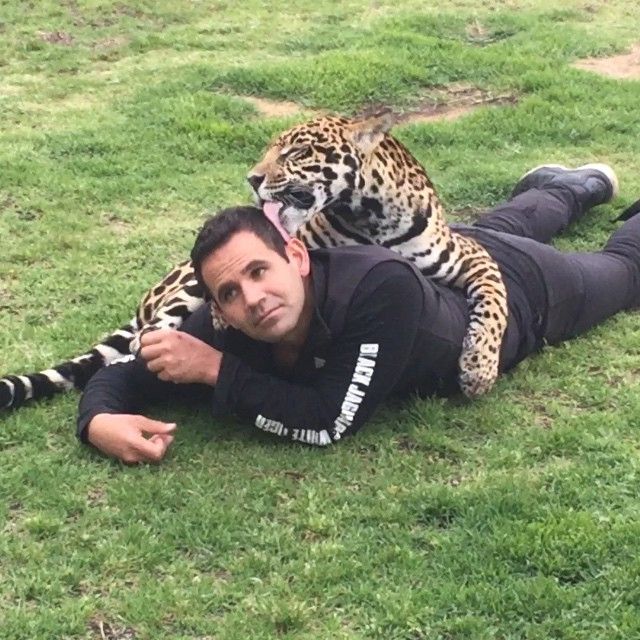
This is one reason that we took such a hard and forthright stance against hugely popular establishments such as the Black Jaguar White Tiger foundation, and Eduardo Serio 5 months ago when we first opened our WordPress account.

As a group devoted to hands off conversation, the ICARUS team does not condone the unnecessary handling or interaction with any wild animal. Sometimes during the rehabilitation process, handling is required, and as the members of our group have all been involved with wild animal rehabilitation, we understand this.

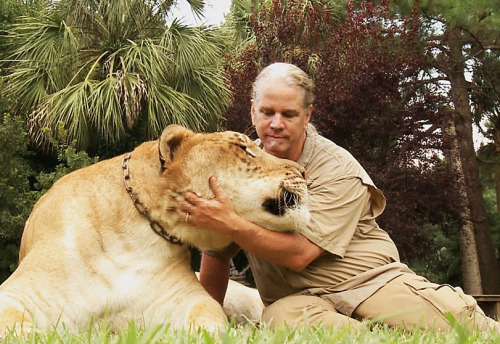
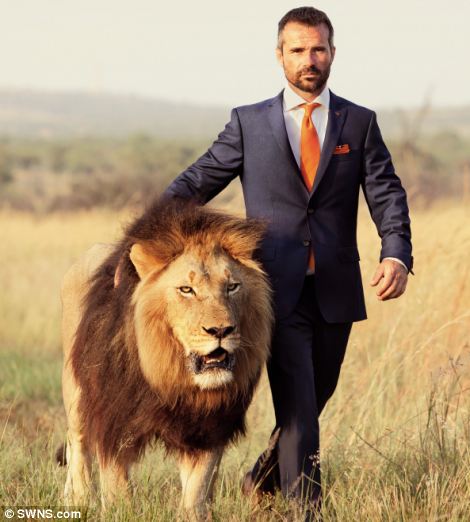
However, when one posts photographs on social media, or use social media to build themselves into a Celebrity Conservationist who is famous for no other reason than the fact that they post photographs and videos of themselves playing with big cat cubs, or adult big cats, they are not rehabilitating those animals, they are actively participating in their exploitation.

This Social Media Conservation, which so often highlights pseudo conservation is only one of the many global conservation issues that will be addressed at the 2016 International Summit which the ICARUS group will be hosting. Wildlife in Crisis: An International Think Tank will bring together conservationists from all over the world with the goal of addressing such issues as captive big cat ownership, wildlife crime, pseudo conservation groups and sanctuaries, rehabilitation ethics , legislation, and similarly the laws that govern exactly what foundation can describe themselves as rescue group or sanctuaries without actually obtaining the accreditation associated with being a sanctuary or rescue. Only through education can the public learn to see the difference between conserving wild animals in the wild, and exploitation of them by Celebrity Conservationists.

Author: Artemis Grey

Like A Bug On The Windshield Of An a380 Airbus

Do you remember high school? Okay, maybe some of you reading this post are stilll in high school. But if you’re older, do you remember what it was like? I mean, do you really remember?

Everyone experiences high school (or any level of school, for that matter) differently. Some of us have a great time, others barely survive, but one thing is certain: The longstanding tropes of Jocks, Cheerleaders, Nerds, It Girls, Outcasts, Drama Freaks, Rednecks, Art Dorks, and the most loathed of all, the Clingers, haven’t become tropes without reason. There are always a variety of stereotypes that kids either naturally fall into, or get pushed into. It’s not fair, but it’s been this way since the beginning of time.

While you’re in high school, everything social hangs on which group you fall into. Even if you don’t want to be in a certain group, you suddenly find that your entire life gets judged by which group you’re in, or at least by which group everyone else perceives you to be in. And if you can’t get into a group, you’ll be just a Clinger, and that’s social suicide because then you’re just fodder for everyone else.

Maybe you’re a badass on the trumpet, and love music, but then all of your friends go out for JV football. You don’t want to be the lame-o who didn’t try out when they did, so you feel like you have to go, even if you’d rather be in band. Also if your don’t go with the guys, you’ll never be able to hang out together because JV practices after school, so the Band Dweebs have to meet before school starts, and then they sit in front of you in math and smell like grass and old sneakers because they didn’t get to shower before school started. Besides, if your buddies make JV, and you throw in with the Band Dweebs, you’ll never hear the end of it when you do get to spend time with the guys. Bros stick together, after all, and you’ll be the one who ran out on them. Or, worse yet, if you don’t try for JV, and then you flub your band try out, you won’t be anywhere. You’ll be nothing but a Clinger. who doesn’t fit in anywhere, and just has to do their own thing.

So you go out for JV football, and you make the team with all your friends. And just like that, you’re a Jock. Even if you quit the team, it’s a done deal. Jock is your tagline for high school. And it does have its perks. Cheerleaders and It girls are all on the table, now. The Clingers, too, since they don’t even count because they’re always doing their own thing, so you can have your pick of them, and then still take Selena, that 9.5 Cheerleader, to Homecoming, because, well, Clingers aren’t real GF material, but they’re fun, once in a while. Yeah, let the Nerds and Drama Freaks duke it out for the Art Dorks and Band Dweebs, the real lookers are in your league, now. At least, the girls that everyone is into are in your league.

It’s a decent system, really. No crossing the lines. You always know where you stand and what’s at stake and how things are supposed to work out. Kind of like that book you were supposed to read in English this year but didn’t because none of the other guys wanted to. You did catch the movie version, though, just so you’d be able to answer the questions on the pop quiz that everyone knew  was coming. The Outsiders, that’s the one. Yeah, there are more groups at school than just the Socs and Greasers but it’s the same idea. You stick to the rules and play whatever role you got handed and you’ll make it out just fine.

Fast forward a decade–maybe only a few years– and you pause while walking to the office and look back on your high school years. And you start laughing. Laughing  like crazy laughing. Crazy laughing like people on the sidewalk around you start to go extra wide to either side, unwilling to cross the street entirely, but making sure that some other person is more in reach, just in case you lose your shit and start grabbing at folks.

Why are you laughing like a maniac?

Because high school–and which clique you were in–had no more significance in the scheme of your life than a bug on the windshield of an a380 Airbus flying at 35,000 feet.

You can’t know more than you’ve experienced. If you’ve never made it through high school, or through the age at which most of us go through high school, you literally can’t know what’s beyond it. You can daydream about it, or theorize, plan, make achievement lists, or set goals like becoming the owner of your own law firm. But until you actually get on the other side of things, you can’t see what’s going to be there waiting for you.

Now here you are, standing on a sidewalk, still laughing, and you’re going to be late to work, which means the guy at the front desk will be sure to tell the third-rate clerk who works for you that you’re late and the clerk will ‘accidentally’ let that slip to your boss who does, incidentally, own the law firm where you’re just a junior partner. But all you can think about right at this moment is the fact that your boss, the guy who owns the law firm, has fifteen framed photographs of him playing the piccolo in marching band, and he never played a single game in football in his entire life.

It doesn’t matter that he was a Band Dweeb in high school. It doesn’t matter that you were a Jock. High school was four measly years in the span of what–gods willing–will be twenty times that over the course of your life. Maybe more, if you’re lucky. Who belonged to what clique fades into complete irrelevance.

Fads are exactly like that. And the phenomenon that I think of as Social Media Conservation is the hottest fad on the planet right now.

A fad is defined as “an intense and widely shared enthu- siasm for something, especially one that is short-lived” (Oxford English Dictionary 2013) and likely to fade away once the perception of novelty has gone.

Now, parts of social media are great, and serve to make a genuine difference in the world, and social media itself, is not likely to go anywhere anytime in the near future. However, the phenomenon of Social Media Conservation can’t die soon enough, if you ask me.

Just what is Social Media Conservation?

Besides being a pox on genuine efforts to conserve our planet and all the things living on it, Social Media Conservation is the phenomenon of thousands, hundreds of thousands, or even millions of people taking to social media en masse to champion Celebrity Conservationists.

Not conservationists who happen to be movies stars, like Leonardo DiCaprio, but Celebrity Conservationists who, without their ‘conservation angle’ would not be celebrities or known names at all. Unfortunately, the majority of these Celebrity Conservationists often do far more damage to animals and conservation efforts than they do good.

Eduardo Serio of Black Jaguar White Tiger is the reigning king of Celebrity Conservationists. What he posts to his Instagram, and other accounts is completely irrelevant to conservation in any form and some of the posts are blatantly detrimental to the animals he claims to have rescued. His “sanctuary” is not accredited by the GFAS, though it is supposedly a sanctuary under Mexican law (I’ve seen no evidence of this, but since he threatens to sue and destroy anyone who claims otherwise, there it is) Yet his followers eagerly cheer the posts on, share them repeatedly, and basically flood the internet with them.

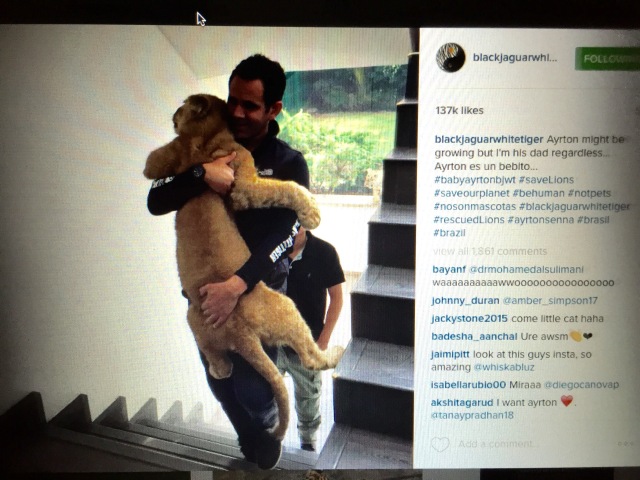
The content of Black Jaguar White Tiger’s Instagram account ranges from adolescent lions peeing on the walls of Eduardo’s own home, to Eduardo randomly spinning around in circles with an adolescent lion over his shoulders to Eduardo himself lying on the floor of his own bedroom (the cubs literally live in his walk-in closet until they’re a month or two old) covered in young lion cubs.

Not one of these videos serves any purpose in the world of conservation, or to raise awareness in regard to the plight of wild lions, or wild big cats. However, they do have a function, and that function is to make Eduardo–and his Black Jaguar White Tiger foundation–look like the coolest place on earth. And the videos work. Each of those three videos has been ‘liked’ by Instagram users anywhere between 68,600 (first video)  78,200 (second video) and 128,000 (third video) times and thousands of comments have been made on each one.

68,600 people have liked a video showing a captive lion cub pissing on the wall of a home lived in by humans

And these followers actually believe that the guy who owns that captive lion cub, and the house it’s pissing all over is somehow saving lions, saving our planet, and not keeping them as pets, as per the hashtags #SaveLions #NotPets and #SaveOurPlanet, which are very carefully included with virtually every photograph and video uploaded to the Black Jaguar White Tiger Instagram and other social media accounts. And there are tens of thousands of those photographs and videos, all carefully hashtagged #SaveLions #SaveJaguars #SaveTigers #SaveOcelots and most the most asinine claim #NotPets

Not pets? 

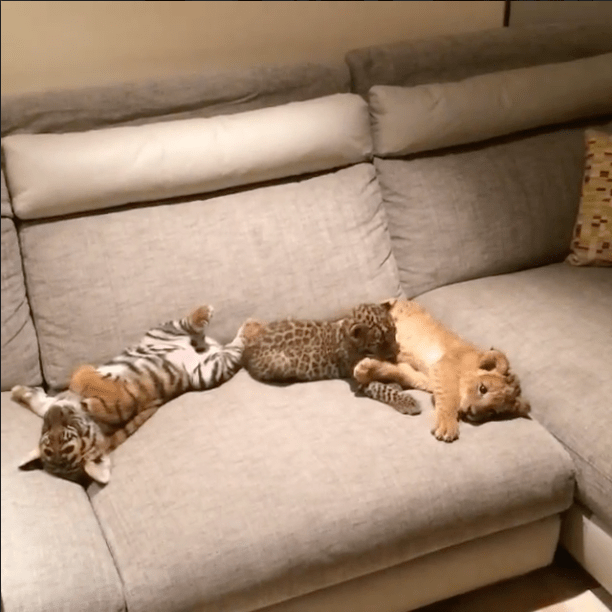
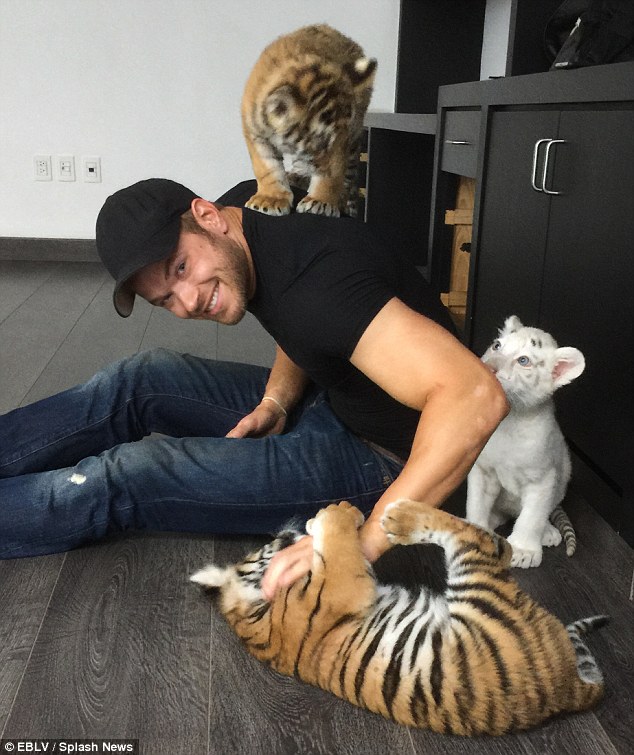
The guy is videoing exotic big cats and other exotic animals running around inside his house, pissing on the walls, sleeping in his bed, lying in his lap, rough-housing with the select high-name guests he brings in for more exposure and swimming in his in-ground swimming pool. 

But they are not pets. Right. I have a bridge I’ll sell you, too.

But dare to question the edict that the animals being exploited by Black Jaguar White Tiger are not pets and are not being exploited? Be prepared for personal attacks ranging from the mild ‘You’re an idiot, Eduardo is saving them from a horrible life!’ to the more heated ‘Fuck off, you’re a stupid cunt who’s just jealous of Eduardo’s bond with his cats’ to the unhinged ‘Keep it up, bitch, and someone’s gonna come piss on your walls!’ *These are not actual threats I’ve received, but a sampling of actual responses made to other, similar to what you’ll get if you have the gumption to actually question Black Jaguar White Tiger and what they’re doing.*

Unsurprisingly, when such gang-ups occur, the commenter who challenged the status quo is often battered vehemently, and then the entire post is immediately deleted, and the original commenter blocked. Unless you take screen shots as it’s occurring–something that most people don’t think to do while they’re trying to defend themselves and their position–there is no evidence it ever happened at all, leaving a situation of ‘he said she said’. This is the savagery of Internet bullying and assault. And, tragically, it is incredibly typical within the circles of Celebrity Conservationists. This is how they insulate themselves from answering questions or being held accountable for their actions. They gather devotees and then simply let those mindless followers do all the dirty work of defending them.

Social Media Conservation is a self-fullfilling phenomenon. The ‘cooler’ a Celebrity Conservationist is, the more followers they get, the more exposure their foundation receives–even if it never produces any tangible evidence of conservation efforts–the more their name and that of their sanctuary or foundation is spread, the more followers it gathers, the more those followers talk about it, the more they share posts, the more unimpeachable the Celebrity Conservationist becomes until their presence is so immense, their influence so insurmountable that to speak out against them is to invite the unified wrath of the millions who worship them.

And suddenly, we find ourselves stepping back through a wormhole into the era of high school cliques. Instead of Jocks or Cheerleaders, there are Celebrity Conservationists, and a planet full of people obsessed with getting into the cliques formed by those Celebrity Conservationists. And if you aren’t in those cliques, then you’re immediately degraded to being just a Clinger hanging around the edges and taking potshots at them simply because you’re jealous that you’re not involved. Your facts, and science, and utterly valid arguments are devalued and belittled by accusations of personal vendettas and ignorance. You’re either jealous of the Celebrity Conservationist, or you don’t understand them.

But this is the incontrovertible truth about these Celebrity Conservationists and their social media empires:

They’re no more significant in the scheme of conservation and the survival of the planet and the animals on it than a bug on the windshield of an a380 Airbus flying at 35,000 feet.

Yeah, Black Jaguar White Tiger has 4.3 million followers on Instagram, and almost 10,000 posts on Instagram. Big fucking deal.

What has Black Jaguar White Tiger done to help wild animals in wild habits, in real life situations? Not what have they talked about doing, or discussed doing, or promised to do, but what have they actually done?

The answer is nothing.

He can’t even get a GFAS accreditation. In all Eduardo’s supposed fundraising, and supposed efforts at conservation, the only thing he has actually done is con 4.3 million people (and countless backers and Hollywood celebrities) into thinking he’s the best thing since sliced bread, while amassing a hoard of some 180+ captive big cats which are currently crammed into a residential house (location unknown) and caged on an 8 acre plot of land (location unknown) and with a promised several thousand acre ‘paradise’ to be built for them in the future.

Just like high school, this fad of Social Media Conservation is going to pass. In another five years, no one is going to be infatuated with how many followers they have on Instagram. No one will even remember Instagram. All of the popularity that is so vital to Celebrity Conservationists will disappear. And without the 4.3 million followers worshiping every inexplicable farce they engage in with their ‘rescued’ captive wild animals, these Celebrity Conservationists will fade away. If they’re lucky, they’ll become a nothing name. If not, and if our laws in regard to animal rights and protection increase, maybe they’ll be in jail for all the damage they’ve done to the animals they claimed to be helping.

But no matter what happens to the Celebrity Conservationists, the animals they used to attain their brief throne will remain. Likely thousands more animals will remain, since places like Black Jaguar White Tiger maintain a constant stream of newborn animals, and do not believe in the practice of spaying and neutering.

And all of those captive wild animals will still need to be cared for, on top of all the wild animals still in the wild who need to be protected so that they might remain in the wild.

A crisis that will fall onto the shoulders of genuine conservationists who toil tirelessly in the shadows, without any expectation of public thanks, because simply seeing wild animals in the wild where they belong, or seeing captive wild animals properly housed in spacious wild-like enclosures, unbothered by humans, is all the thanks we need in order to feel good about ourselves. 


Author: Artemis Grey


Black Jaguar White Tiger, The Jim Jones of The Conservation World

Something the ICARUS group repeatedly talks about is the method of hands off conservation. It is one of the foundation stones of our ideology, which focuses on keeping wild animals wild. No, not every animal that is rescued or saved can be returned to the wild. Many are habituated to humans, and would never survive in their natural environment, and others, tragically, have no environment to even be returned to, were it possible. One reason that the ICARUS group is so vehemently against the handling of wild animals (as usual, excluding the handling necessary to rehabilitation and to medical attentions) is because it is impossible to justify handling in one instance, and condemn it in another. It is also why we so strictly consider only GFAS accredited sanctuaries as being genuine sanctuaries. The public has proven time and again that it is incapable of watching someone handle wild animals, and then refrain from engaging in the same behavior if given the opportunity to do so.

After reading the best article to date calling out Black Jaguar White Tiger, by Jacalyn Beales, I decided to write an ICARUS article on the subject. My articles are not nearly as analytical–though I do research them– and instead my writing contains a more visceral component. One which is intended to set the reader back and make them think about what they’ve just read. Perhaps if several articles are released closely together, we can do better than making page 7-8 on a Google search regarding the failings of the foundation.

Major case in point: The vastly growing empire that is Black Jaguar White Tiger. Within the span of just two years, this foundation has become a world wide phenomenon touted as the leading edge of conservation, endorsed by dozens of celebrities, and monopolizing social media to the point of being able to shut down sites like Instagram just with the traffic associated with their account. If you Google the foundation including words like ‘abuse’ or ‘criticism’ or ‘controversy’ be prepared to flip an average of 7-8 pages over through your search before you find any article that actually contains legitimate criticisms about the foundation, rather than bait and switch wittily worded endorsements of it. Instead, what you’ll find is a “sanctuary” which only meets the barest minimums required by Mexican law.

The terrifying part of all this support and lavish praise? It’s all in regard to a man who raises lion cubs in his walk-in closet and allows them to run rampant inside his house. No, I haven’t accidentally started talking about Siegfried and Roy, I haven’t accidentally referred to a retired circus performer who hoards ‘rescued’ big cats in his central Texas cape cod home. I’m not being sarcastic, or overly dramatic.

Eduardo Serio, the owner and founder of Black Jaguar White Tiger keeps newborn big cat cubs in his walk in closet so that they can receive ‘around the clock care’ from him personally. Once they’re a few weeks old, they move from the closet into a ‘communal area’ in the main section of the house wherein they’re all fed together–something that can often result in dangerous fighting, and even mortal wounds in larger animals. Eduardo talks candidly about his grossly incorrect handling of his animals, and shockingly, the public hangs on his every word.  In fact, people pine for the chance to visit the foundation and join in the glorified mishandling.

A master of selling ideas, Eduardo runs multiple social media accounts followed by millions of people all over the world and they worship him for his exploits.

I mentioned the other day to someone that my personal house cat, Ari, who is dealing with end stage heart failure, now sometimes has trouble making it to the litter box. The person wrinkled their nose in disgust and suggested that it was ‘probably time to put him down, then, because he could live comfortably for months, yet, and think of the mess.’

However, Eduardo posted this video with the caption  ‘And of course, Ayrton’s signature pee on my wall…’ and within two weeks, it’s received 64,500 likes. Aytron is a wild animal trapped inside a house spraying on walls–repeatedly, and everywhere–to mark his territory, and in 14 days 64,500 people have liked the video and inundated it with comments like ‘That boy is so spoiled.’

Spoiled indeed. As well as continually mishandled.

FullSizeRender-2

Similarly, in the summer of 2015 Dade City Wild Things came under severe fire (and rightly so) for allowing guests to swim with tiger cubs. Meanwhile, Eduardo posts videos like this and is rewarded with 30,500 subscribers to his YouTube channel. Often, his commenters compliment his “sanctuary” without realizing that it’s not actually an accredited GFAS sanctuary because of how he houses and exploits his animals.

Article after article after article lavishes praise on Eduardo and his Black Jaguar White Tiger foundation, all of them overlooking the simple basic failings of the situation. This article, dated in May of 2015 states that Eduardo has purchased 100 acres to house his growing group of rescues. However, this article, dated October of 2015 states that ‘Stage 3’ of Eduardo’s ‘rehabilitation program’ is ‘in the making’ and will eventually offer ‘thousands of acres’ for the cats. This same article lists ‘Stage 2’ as 8 acres where the older animals can run and play. This article also mentions that ‘Stage 3’ is ‘in the works’. But it also states that Black Jaguar White Tiger currently has 152 big cats in its care.

On 8 acres.

You can’t properly care for 8 horses on 8 acres, never mind 152 wild big cats. Every article I have cited, thus far, was published in 2015 and according to these articles the number of animals in Eduardo’s care varies (and let me remind you, Eduardo himself is giving these interviews) from 45 animals, to 152 animals. Meanwhile, Black Jaguar White Lion’s own website claims to have rescued and be houses 180+ animals. On, let me repeat this one more time, 8 acres. And one house.

If I told you that an Arizona housewife living on 8 acres had 180 house cats, you’d suggest I call animal control because she couldn’t possibly care for all of them properly. Even if she had help, there just isn’t room in one house and 8 acres for 180 house cats. But Black Jaguar White Tiger claims to be ‘rescuing and properly caring for’ over 180 200-500+pound exotic cats, inside a house that’s lived in by humans, and with just 8 acres of land. Yet, the praise and hero-worship continues in articles like this.

Aside from Jacalyn’s article, I was able to find only one other article (I did not include articles I’ve written for ICARUS) that cited the problems and misplaced trust in Black Jaguar White Tiger.

‘What if someone told you that animals treat us as equal as long as you give them love?’

‘And the multitude of them that believed were of one heart and of one soul.’

Both of these are inspirational quotes, provoking a deep reaction of unity with the world around us.

The first one is a summary of Eduardo Serio’s beliefs about big cats, taken from an article that goes on to wax poetic about the kindnesses he’s done for the 180+ animals crammed on 8 acres and how love is the end all when it comes to helping animals. The article ends with this purple prose humdinger: ‘All you need is a few minutes on the Black Jaguar, White Tiger Instagram account to feel like a better person. Eduardo and his team share moments of love, between feline and human, that we never thought were possible. He shares the stories of each lion, tiger or jaguar that lives in the organization, showing us time and time again that all is possible with love.’ And, of course, there’s a link for donations!

That second quote, such a mirror image to the first in proclaiming that we’re all one and the same with love? Yeah, that’s from one of Jim Jones’s sermons. If you’re under the age of about 35, you’re going to have to Google Jim Jones. I’ll save you some time and put in a link here. But if you don’t want to even bother with that, I’ll give you the high points.

Jim Jones was a preacher who did something no other church in his time (mid 70s) had done. He ran a church wherein everyone–literally everyone–was equal. I’m talking black, white, illegal immigrants, gays, lesbians, bisexual, transexual. Everyone was welcome and seen as equal in the People’s Church. The entire point of Jim’s ideals were that we were all the same inside, just like Eduardo claims we’re all the same. It was great. Up until Jim Jones lost his shit and orchestrated the largest mass suicide you’ve probably never heard of. 914 died that day, 5 of them shot to death as they tried to escape via airplane to warn the government of what was happening. 909 people died because they drank the cyanide-laced Kool-Aid Jim Jones told them to drink.

I can almost hear your eyeballs rolling around in your head now–those of you who support Black Jaguar White Tiger, anyway. You’re thinking ‘How could 909 people be so stupid as to listen to one guy telling them to kill themselves?’ Meanwhile Eduardo’s supporters are sharing the photos and videos and every other social media shareable thing of a man who has anywhere from 45-180+ captive big cats crammed onto 8 acres of land the location of which is a closely guarded secret. They might as well be giving money to the government to help feed the aliens living at Area 51. They’ve got the same level of proof that the cats in Eduardo’s care are alive and well as they do that aliens are hiding at Area 51.

This is the danger of social media in 2016. If enough people–especially wealthy, celebrities– say something, then it must be true. So a few dozen celebrities have gone down there to Black Jaguar White Tiger. *If* they saw abuse, how many of them do you think are going to come back up here and announce that a man who basically owns Instagram, among other social media outlets, is a liar and fraud? Do you really think these celebrities are going to ruin their careers over this? How many celebrities have kept silent for decades about sexual assaults or worse because the perpetrators were people in high places who could ruin their careers?

It’s up to us as individuals to not get sucked into the social media frenzy. Think of Instagram as the supermarket tabloid of the internet. Not everything you see on the cover is the truth. Now go read Jacalyn’s article again, and think twice about sharing that oh-so-adorbs photo of what’s-her-fabulous-face cuddling a baby lion or tiger at Black Jaguar White Tiger.


Author: Artemis


New Year, New Opportunities to Advocate for Animals

The ICARUS blog has been rather quiet this last month. I’ve been dealing with some serious health issues (I won’t offer details, but google Adenomyosis, and Factor II Deficiency and you’ll understand) At the same time, I’ve been dealing with major health problems associated with one of my cats, Ari. He’s been diagnosed with Restrictive Cardiomyopathy, which is a terminal condition. At 13/14 he’s not what I’d call an ancient cat (Old Lady Cat is rocking it out at 18) but in human years, he’s around 75, and while I adopted him from the ASPCA and we don’t know his breeding, this heart issue is prevalent among Maine Coon cats, and large exotics, and Ari is very large, with markings and mannerisms that point to those sorts of cats in his background. It’s been touch and go, and he’s had fluid drawn from around his lungs several times. *Right now* he’s responding very well to the diuretics and heart medicine, so hopefully we’ve attained a plateau of comfort. Ari, for his part, has never slowed down, and remains his cheerful, playful self. Between Ari’s health, and my health, I haven’t been a whole lot of help to the ICARUS team the last month, but with both of us more stabilized, I intend to get back into the swing again.

I’m not one for New Years Resolutions, as I feel like they just set you up for a failure. Instead of embracing the new year, the new opportunities and the turning of the seasons, you get so focused on achieving the goals you’ve created that you don’t enjoy life. That said, I love when the year turns over and you can see the endless possibilities stretching out before you. All of those chances and opportunities to go out and do good in the world. All those animals waiting for us to help them. All the people waiting to be taught how they can help animals all over the world.


Sometimes the best way to help animals is simply to teach people about them, and about how to help conserve and protect them. Team ICARUS is a proponent of what’s called ‘hands off conservation’. This means that unless an animal is being given medical treatment or rehabilitative therapy, we do not touch or handle them. We do not believe in playing with wild animals, neither babies, nor adults, nor do we believe in keeping them inside homes or other inappropriate housing situations.

There are situations in which it is necessary to touch or handle wild animals. Very young animals must sometimes be bottle fed. Some species, like sloths, or fruit bats must be carried from feeding areas to housing areas, or kept swaddledFlying fox rehabilitation centre expands in Sydney in order to mimic their natural situation. The ICARUS groups considers this sort of handling to be part of the rehabilitation process, and thus unavoidable. However, romping around with big cat cubs, or dressing young primates up in clothing and carrying them around as if they were human children, crosses the line into pseudo-conservation. Continuing intimate contact with animals after they have matured beyond the necessity of that interaction is no longer caring for them as if they were wild animals, but instead, is treating them like a pet.

There are many groups who publicly present themselves as being focused on the conservation of a species, or multiple species of wild animal, while at the same time engaging very publicly in acts of exploitation of the very animals they claim to be protected. Despite that many of these groups describe themselves as “sanctuaries” if they directly interact with their animals, or allow the public to directly interact with their animals, they are not, and cannot be a GFAS accredited sanctuary. And for the ICARUS team, that’s the only genuine sanctuary. Many of them closely mimic the presentation of other legitimate sanctuaries or rescues specifically with the intention of duping the public into believing that they have the same goals. Often times this enables them to con large corporations and entities into ignorantly funding them even though they are not aiding in conservation in any way.

Sometimes, these pseudo-conservation groups can be sorted from the genuine organization simply by careful research. For example, an elephant orphanage dedicated to the rescue of baby elephants whose mothers were killed by poachers will not be a tourist destination. Human contact will be kept as minimal as possible, and though the young elephants must be bottle fed, the end goal is for those animals to be released onto preserves where they can successfully function as animals not dependent on humans. Any elephant ‘orphanage’ which allows the public to play with the baby elephants or that maintains a breeding program has much more in mind than rescuing orphaned babies.

Similarly, big cat “rescues” which maintain a steady stream of young animals–without being able to document where those young animals came from–or that allows public handling of the animals in their care, for either a fee or donation is not concerned with saving animals, but rather, making money.

The ICARUS group has been attacked before by those attempting to defend the organizations we call out for their pseudo-conservation activities, and we’re sure to be attacked again. It will not change our belief that these organizations are causing nothing but harm to the animals in their care, and skewing the public’s perception of what conservation really is.

Hundreds of thousands of people share the misleading and eye-catching videos of Black Jaguar White Tiger on a daily basis. The seemingly innocuous and adorable interactions of jaguar cubs leaping off beds, or romping through living rooms Captura de pantalla 2015-01-27 a la(s) 21.34.02or playing inside houses with celebrity guests

2845026_orig

capture the public’s imagination and devotion. For the devotees of such organizations, the idea of preserving habitat, or subspecies, researching genetics and reintroducing of animals into the wild or the halt of illegal animal trafficking has nothing to do with conservation. Rather, for those devotees, conservation is distilled into one simplistic act of ‘saving’ big cats from being ‘used’ by ‘bad people’.

The facts that these ‘rescued’ animals are kept inside of houses, used to entertain celebrity guests, improperly handled and left intact and able to breed more captive animals are consistently explained away by the ignorant, and often highly indignant phrase ‘But he rescued them from a worse life.

Here’s what those BJWT devotees fail to grasp: He’s helping to create and maintain that worse life from which he’s rescuing his animals.

Of the animals under the care of BJWT there is little to no documentation on where they came from, how they were actually rescued. Even the foundation story of the group changes on a regular basis. Their founder has admitted openly that he buys cubs and cats to ‘rescue them’ from their plights, which means that the breeders of those cats only have to breed more in order to make more money by selling the new cubs to BJWT. It is privately owned, privately funded, and while not ‘open to the public’ celebrities are regularly invited to the grounds–the exact location of which is carefully guarded–where they are allowed to play with animals, handle cubs which are often much too young to be handled, and have their photographs taken with the animals, all in exchange for donations and publicity. Despite that the group insists that most of its animals come from circuses, virtually all of the ‘rescues are incredibly young-too young to ever have been used in a circus-but are perfect for playing with the next round of guests who visit the foundation. Despite that BJWT is, apparently a “sanctuary” in Mexico, it is not GFAS accredited. It can’t be because of his handling of the animals.

Hundreds of thousands of people who follow the foundation on social media fail to see the fundamental failings of a group who treats the big cats in its care the same way that backyard owners treat their own exotic animals. If it is wrong for a woman in Iowa to keep six tigers in her house and allow her children to play with them, it’s also wrong for a wealthy man in Mexico to keep six dozen big cats in his mansion and allow people to play with them.

This is not the face of conservation:

BJWT+GQ

Advocating for animals and conservation means reaching out to, and engaging the public. There are countless ways to do this that do not include allowing the public to handle and pet the wild animals you’re discussing. Advocacy is an argument often used by groups to justify their allowance of humans directly interacting with animals. This is just another red flag to watch out for. If a group is offering you the chance to touch or hold a wild animal in order to teach you about how that wild animal needs to be protected in the wild, then they’re not focused on the plight of the wild animals, but on making money off of you playing with their captive ones.

This new year is bringing new chances to advocate for wild animals in a responsible fashion. We hope that you’ll join the ICARUS group in supporting those groups who utilize hands off conservation in order to protect wild animals everywhere.


Author: Artemis Grey


We Are Legion… If We Decide To Act Like It

Some of you might have seen the headlines in regard to Lumber Liquidators, and the fact that they have now admitted to importing, and subsequently selling, hardwood which was illegally harvested from the habitat of the highly endangered Siberian tigers and Amur Leopards in the far east of Russia. Since I’m in Virginia, which is where the company is headquartered, I’d heard back in the beginning of October that something fishy was going on, but details as to what, exactly, were not yet available. Then, on October 8th PilotOnline.com ran an article on the matter, which shed a little more light on it. You can read that one here. There still wasn’t much National attention on the subject, though.

Now, that’s changing. Multiple news sites like CBS, CNBC, NBC, and The New York Times, are picking up the story and making noise about it. Their coverage ranges from blurbs, to more in depth information. Overall, most people involved seem to be satisfied with the ‘hefty fines’ that Lumber Liquidators has agreed to pay. But the term ‘hefty fine’ means something different to the lawyers, and judges, than it does to me. Or to Lumber Liquidators. Oh, I’m sure that they’re wailing internally, but let’s examine this ‘hefty fine’ in the format of numbers.

The company will pay $13.2 million dollars in fines. Seems legit. Written out, it looks like this:

$13,200,000

But in stark contrast, the company made about $1.05 billion in profits last year, which looks like this:

$1,050,000,000

So basically, the company is giving up just over one percent of the total profits they received in just one year of existence.

Look at it this way: You find a $100 bill, and your big brother takes it from you and gives you a $10 bill instead. Sucks hind tit, right? Now, imagine that your big brother came into your room, stole a bunch of your super hero figurines that you’d been collecting , sold them for $100, and you caught him, and he said he’d give you $10 because he’s sorry. On a very simplified scale, this is what Lumber Liquidators did.

Between 2010 and 2015 they pulled in roughly $5.6 billion dollars in profits. That’s $5,600,000,000. They’re paying only $13.2 million dollars, or $13,200,000 in fines.

And they only have to do it once.

Next year they’re (probably) going to make another $1,000,000,000. And the year after that. And so on and so forth. If the company only stays in business one more year and does well, it’s still going to make over 7 times more than what they paid in fines. Presuming, of course, that they actually pay the fines now, and don’t drag their feet about it. With a hearing not even set until February of 2016, a speedy payment doesn’t seem too likely. But according to the Justice Department, Lumber Liquidators’ fine is the largest financial penalty ever imposed for illegal timber trafficking, and it is a huge success.

This is one of the greatest, and most heartrending issues within the conservation community. Laws, both those of specific countries, and global, are woefully underdeveloped in regard to the current, and continually growing needs of the environmental world. Humans have been recording history for about 5,000 years, but the first American environmental law dedicated to protecting the environment was passed in 1899. We’ve only been legally protecting our world and the animals within it (in America) for 116 years. Just 116 years out of 5,000. And the number one penalty for breaching the laws we do have, is paying a simple fine, and promising not to do it again. As a rule, there is no loss of business licenses, or jail time given, even to those who made the decisions to break the laws in the first place.

Not only is that just not good enough, it doesn’t even work to penalize anyone. After all, why should companies stop cutting corners, and breaking rules when the only consequence of doing so is to make slightly less profit, when their proft line has already been doubled or tripled by skirting or ignoring those rules to start with? In business (and military) terms this is called Acceptable Loss. The term Acceptable Loss is used to indicate casualties or destruction inflicted by the enemy or market situation that is considered minor or tolerable.

Minor and tolerable. For the company who is making money.

There is nothing minor or tolerable for the Siberian tigers, and Amur leopards who lost thousands of acres from an already dwindling habitat. There is nothing minor or tolerable about the fact that of the just 500 Siberian tigers and 57 Amur leopards left in the wild, a portion of them will likely starve, or die in altercations over the meager, and much too small, habitat they ‘re forced to share. Habitat that is now even smaller.

What our law enforcement groups consider to be massive success stories are nothing more than footnotes in the annals of companies’ histories. Acceptable losses within the churning mechanisms of huge corporations who plow onward in their endeavors, continuing to rake in profits hand over fist. So inconsequential are these payouts that most businesses actually set aside money to be used for them if they crop up. They often pay their own lawyers more to render a settlement on their behalf than they pay in the actual settlements themselves.

But we have more power than any court, or judge, or law enforcement agency in any country anywhere in the world. We can bring these companies to their knees, and we don’t even have to exert ourselves in order to manage it. The only thing we, the people who must live under the umbrellas of these inconceivably colossal  entities, need to do in order to tear them apart, is to not give them our money.

It’s not easy to find out exactly where your food comes from, or where all of the products we use in our daily lives come from. No one has time to google their toothpaste, their rice, or juice, or napkins and see how they’re made, and whether or not the mother company is environmental conscientious. Women, you know what it’s like just trying to see if your sanitary products are 100% cotton, instead of full of chemicals and manmade fibers. It’s incredibly hard to sort out the origin of many of the things we use.

However, it is easy to find out about some of the products we use. The internet is full of farms which focus on producing pesticide-free heirloom fruits and vegetables – more than you would ever imagine, if you google your own area. Small farmers are slowly fighting their way back into the market. Reclaimed lumber is now thoroughly in the mainstream, and many companies focus on using it in their building projects. There are log home companies which specialize in environmentally conscious timbering. Organic dairies are springing up everywhere, along with rabbitries and farms which raise hormone-free beef and even bison. By and large, these products don’t cost more than the conglomerate stuff, they’re just not as ‘in our face’ as the former.

We have the power to choose to utilize these things. We have the power to choose to not use the products of huge corporations. At least some of the time. And you know what? Some of the time beats the hell out of none of the time.

If every single person out there decided that buying a little less of something grown, made, or reclaimed within a hundred miles of their residence, was more important than buying more of something that was imported, or made by a large corporation, those corporations would notice. If every single person who’s never done something like try fresh milk from a herdshare, or rabbit meat (better than chicken) or bison meat (leaner than beef) chose to just try something new, instead of going right for the old stand by microwave chicken tenders, it would make a difference.

A huge percentage of the damage done to the wild spaces we have left in this world, and to the wild animals who live in those wild spaces, is done either to create land which will be farmed by corporations, or to render a ‘cheaper, easier’ product for the consumer. And we keep taking the bait.

These incidents of gross negligence, and the disregard of giant corporations will not be stymied by any law, or fine. It’s like throwing rocks into a swift-running creek. The only way to change the course of that much water is to change the landscape it’s running through. We are that landscape. Us.

We are Legion, if we but stand up and unite.

It will not happen all at once, but it will happen. We have the strength and ability to turn the flow of the consumer river in any direction we want. All we have to do is start.


Author: Artemis Grey

Feature Image Credit: Tapiture

It’s Not About The Person, It’s About The Animals In Their Care

Hands off conservation is one of the fundamental ethical foundations of the ICARUS team.

It’s something we’ve posted about before, and it’s something we’ll post about again. Every blog post which contains certain ‘celebrity conservationists’ and which criticizes the way they treat their animals gets quite a few comments (not all of which get posted, because while we’re open to differing opinions, we’re not going to entertain baseless poop-slinging) and while some of them agree with us, many argue that for *insert whatever reason* it’s okay for a particular celebrity conservationist to pet/play with/hold/whatever their wild captive animal.

Most of the unpublished comments accuse us of being “jealous” of the celebrity conservationist, of being ignorant as to the fact that they’re “special” and thus can do these things without hurting the animal, or that we’re being paid to attack them, or that the attention they bring to conservation outweighs any stuff that they shouldn’t be doing.

Here’s the point all of these avid defenders are missing: It’s not about the celebrity conservationist. It’s about the animals they’re exploiting.

When we name names in our posts, citing how certain people directly interact with the captive wild animals in their care, or how they allow the public to directly interact with them (and subsequently how they cannot attain GFAS accreditation no matter how awesome they are) people rush to the defense of these (or some of these) celebrity conservationists. People get angry when you call out those whom they idolize. While we have yet to get any death threats, we’ve definitely gotten some, colorful, shall we say, comments, in defense of these celebrity conservationists. What these defenders fail to understand is we aren’t after their idols because they’re awesome and we’re jealous, or we’re getting paid to go after them, or because we’re just mean. We’re naming their names because we’re concerned about the animals in their care.

Our number one focus is the ethical and responsible treatment and care of animals. Most specifically wild, and captive wild animals. Our basis for believing in, and supporting, hands off conservation isn’t that we don’t believe you can have a special bond with a wild animal, or because we don’t have access to captive wild animals, so we don’t think others should, or anything else. Our belief is based in science, concern for the animals, and in existing laws, including the Global Federation of Animal Sanctuaries.

Yes, some of these celebrity conservationists have raised the animals since birth. Yes, they’re experts (self-proclaimed, or with actual degrees) on these animals, and their behavior. Yes, they speak about conservation, and engage the public. None of that, however, gives them the right to treat the animals in their care any differently than they expect the public to treat them. And none of it guarantees that they, or their animals, will not suffer immensely for it in the end.

Let me use myself as an example.

I’ve been riding, training, breeding, foaling-out, showing, and caring for horses for 27 years. Almost three decades. I have more experience than some of those who have served on the Olympic team.

Several years ago, there was a cold born on the farm. I knew his mother, and his father. I personally assisted in his birth. The colt touched me, smelled me and saw me before he even saw his own mother. I raised this foal from birth, worked with him daily, and when he was old enough, began his training. He was a very ‘brain stem’ horse, meaning that he responded to body language, and silent communication more than verbal. I was his boss mare, so to speak, and he was my beta. He submitted to my authority readily, and without any physical domination on my part. I spent hours with this animal every single day.

One day, when he was about three years old, I had him in the crossties for a routine vet appointment. There was another colt in a nearby stall. My guy was fussing, where he was standing in front of us, because he didn’t like that he couldn’t turn around and be involved in what was going on. He was nosey, like most little boys are. I gave him a pat and told him to cut out the complaining. After that, I had approximately three tenths of a second to dodge or otherwise defend myself when the colt threw his hind end into the air, and lashed out with both hind feet.

I was incredibly lucky. His right hind foot hit my right breast, while his left hit my left arm. Less than an inch to one side, and he’d have broken my sternum, bruised or ruptured my heart, torn my descending thoracic aorta or my superior vena cava. Less than an inch the other way, he’d have broken ribs, punctured my lung or ruptured my liver. Farther down, and I’d have received gross damage to my internal organs, and farther up could have broken my neck, caused a depressed skull fracture, torn my lower jaw clean off, or even worse. The fact that I had space behind me, where I could be flung back without absorbing the full force of the kick helped, too. Basically, there was only one or two ways to survive the sort of kick I received, and I was lucky enough to manage one of them.

The really crazy part? That colt wasn’t trying to hurt me. What he did was the equine equivalent of saying ‘Get off my case, lady.’ He was a small, 700 pound herbivore just giving his ‘boss mare’ the brush off. If I had been another horse, I would merely have grunted and bitten his ass to put him in his place. As it was, he got a sound whack, and submitted in apology, and then stood there quietly without further fuss, because he wasn’t being mean, or attacking me in the first place. He was just mouthing off, horse style.

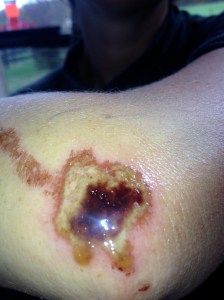
WARNING GRAPHIC PHOTOS taken directly after the incident, then later.

IMG_3185.JPG IMG_3184.JPG

The colt’s left hind foot grazed my elbow, causing my arm to swing back and hit the corner of a stall. I required X-rays to assure nothing was broken.

IMG_3202.JPGMy right breast, just moments after the impact.

IMG_3274.JPG     IMG_3273.JPGDespite scrubbing the wound immediately with disinfectant from the vet, an infection set up, requiring antibiotics.

IMG_3313.JPGAfter a week of antibiotics, the infection retreated. But the wound took more than a month to fill in.

IMG_3267.JPG My breast required pain meds, and had to be noted in my records, due to the internal scar tissue created which will show up on future mammograms.

I am a professional, and I knew what I was doing, and I wasn’t doing anything inappropriate. Neither was the colt. He was just being a colt. Almost any owner/trainer of captive wild animals will say the exact same thing about their animals after an incident.

However, there are some major differences between this horse and me, and captive wild animals.

The biggest of those, is that even if I’d been killed, no authorities would have shown up and confiscated the horse, and possibly euthanized him. No news crews would have shown up to discuss the problem of ‘captive horses’ being kept in ‘back yard zoos’. Horses and their owners all over the globe would not fall under fresh scrutiny, and there would be no sudden push for legislation to protect horses from being held in captivity.

If the colt had been a captive lion or tiger or other wild animal, all of those things would have happened, or could have happened. Maybe even worse things would have transpired. All because the animal acted like an animal, and I happened to be too fragile to withstand it.

Private owners are killed or maimed by their captive wild animals on a regular basis. This isn’t something new. Celebrity conservationists and animal trainers are also killed and maimed by their captive wild animals on a regular basis. It’s also nothing new.

Yet hundreds of thousands of members of the public continually try to categorize these incidents into neatly labeled boxes like ‘They were amateurs, and didn’t know what they were doing.’ or ‘They mistreated their animals, and the animals fought back.’ or ‘It was just a freak accident, that no one could have prevented.’ or ‘It was the fault of someone else present, not the the fault of the animal, or its celebrity conservationist.’ when the truth and absolute fact is that none of the incidents would ever have happened if someone was not directly interacting with a captive wild animal.

Here are links to just a small sampling of documented attacks and incidents involving captive wild animals with trainers. Here’s a PDF file compiled by the Human Society documenting hundreds of circus related incidents. It happens in the film industry, with trainers who have ‘perfect safety’ record. Even owners who start out thinking that they’ll be able to communicate with their animals, and be successful interacting with them often learn the truth, sometimes, they’re lucky enough to learn it without dying.

The one, single defining fact shared by these incidents, is the direct interaction between humans and captive wild animals.

This is why ICARUS maintains a strict hands-off approach to conservation. When you directly interact with a captive wild animal, it is not a matter of if something will happen, but when it will happen. And when it does, it will be the animal who suffers. There is no free pass for celebrity conservationists. They run the exact same risks as someone who’s raised and trained animals in their backyards. The only difference is in how the public chooses to justify one, while vilifying the other. For the ICARUS group, however, there is no difference at all. Our focus is the well being of the animals, and therefore we will continue to speak out against direct interaction with captive wild animals for any reason beyond rehabilitation and medical treatment.

As gratifying as it might be to interact with captive wild animals, it simply is not worth the risk of what could happen to those animals if something went wrong.

Author: Artemis Grey

Feature photo credit: Peter Lawson

Media, Money, and Me: The Three ‘M’s of Mock Conservation

I’ve been very off the radar in the last few weeks. I first went on a two week camping vacation and then needed to deal with some personal things, both sad – the death of a beloved cat – and great – I’ve now officially signed a book contract for my Contemporary YA! While I was gone, the other members of the ICARUS team have done an amazing job of holding down the fort – from thousands of miles away, no less! Now that I’m back, and I’ve attained some semblance of balance, I’m trying to get back into the swing of writing blog posts.

As I was reinserting myself into social media, I found my feed congested with numerous animal-related posts. This isn’t unusual, of course. A number of them had to do with recent developments in the Kristen Lindsey case (you might be familiar with the Texas veterinarian who shot a pet cat through the head with an arrow and then boasted about it on Facebook. If not, a quick Google search will bring you up to date) but a huge number of them were posts I’d either been tagged in by well-meaning friends, or that had been shared by people I follow (some of them Celebs) and who were just trying to share happiness and good feelings.

The problem is, the majority of these ‘feel good’ posts involve mock conservationists who are basking in the limelight of their own proclaimed knowledge and awesomeness. They are not, in fact, people acting in the name of conservation, nor are they acting in a manner that will meaningfully further genuine conservation. The ICARUS group has posted before on this subject, and we’ll post again, unfortunately, because it is a constant struggle to convey to the public exactly why these (many times) adored and revered ‘experts’ are doing more harm than good in the world of conservation. I like to use the 3M system when taking measure of a supposed conservationist.

Media – Just how much media coverage does this person receive? You can’t always control whether or not the media focuses on you, of course, but does the person seek media attention out? To they regularly engage in media outreach by posting videos of themselves working for their conservation? Do they constantly offer professional opinions on whatever animal welfare subjects are trending? And does their professional opinion consist of comparing what they do, to what the subject is, in a fashion that presents ‘their’ way as the ‘right’ way?

Money – Does the person gain money from directly interacting with their animal, allowing the public to directly interact with them, or by exploiting the animals by using them to make movies, or commercials?

Me – Does the person focus primarily on themselves, what they do, and how they do it, rather than the animals and their plights? Another good judge is to look at it from the standpoint of ‘If you removed the supposed expert from the situation, would you still get information about the animals, or would the whole thing be meaningless without the expert?’ If you can removed the ‘main character’ and still walk away with a plethora of information about the animal and it’s plight, then the focus is truly on the animal. If you can’t remove the ‘main character’ and still learn something about the animal, then the supposed conservationists has made it all about them, rather than the animals.

And yes, some of these are folks we’ve spoken out against before. We don’t have any personal vendetta against them, we simply do not agree with that they’re doing, and how they’re influencing the public, and they remain squarely in the spotlight of the public’s enamored eye, thus making themselves a target for us to counter.

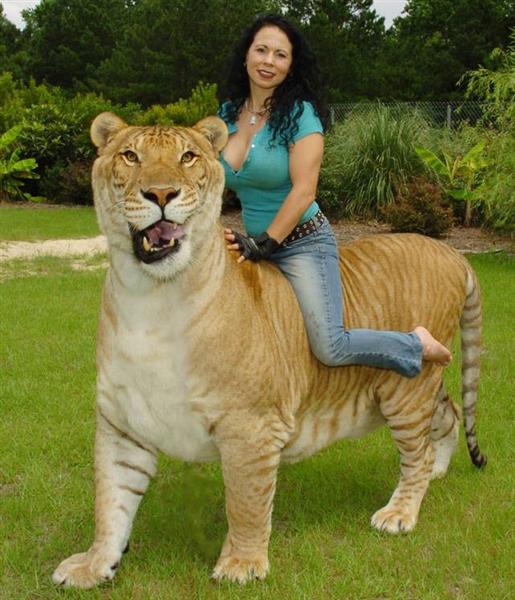
The first culprit of these mock conservation articles in my news feed is no stranger to conflict. Bhagavan “Doc” Antle has been at the center of both loving fans, and lawsuits, often in equal measure.

tumblr_m7l3haeJ2L1r4amizo5_500

Since Rolling Stone featured him in a recent article (why, oh why, Stone, can you not grasp the need for research in your articles?) about the death of a zoo worker in New Zealand, the aforementioned article has cropped up in my newsfeed repeatedly, often accompanied by comments along the lines of ‘This guy has the coolest job ever!’ or ‘Sign me up, I want to visit!’ or ‘This guy is amazing! Saving those rare cats!’

This is *the* most difficult things to counter in the world of media. Misinformation. In a world where Google is the go-to answer for everything, the majority of people read an article published by a well known name and then perceive whatever is written within that article as irrefutable fact. Tragically, this is how falsehoods are spread thousands of times over. Rolling Stone portrayed Antle as a boisterous, eccentric, but utterly devoted conservationist, who runs a sanctuary for rare big cats. They smoothed over Antle’s blatantly chauvinistic and arrogant belief that ‘there is no valid critic of Doc Antle’ as a laughable part of his personality. The author of the article did not seem bothered by how Antle likens those who do not support direct interaction with wild animals to ‘jihadists’ who don’t believe there’s any other way to see the world. Within the first few moments of the interviewer’s visit Antle made it clear that he both believes himself to be above reproach, and that anyone who speaks out against him is an extremist bent on destroying him. His business parks (and they are his “business”) are not GFAS accredited sanctuaries, but rather breeding facilities, or public entertainment facilities. In every day social interactions, someone who speaks of themselves in such a way would be quickly abandoned by those around him for acting like a pompass ass. But in Antle’s case, the interviewer only laughed it off as ‘personality’.

doc___whites_w640

The article went on at length, covering Antle’s background and early years, detailing how he first purchased a tiger cub from a friend with ‘zoo connections’ (likely this cub was a victim of the breeding-for-public-attraction at zoos) and how after training it to sit still, he got the idea to charge people money to have their photographs taken with it. Oddly the article fails to mention that when Antle left Virginia he also left a number of animals (primarily fowl and deer) abandoned in their enclosures on his property. There was also concern involving a possible tiger bite at that facility, but as it occurred in 1989 records about it are difficult to find. I live not far from where he was located, however, and everyone knew about ‘that crazy moron with all those animals who fancies himself an expert’. Then one day, he was simply gone, and the county was left to clean up the aftermath, and re-home the animals.

The article also failed to note any of almost 40 violations registered by the USDA alone (there are other charges or violations from other groups) that Antle has managed to collect over the decades that he’s been breeding and mishandling wild animals. Many of these involve inadequate housing, or enclosures, failure to provide appropriate feed, actual escapes of cats and apes, and at least once incidence of attack on a model being used in a photo shoot. In that case, Antle vehemently insists that the model cut her head by falling off a platform, despite that the treating doctors documented the injury as a big cat bite, and the model underwent the rabies vaccination course.
Doc-Antle

Antle’s list of violations is a matter of public record, but continues to be overlooked by the media who offer up stories of his supposed efforts in conservation. Here are two links highlighting how what Antle does is damaging, and his USDA violations.

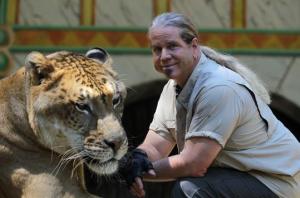
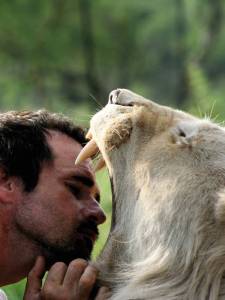
Next on the list of mock conservationists is also someone we’ve talked about before, and someone who has a throng of followers and fans. I’m sure posting him here will be met with defensive comments. I give you my word, I’m only including him in this post because stories featuring him have shown up in my feed multiple times in the last week. Kevin Richardson – often referred to as the Lion Whisperer – is known across the globe for ‘being accepted as part of the pride’. The problem is, the ‘pride’ is an artificial one comprised largely of animals that Kevin himself bought (arguably to keep them from being used in canned hunting, but by buying them, he still put money into the canned hunting industry) and hand raised himself. Objectively, his ‘acceptance’ by this pride is no different from the ‘acceptance’ of any backyard owner who interacts with their captive exotic cat.

Kevin-Richardson-Backstreet-Boys-Member-Celebrates-44th-Birthday-Oct.-3

Kevin puts out videos quite often, all of them featuring him interacting with his lions, sometimes outlandishly riding them like ponies, or roughhousing with them. He has trained a number of his animals for movies, and has used them for such. In this case, the video was shared by multiple people, showing up repeatedly in my feed as ‘He releases a lion back into the wild, but then something amazing happens’ or some version of that. I recognized Kevin immediately, so I knew it was false. I did read the article, and watch the video, however, so I could say that I had. You can find the article and video here. Both the ‘bait tag’ and the title of the article state clearly that a lion is getting returned to the wild.

The truth, however, is that this is a lion Kevin bought as a cub, and then hand raised, and it is not being released into the wild – and has never even been in the wild. The author of the article clearly has no idea what’s actually going on, and has even tagged the post with hashtags like #wildanimals.
acf9b92feb224a15684bf7a3958ded4e

Throughout the video, Kevin interacts with his own lions, yet he never talks about wild lions, their plight, or anything conservation related. He never makes it clear that he bought the animal in the video, or that it is a captive animal, or that it’s going to remain captive. He gives the viewer no objective, tangible information at all on lions. He discusses the lion’s unusually white coloring, but does not explain that he owns dozens of other white lions, instead, leaving the viewer with the sensation that this lion is somehow special. Besides stating ‘I don’t ever think for one moment that they’re domesticated’ Kevin does not address the fact that he’s playing with wild animals, nor that by doing so, he’s endangering both himself, and the lions. Instead he says that the reason he can interact with them is because ‘I have a relationship with them.’ This is – verbatim – the exact reasoning that every private big cat owner uses to justify the fact that they choose to keep a wild animal captive as a pet.

Richardson’s videos are perpetually shared, and touted as amazing feats of relationship between a man and his animals, and more often than not, they are portrayed incorrectly as animals being released into the wild, or ‘rescued for conservation’ when, in reality, he uses them to make movies and television shows, documentaries (which focus on him and his animals, rather than wild animals) and youtube videos showcasing both him and his lions and hyenas. While Richardson has spoken of conservation, and participated in conservation efforts outside his own sanctuary (which is not GFAS accredited, because, in part, of his direct interaction with his cats) he remains most known for all of those videos and movies which feature him playing with his own captive lions. Even the video I’ve linked to is basically a six minute commercial for Fixodent. It is undeniable that the selling point, and what viewers will remember most, is Richardson playing with the lions, and by using the lions to sell a product, Richardson is exploiting them.
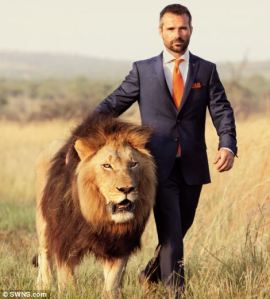
article-2648503-1E7576BA00000578-919_470x522

The last two people I’m going to talk about are not unlike Richardson.

The first as been around for many years, but I hadn’t heard of him until one of his videos appeared in my feed. The video itself is quite old too, and with 38 million+ views on youtube, I’m amazed I haven’t seen it before. His name is Sulo Karjalainen – the Bear Man of Finland – and his videos are featured on websites like ‘cute overload.com’ The one that showed up in my feed can be seen here, and had a catch phrase like ‘Only one man dares swim with a polar bear’.
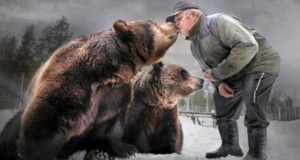
friendship-man-and-the-bears-615x330

A celebrity in his homeland because of the ‘special bond’ he has with his bears, Sulo seems to interact with them on a daily basis, and has taught many of them to do tricks. He’s been featured on various sites. He first began by raising orphaned cubs, and if they couldn’t be released into the wild, he kept them. Currently, he owns six bears, and a number of lynxes, housing them at the Kuusamo Large Carnivore Centre.

maxresdefault

As there is a language barrier on many of the websites, it is difficult to find a great deal of information about Sulo, but it is clear that he considers conservation to be his main goal. Even though videos of him playing with his bears continue to crop up.

Similar to Sulo, Shaun Ellis the ‘Wolf Man’ of the US, supposedly shares a ‘special bond’ with his wolves. Though Ellis started out researching wolves, he soon fell into the roll of ‘special expert’ and began actually living with the wolves and interacting with them daily.

article-2213320-155C1D16000005DC-5_634x396

After becoming a household name through several documentaries – all of which focused on Shaun living with the wolves and being ‘one of the pack‘ in a mirrored wolf-version of Kevin Richardson and his ‘pride’ of lions, Shaun has since relocated to the UK where he runs a center that offers courses on understanding wolf behavior, and dog behavior, and bizarrely enough, encounters with the wolf hybrids that Ellis breeds.

Shaun Ellis and pups &Ponies 246

The fact that he actively breeds wolf hybrids alone is a testament to how damaging his influence is. Ellis claims that the hybrids are ‘used extensively in his research‘ though it’s not clear how breeding and studying hybrid animals can actually benefit wild wolves. Despite that he makes money off of allowing the public to play with his hybrid animals, and even offers courses in learning how to interact with them the way he does, Ellis is regarded as a hero for conservation, something that boggles the mind when one considers that he propagates the crossbreeding of wild and domestic animals for profit. Obviously, neither of these facilities are GFAS accredited sanctuaries.

12006283_945396408840217_3367454882953136310_n


I’ll end this post with probably the most recognizable group on the Internet today, the Black Jaguar White Tiger foundation. With over 4 million followers on Instagram, Eduardo Serio’s questionable ‘rescue’ foundation has become a social medial monopoly. They post thousands of videos portraying rampant mishandling of the animals in their care, do not believe in spaying or neutering their cats, and claim that ‘all is possible if you simply love each other’.
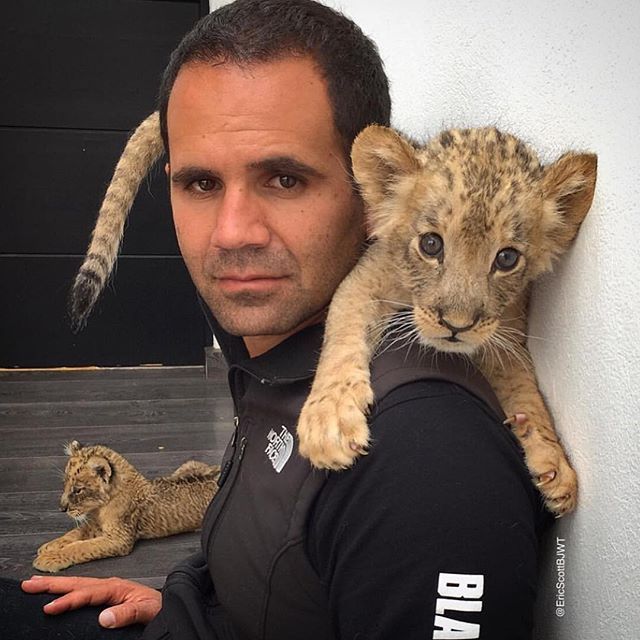
f54c36000bd7537ddbb1a74902518fa7

Their foundation page hosts a sponsorship section in which you can choose to donate anywhere from $25.00 t0 $1,000 per month in exchange for rewards ranging from a simple certificate saying that you supported the foundation to a photograph of your ‘sponsored baby’,  bracelets, FaceTime calls with ‘your baby’, a free t-shirt every month, a cast of ‘your baby’s’ paw print, and a 2 day visit for 2 guests to the sanctuary that includes hotel and meal expenses.*

Startlingly, there is never a shortage of ‘babies’ to be sponsored.

To date Eduardo claims to have rescued near 200 big cats–primarily from circuses or places that wanted to use them as ‘photo props’ and insists that he’s given them the best life possible. Oddly, Eduardo does not seem to connect his own continual rotation of celebrity visitors, all of whom are allowed to hold, feed, play with and coddle his cats in return for donations and media exposure with the ‘photo prop’ life he ‘saved’ them from.

In addition, he cannot explain how nearly all of the ‘rescues’ are cub small enough to be held and played with, though they supposedly came from circuses, which arguably have no use for such young animals. There is no transparency to Black Jaguar White Tiger in any area of the foundation and thus it remains virtually impossible to discern what, if any, of Eduardo’s claims are true. Yet through the venue of social media, BJWT continues to rake in huge amounts of money through donations and backers, despite that the foundation itself consists of nothing more than a house and somewhere between 8-100 acres of land, not nearly enough space to proprietary house 200 big cats. Though the foundation is apparently registered as a “sanctuary” by Mexico BJWT is not a GFAS accredited sanctuary.


Unfortunately, there are many, many more ‘experts’ who exploit their animals even as they’re revered for their conservation efforts. I merely listed those who showed up in my newsfeed recently under the guise of releasing wild animals, or setting examples as to what we should all strive for in matters of conservation. For me, the opposite is true. They all set an example of what you should never do in the name of conservation.

I understand – before anyone comments in defense of anyone – that once a video is out there on the internet, it’s impossible for those in the video to monitor exactly how the public shares it, and the articles to which it might be attached. This is precisely why it is so very vital for those experts to be extremely cautious in what sorts of videos are released, and what sort of example they set.

So the next time a ‘feel good’ animal video or article pops up in your news feed, remember the Three ‘M’s of Mock Conservation. See if they apply to the article or video. If so, then think twice about sharing it, and instead consider leaving a thoughtful comment under it, urging people to dig a little deeper into the motives behind that video or photo. Remember, the more times a video or photo is shared, the more the lies within it are propagated and the longer they will endure.

Author: Artemis Grey

*This offer has been removed from the foundation’s website since the publication of this article.

 

What do airplane bathrooms, Donald Trump and Wildlife Conservation have in Common?

DSC_0093

I never imagined that the start of our first ICARUS Project journey would find me trapped in an airplane bathroom at a cruising altitude of 35,000 ft. To be fair, I don’t think anyone imagines that in any scenario, but there I was clinging to the sink and praying for the travel gods to take mercy on my weak stomach. In that moment I said to myself, “And so it begins”.

IMG_5267

It’s a common problem, creating a viable thesis, students all over the world spend late nights crying over their laptops and wishing for the end of days. Me personally, I just ignored it for as long as possible. No really, I spent the last two years in the field trying to avoid the subject. Luckily, that’s how it found me. I knew, in theory, the difficulty in tackling something as broad as wildlife crime. To expose individuals and organizations that traffic, possess, breed and abuse the wildlife that is imperative to keeping our ecosystem balanced. Not only do they keep our planet in check, but keep its human inhabitants grounded and humble. Our animal cohabitants remind us that we do not in fact own everything around us. When it comes to marking territory, it’s humans that feel the need to piss on every tree.

379311_10152411956065632_848104194_n

So how did I get here, in this cramped, putrid plane toilet? How does a grown woman of 36 find herself with a one way ticket out of America, all her belongings packed in her tired old chevy and headed to Costa Rica, and hoping to save some animals.

SP_Oct11_1-3-680x452

In a nutshell, I’ve got nothing to lose. At the age of thirty I found myself bankrupt and jobless (after losing a job as the manager of a posh horse farm due to a horrific bout of meningitis). I spent two long years shelving videos at Blockbuster (yes, it was THAT long ago) and wondering when my bright future had snuffed out. At some point you put up or shut up, so I emptied my bank account, a whole whopping 500 bucks, rented a Uhaul and headed to NYC to sort it all out.

269070_1919775483186_392084_n

Long story short, the concrete jungle was not my mecca, but it did lead me to an opportunity through my school to travel abroad to Africa, Namibia to be specific. An opportunity to work with wildlife, specifically big cats, for the first time. Perhaps, Namibia was my mecca and the cheetahs my saviors. There was no turning back after that. I left NY and gave impoverished internship living a shot. From the diversity of the rescues at The Black Beauty Ranch in Texas, to the majesty of the North American wildlife at The Wildlife Center of Virginia and then the ferocity of the Big Cat Rescue residents in balmy Tampa, Florida. I finally found my purpose. Not only did I learn to understand the biology and behavior of the animals that inspired me to live off of peanut butter and toast, but I was exposed to the suffering and neglect that these sentient creatures fell victim to, not only in the countries spotlighted by the media, but also in the pseudo sanctuaries, roadside zoos, canned hunt farms and backyards of America. That’s when I found my purpose. That’s how ICARUS came to be. No matter how idealistic, I believe this project can effectuate great positive change and my ICARUS cohorts share my crazy mission.

DSC_0096

Flash forward to the misery of my airplane bathroom captivity. In the fetal position and my head between my knees, I had no idea this was only the beginning of my nearly 24 hour journey into the jungle. When fellow ICARUS member Sarah and friend Becky picked me up at a bustling and slightly overwhelming San Jose airport we couldn’t forsee that we were climbing into a car that would drop its clutch just before the mountain pass, resulting in a 500 dollar garage bill. We would then find ourselves throwing Sarah’s credit card into the pot and doing a hail Mary, in the hopes that we would have just enough to rent a car and get us over the pass on a dark and rainy night. Somehow we managed to get back on the road and three women, a ton of luggage and a failed scat dog named Cody, barreled over what is perhaps the shiftiest mountain road my poor stomach has ever encountered. Despite any emotional, mechanical or financial obstacles we arrived at our destination alive and well, thankfully!

IMG_5262

So, here we are, in Puerto Viejo. We are currently living in a house (The Love Shack) with a leaking gas cooker, fans that probably started the Ebola epidemic and floors that are slowly becoming holes beneath our feet. This is apparently what happens when you embark on an epic journey with absolutely nothing in your bank account! Within my first 72 hours in Puerto Viejo I found myself advocating against turtle poaching, the sale of endangered animal meat and … wait, cock fighting…really? All of which is apparently occurring right here now. Sadly, this was just with the American residents. I even found myself trapped in a supermarket queue while a preening, peacock of a man preached to a local woman that she needed to look past Donald Trump’s inane racist comments to find the true value he has as a presidential candidate. I momentarily questioned if I was indeed in Costa Rica or perhaps trapped in the Twilight Zone. This was right before I evaluated how much time I would spend in a Central American prison if I stapled this man’s mouth shut. I decided not to risk it.

DSC_0110

So, here it begins. We hope that you will join us as ICARUS embarks on a journey to pool together the greatest minds in animal welfare, to create resources that we can all draw from no matter our race, religion or creed. To gather the good and expose and bring an end to the corrupt. To use global unity to begin to repair global wildlife issues. Human Beings are the root cause of wildlife devastation, but we are also capable of its salvation.

=

There is No ‘But’ In the Word Conservation

In an earlier post titled ‘Why The End Will Never Justify The Means When It Comes To Conservation’ (which you can read here) ICARUS wordsmith Artemis Grey focused on the issue of ‘hands off’ conservation, particularly citing the world famous ‘Lion Whisperer’ who insists that his main focus is animal advocacy and conservation, even while he, himself, interacts with the lions under his care, and engages in the exact activities that he condemns as animal exploitation in other situations. As expected, we received a great deal of defensive response from fans and supporters of the Lion Whisperer, every one of which contained some version of the statement ‘He does those things, but…’

But he raises awareness. But the animals are well cared for. But he does more good than bad. But he has a special bond. But the only reason you’re attacking him is because secretly, you’re jealous of him. But you can’t compare what he does to ‘real’ cub-petting. But he didn’t breed his lions (up for debate) so it’s not the same. But other experts do it, so it’s not fair to single him out. But, but but….

After consideration, Artemis decided to write a second post on the matter of hands off conservation, expanding it. After all, she did, indeed, focus primarily on the Lion Whisperer, and he isnt the only ‘expert conservationist’ who mishandles the animals in their care, and he’s not the only well-known “sanctuary” which fails to qualify for GFAS accreditation because of direct contact with animals.

The ICARUS group maintains a strict policy against handling captive wild animals, except for the purposes of rehabilitation or medical treatment. Have the members of ICARUS made mistakes? Yes, you can read one of the first posts we ever published wherein we acknowledge that we’ve made mistakes, and subsequently learned from them, and strived to do better, here. It’s human to make mistakes. It’s exploitive to continue making those mistakes and label it as conservation.

It might be best to start with the original ‘Father of Lions’ himself, George Adamson. There is virtually no one on earth who hasn’t heard of Elsa the lion, and her offspring, or of Joy and George, the folks who raised Elsa and other lions. What isn’t well known, is that Elsa herself died tragically young (widely believed because of a tick-borne illness, but the truth might have more to do with human predation, though the pressure to cover it up is immense) and all of her offspring also died within a few years, killed either by game wardens for predation on livestock or attacks on humans, or killed by farmers as they were attacking livestock. In addition, one of the very lions used in the making of the famous movie Born Free, injured staff during filming, and was subsequently shot by George himself after mauling a child, and then killing one of George’s assistants, whom the animal had known since birth.

tumblr_loowclyMlV1qbo67vo1_1280 Joy with Elsa, considered ‘Conservation’

0Tourist who paid to play with lions, considered exploitation.

It’s possible that if they were alive now, both George and Joy would have regrets about their inadvertent exploitation of the lions in their care (and of course, GFAS accreditation did not exist while they were alive). Actress Tippi Hedren shared similar experiences with lions as a young woman, but Tippi, now 85, advocates against ever possessing a big cat as a pet or otherwise exploiting them.

The word ‘but’ in regard to conservation is a dangerous, and insidious thing. When you are dealing with a public looking to you for examples of how to protect wild animals, you must make yourself an ideal example. A child who witnesses domestic violence, even if as a child they are told that hitting people is wrong, is at a much higher risk to subsequently abuse their domestic partner. While this statistic does not directly relate to animal abuse, it does represent the scientifically accepted fact that a child who witnesses something they understand to be wrong is more likely to engage in that behavior at some point, than a child who witnesses correct behavior. Applied to conservation, this means that children who idolize adults mishandling animals in their care might understand that the animals shouldn’t be handled that way, and yet still engage in that behavior themselves. It is far better to simply refrain from doing things you don’t want the public at large to do.

The late Steve Irwin is another example of someone with the best intentions, who did not necessarily set the best example. I adored Steve, I still adore Steve and his family. I think they have the best intentions, and they’ve certainly helped to bring conservation into the limelight. However, Australia Zoo continues to allow the public to walk with, take pictures with, and feed tigers and other wild animals, for a starting price of $400.00. I would never slander Steve. I simply do not condone the behavior of his Australia Zoo.

16-year-old-bindi-irwin-crocodile-hunter-fathers-legacy-australia-zoo-4Bindi, with one of Australia Zoo’s tigers. Bindi remains a leading name in conservation.

Thailand-Tiger-Park-reopens-after-mauling-650x487 Tourist paying to play with an adult tiger, considered exploitation.

s-Steve-IrwinSteve feeding a tiger at conservation-based Australia Zoo

QGlZuLPTrainer feeding Hercules (a hybrid animal called a liger) at T.I.G.E.R.S, a group devoted to the conservation and preservation of rare and endangered species

61637656bd560c478e961aa9391c4df4Tourist participating in a pay-to-play scheme.

The human capacity for rationalizing is inexhaustible, much to the detriment of the animals in their care. Often times, ‘experts’ with a comparable amount of experience with their animals are differentiated by how they’re presented, not what they’re actually doing. Humans will rationalize away blatant similarities simply because they like one expert over another, or because they feel that what one expert is doing with their animals is somehow more righteous than what another is doing, when in fact both experts are exploiting their animals.

400393 01: World-renowned illusionists and conservationists Siegfried & Roy pose with Pride, the Magical White Lion in this undated photo. The Las Vegas entertainers, honored as Magicians of the Century, perform at The Mirage where they have been the longest and most successful entertainers in the history of Las Vegas. (Photo courtesy of Siegfried & Roy/The Mirage via Getty Images)
Siegfried & Roy pose with Pride, the Magical White Lion. Many members of the public feel that Roy finally ‘got what he deserved’ after years of exploiting his big cats in his show.

5I9ZeAwThe Lion Whisperer relaxing with one of his white lions, vehemently defended by his fans as a ‘conservationist with a special bond with his animals’. His television shows depicting such interactions are not considered animal exploitation by his fans, but rather, advocacy.

It is not merely individual highly visible people who engage in this sort of ‘It’s okay for me to do it, I’m an expert’ behavior. Dade City’s Wild Things has been in the media recently after coming under fire for allowing tourists to swim with tiger cubs (for a price) but the park adamantly defends its decision to allow public interaction with its animals as outreach and conservation advocacy that gets the public involved.

Black Jaguar White Tiger Foundation is an extremely recognizable foundation which claims to be a rescue center and a sanctuary. However, while it is a private organization, celebrities are often invited to come visit and play with the many young animals, and it is not a GFAS accredited sanctuary. Despite that the group advertises itself as a conservation center, the animals are uncut and allowed to breed at will. With hundreds of thousands of defending fans, Black Jaguar White Tiger is acclaimed and its founder, Eduardo, is worshiped as a savior of the animals in his possession. The truth is that he permits breeding, and handling, using the massive draw of adored celebrities playing with captive wild animals to provide constant social media exposure. This, in turn, brings in huge donations which he uses to maintain his facility.

2a242649face8e02afca920ae7e4dc29Eduardo’s foundation is strictly for conservation and rescue, he claims.

340x252-1432844013635669142439325897-543589299_BlackJaguarWhiteTiger_facebook.jpg?f4e9c5Eduardo, and various celebrities, at the Black Jaguar White Tiger Foundation. The large number of cubs is not maintained through ‘intentional breeding’ Eduardo and his supporters insist, but rather, through ‘allowing nature to take its course’.*29137009.sfimages

T.I.G.E.R.S. (The Institute of Greatly Endangered and Rare Species) of Myrtle beach fame is another group that runs multiple parks, and multiple opportunities for the public to hold and play with the animals the group is supposedly breeding and raising in the name of conservation. Though their very name insinuates that they deal in endangered and rare species, one of the animals they’re most famous for, Hercules the liger, is not a naturally occurring species at all, but rather, a hybrid created by humans through the forced breeding of a lion and a tiger. Though T.I.G.E.R.S. says it donates a great deal of money to conservation, most of that money is made by allowing the public to play with captive big cats, and there is little evidence that any of it actual goes to conservation. They are also not GFAS accredited, despite their use of the word “sanctuary”.

hercules_-_largest_living_cat_webpage2_guinness_world_records_500x388Hercules, of T.I.G.E.R.S. with a trainer. They advertise themselves as experts helping to preserve endangered and rare species.

rajani-ferrante-riding-liger-herculesHercules of T.I.G.E.R.S. with another trainer.

hqdefaultThe Lion Whisperer, defended as an expert conservationist with a ‘special bond’ by his fans, riding one of his ‘fellow pride members’.

1282976243119-adventure picsTourist participating in a pay-to-play exploitation of big cats.

Lion tamer riding one of his circus lionsLion tamer during his act, something that everyone who supports conservation would condemn as exploitation.

And there are many, many more groups and people who engage in behavior that is damaging to their animals. It would literally be impossible to include every single one in one post. There will always be one more person or group who is ‘worse’ or ‘less responsible’. It remains an uphill battle to speak out against such activities, as fans and followers will always defend those they adore, but the ICARUS group remains firm in their position. It is entirely possible to love a person or group, and yet not condone what they do. It is possible to disagree with their actions openly without slandering them. It is also possible to feed and shelter an animal, and still do it a terrible injustice by exploiting it.

The photographs in this post are designed to highlight the dangerous problem with using the word ‘but’ in regard to the handling of animals by people, experts or otherwise. This is one reason that the ICARUS group is evenhandedly against ever handling captive wild animals aside from giving them medical care, or rehabilitative therapy, and one reason that we chose to embrace the strict guilders of the GFAS. Humans will always attempt to rationalize why it’s acceptable for one person to carry out exploitation while it’s unacceptable for others to do the same. Thus, we take the stand that it is never acceptable. The justification of an expert’s behavior is a slippery slope the ICARUS team refuses to even start down. Instead, we choose to approach conservation and preservation by setting an example of what the public should do in regard to both wild animals, and captive wild animals, rather than showing them what they should not do.

In the words of Thoreau ‘Wildness is the preservation of the world.’ 

If you love wild animals, keep them wild. Support groups like ICARUS who are working to keep them wild, not treat them like pets in the name of conservation. Actions speak louder than words. If someone is receiving money in exchange for allowing public interaction with captive wild animals, or receiving money in exchange for their own interactions with captive wild animals, then they are not acting in the name of conservation, even if they are speaking about it.

Author: Artemis Grey

*This statement has been removed from the foundation’s website since the publication of this article.

Why The End Will Never Justify The Means When It Comes To Conservation

Conservation is a complex issue, with complex answers, and complex situations, and very rarely can matters within it be distilled into a single, rigid policy. However, the single issue on which there is no room for discussion, is the subject of handling, and directly interacting with captive wild exotic animals. Aside from issuing medical attention or for purposes of rehabilitation, there is no benefit for the animal, in having humans handle or touch it. For the members of team ICARUS, this is nonnegotiable.

It is not, under any circumstances, acceptable for anyone, regardless of their supposed expertise, to play with, or directly handle, or socialize with captive exotic animals. This ‘special bond syndrome’ is most prevalent in big cat species, and is the leading reason so many big cats are privately owned by citizens. Every well-meaning owner believes that they have a special bond with their animals. Tragically, this very often results in injuries or death to the owners, or their acquaintances, and subsequently to the big cats themselves, who are nearly always euthanized after being involved in an attack.

Even more disturbing than the private citizens are the highly publicized ‘self-described animal behaviorists’ (traditionally a true animal behaviorist is someone who has obtained a graduate degree in related fields and has obtained a post-graduate certification) who routinely handle and interact with big cats, claiming that they do so through a special bond. The most easily recognized of these is the so-called ‘Lion Whisperer’ of South Africa. One needs only Google the title to find hundreds of pages, all filled with videos of him cheerfully playing with full grown lions or leopards, as well as spotted hyenas. The Lion Whisperer has been hosted on nearly every major network, all of which focused on his ‘amazing bond’ with the lions and animals of his sanctuary. They show a plethora of clips of him interacting with the lions, napping with them, and fondly dictating the story of each one – nearly all of whom he’s raised from either adolescence or cub-hood. It’s always mentioned that his sole purpose is to ‘bring attention to conservation matters’ and to ‘end the cub-petting industry’. The fundamental problem here, is that he’s participating in cub-petting with adult animals.

Conservation is not, and never will be, aided in any way by publicizing the act of playing with an animal. If one goes to Youtube and searches for the Lion Whisperer, they’ll be greeted with pages and pages of him playing with the lions. Where, in all of that dream-worthy special bondness is any conservation of remaining wild lions? All of the animals featured in the programs live on one of his reserves, or in his sanctuaries. Many of those have actually been imported from other places, and were not rescued, or rehabilitated. Not one animal, in the history of his sanctuaries, has ever been released into the wild. They cannot be released because they are thoroughly habituated to human interaction. A habituation that is continually reinforced through daily interactions. The fact that he has, indeed, rescued many animals from deplorable conditions, is completely overlooked by the fans who fixate on his highly publicized videos of playing with the animals.

The Lion Whisperer has thousands of loyal fans and followers who will defend him and his actions vehemently, but for the ICARUS team, actions speak louder than words. Despite all of his claims of being focused on conservation, and the fact that he has actually rescued animals, he also maintains private reserves and sanctuaries, he plays and interacts with the animals in his care, and he trains them for use in movies that he writes and produces. And those actions keep his sanctuary from being GFAS accredited. In this case, the good he does, is vastly overshadowed by the fantastical persona of Lion Whisperer who plays with lions, other big cats and wild animals. It is that persona that the public worships.

If he were a civilian who owned ten big cats and made movies with them, much of the public would consider him to be part of the problem with animal exploitation. However, they embrace the Lion Whisperer and his ‘amazing bond’ with his animals, and seem to find nothing wrong with his behavior because he’s ‘doing it for conservation’. But how many people actually associate the term ‘conservation’ with the term Lion Whisperer? The title Lion Whisperer is synonymous with the image of a man playing with a pride of lions, not with the ongoing plight of Africa’s wild animal population.

You cannot teach people that wild animals are not pets by producing movies wherein you treat wild animals like pets. You cannot teach people that wild animals should not be bred in captivity, or held in captivity, while you stroll through a created pride of captive-bred lions. There are no ‘buts’ in the terms of conservation. Experts do not have the luxury of doing things that they are actively trying to ban the public from doing. If cub-petting feeds canned hunting, and harms big cat conservation, you cannot claim that producing multiple movies that highlight your own adult-petting aids in conservation.

This is why the members of team ICARUS have a strict policy against cub-petting and direct interaction with wild exotic animals, and why we look to the standards for GFAS as a guidline. What Dade City Wild Things is doing by allowing the public to swim with tiger cubs, is no different from the Lion Whisperer swimming with adult lions. In both cases, humans are interacting with captive wild exotic animals not because it benefits the animals, but because it makes the humans feel special.

In the words of Jane Goodall, “What you do makes a difference, and you have to decide what kind of difference you want to make.”

The question is, do you want to create a world where it’s acceptable for certain people to exploit animals in order to bring attention to animal exploitation? Or do you want to create a world wherein there is no animal exploitation at all?

The ICARUS team hopes that you will choose to become the latter. Don’t be dazzled by those who make a name for themselves by using the animals they should be caring for. Don’t allow them to convince you that it’s acceptable for them to treat animals in a way that no one else should, simply because they’re special. Remember, the animals they claim to have a special bond with have been hand-raised from birth, no differently than the cubs in cub-petting schemes. They’ve been conditioned to accept human interaction. The only difference is that while the cub-petting schemes sell their cats into the canned hunting industry, people like the Lion Whisperer simply continue to make money off their adult animals.

Author: Artemis Grey