We Are Legion… If We Decide To Act Like It

Some of you might have seen the headlines in regard to Lumber Liquidators, and the fact that they have now admitted to importing, and subsequently selling, hardwood which was illegally harvested from the habitat of the highly endangered Siberian tigers and Amur Leopards in the far east of Russia. Since I’m in Virginia, which is where the company is headquartered, I’d heard back in the beginning of October that something fishy was going on, but details as to what, exactly, were not yet available. Then, on October 8th PilotOnline.com ran an article on the matter, which shed a little more light on it. You can read that one here. There still wasn’t much National attention on the subject, though.

Now, that’s changing. Multiple news sites like CBS, CNBC, NBC, and The New York Times, are picking up the story and making noise about it. Their coverage ranges from blurbs, to more in depth information. Overall, most people involved seem to be satisfied with the ‘hefty fines’ that Lumber Liquidators has agreed to pay. But the term ‘hefty fine’ means something different to the lawyers, and judges, than it does to me. Or to Lumber Liquidators. Oh, I’m sure that they’re wailing internally, but let’s examine this ‘hefty fine’ in the format of numbers.

The company will pay $13.2 million dollars in fines. Seems legit. Written out, it looks like this:

$13,200,000

But in stark contrast, the company made about $1.05 billion in profits last year, which looks like this:

$1,050,000,000

So basically, the company is giving up just over one percent of the total profits they received in just one year of existence.

Look at it this way: You find a $100 bill, and your big brother takes it from you and gives you a $10 bill instead. Sucks hind tit, right? Now, imagine that your big brother came into your room, stole a bunch of your super hero figurines that you’d been collecting , sold them for $100, and you caught him, and he said he’d give you $10 because he’s sorry. On a very simplified scale, this is what Lumber Liquidators did.

Between 2010 and 2015 they pulled in roughly $5.6 billion dollars in profits. That’s $5,600,000,000. They’re paying only $13.2 million dollars, or $13,200,000 in fines.

And they only have to do it once.

Next year they’re (probably) going to make another $1,000,000,000. And the year after that. And so on and so forth. If the company only stays in business one more year and does well, it’s still going to make over 7 times more than what they paid in fines. Presuming, of course, that they actually pay the fines now, and don’t drag their feet about it. With a hearing not even set until February of 2016, a speedy payment doesn’t seem too likely. But according to the Justice Department, Lumber Liquidators’ fine is the largest financial penalty ever imposed for illegal timber trafficking, and it is a huge success.

This is one of the greatest, and most heartrending issues within the conservation community. Laws, both those of specific countries, and global, are woefully underdeveloped in regard to the current, and continually growing needs of the environmental world. Humans have been recording history for about 5,000 years, but the first American environmental law dedicated to protecting the environment was passed in 1899. We’ve only been legally protecting our world and the animals within it (in America) for 116 years. Just 116 years out of 5,000. And the number one penalty for breaching the laws we do have, is paying a simple fine, and promising not to do it again. As a rule, there is no loss of business licenses, or jail time given, even to those who made the decisions to break the laws in the first place.

Not only is that just not good enough, it doesn’t even work to penalize anyone. After all, why should companies stop cutting corners, and breaking rules when the only consequence of doing so is to make slightly less profit, when their proft line has already been doubled or tripled by skirting or ignoring those rules to start with? In business (and military) terms this is called Acceptable Loss. The term Acceptable Loss is used to indicate casualties or destruction inflicted by the enemy or market situation that is considered minor or tolerable.

Minor and tolerable. For the company who is making money.

There is nothing minor or tolerable for the Siberian tigers, and Amur leopards who lost thousands of acres from an already dwindling habitat. There is nothing minor or tolerable about the fact that of the just 500 Siberian tigers and 57 Amur leopards left in the wild, a portion of them will likely starve, or die in altercations over the meager, and much too small, habitat they ‘re forced to share. Habitat that is now even smaller.

What our law enforcement groups consider to be massive success stories are nothing more than footnotes in the annals of companies’ histories. Acceptable losses within the churning mechanisms of huge corporations who plow onward in their endeavors, continuing to rake in profits hand over fist. So inconsequential are these payouts that most businesses actually set aside money to be used for them if they crop up. They often pay their own lawyers more to render a settlement on their behalf than they pay in the actual settlements themselves.

But we have more power than any court, or judge, or law enforcement agency in any country anywhere in the world. We can bring these companies to their knees, and we don’t even have to exert ourselves in order to manage it. The only thing we, the people who must live under the umbrellas of these inconceivably colossal  entities, need to do in order to tear them apart, is to not give them our money.

It’s not easy to find out exactly where your food comes from, or where all of the products we use in our daily lives come from. No one has time to google their toothpaste, their rice, or juice, or napkins and see how they’re made, and whether or not the mother company is environmental conscientious. Women, you know what it’s like just trying to see if your sanitary products are 100% cotton, instead of full of chemicals and manmade fibers. It’s incredibly hard to sort out the origin of many of the things we use.

However, it is easy to find out about some of the products we use. The internet is full of farms which focus on producing pesticide-free heirloom fruits and vegetables – more than you would ever imagine, if you google your own area. Small farmers are slowly fighting their way back into the market. Reclaimed lumber is now thoroughly in the mainstream, and many companies focus on using it in their building projects. There are log home companies which specialize in environmentally conscious timbering. Organic dairies are springing up everywhere, along with rabbitries and farms which raise hormone-free beef and even bison. By and large, these products don’t cost more than the conglomerate stuff, they’re just not as ‘in our face’ as the former.

We have the power to choose to utilize these things. We have the power to choose to not use the products of huge corporations. At least some of the time. And you know what? Some of the time beats the hell out of none of the time.

If every single person out there decided that buying a little less of something grown, made, or reclaimed within a hundred miles of their residence, was more important than buying more of something that was imported, or made by a large corporation, those corporations would notice. If every single person who’s never done something like try fresh milk from a herdshare, or rabbit meat (better than chicken) or bison meat (leaner than beef) chose to just try something new, instead of going right for the old stand by microwave chicken tenders, it would make a difference.

A huge percentage of the damage done to the wild spaces we have left in this world, and to the wild animals who live in those wild spaces, is done either to create land which will be farmed by corporations, or to render a ‘cheaper, easier’ product for the consumer. And we keep taking the bait.

These incidents of gross negligence, and the disregard of giant corporations will not be stymied by any law, or fine. It’s like throwing rocks into a swift-running creek. The only way to change the course of that much water is to change the landscape it’s running through. We are that landscape. Us.

We are Legion, if we but stand up and unite.

It will not happen all at once, but it will happen. We have the strength and ability to turn the flow of the consumer river in any direction we want. All we have to do is start.


Author: Artemis Grey

Feature Image Credit: Tapiture
Sloths & The Pet Trade in America

6360289637_4dff19c33f_b

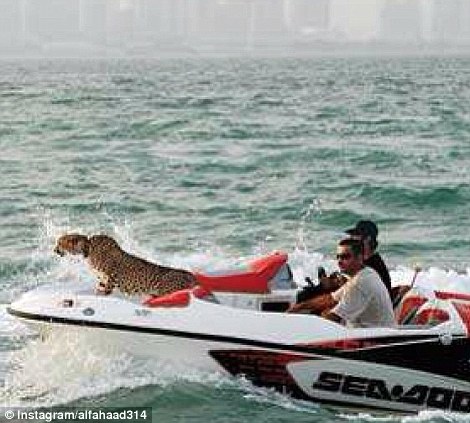
In the Middle East there are plenty of instagram accounts where the Middle Eastern rich have a crazy array of pets. But they are not alone in this, it’s certainly easy over there but in the US it is just as simple (state dependent). In fact you can also get pretty much any pet that you wish for in the good ole Westernised USA too.

article-2509151-197a3bb900000578-785_470x423

Last year I visited Big Cat Rescue in Florida with my good friend and now co-worker Jessica James of ICARUS. If you get a chance to go you should, they are really doing conservation and animal care the right way. One thing I was shocked to learn on my visit there that there are more tigers living in people’s backyards in Florida than in the wild. How is that even a thing?? If your tiger escapes you don’t even have to notify your neighbours!! People have literally woken up with a stray tiger in their back yards. This is just an example of the craziness of the pet trade in America. A tiger…as a pet…

sloth-sanctuary (1)

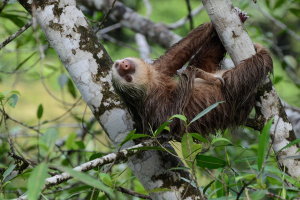
So clearly you can have anything from a tiger to a kangeroo to a sloth as a pet. Nearly all of these will have been stolen from the wild for the pet trade (or for Zoo’s – this still happens!) or they come from dubious ‘breeding programs’. I’m sure I’m not alone in thinking that this is not ok. Either these animals are taken directly from the wild for immediate sale or they are implemented in a breeding program straight off the ship. These places are akin to puppy mills where their young will be taken and sold off at the youngest age possible and then bred again. With Sloth babies you can earn a cool $2000-$5000 per Sloth. Looking at you Oregon “sloth sanctuary” by the way. This delightful place has been researching Sloths for 20 years and yet doesn’t have a single scientific paper to it’s name. Suspicious already. Not only that but they have over FOUR HUNDRED Sloths in their care and allow their guests to have Sloth SLEEPOVERS. Sloths are classed as dangerous mammals in zoos and having worked with both wild and captive Sloths for years I can categorically say that this is not a good idea, not just for the animals but also the people who are paying to do it. The ‘sanctuary’ owner is well known for selling Sloths on forums and considering Sloths are not native to Oregon, guess where they get their Sloths from. Yep, the wild. Most of the animals won’t survive the journey and some will die once they reach the shores of the USA. It amazes me that this country was once seen as a land of freedom, but for these animals it will be a new prison from their old jungle homes. This kind of makes my blood boil, especially as this place is perpetuating itself to be a conservation center.

grid-cell-5692-1416922679-21

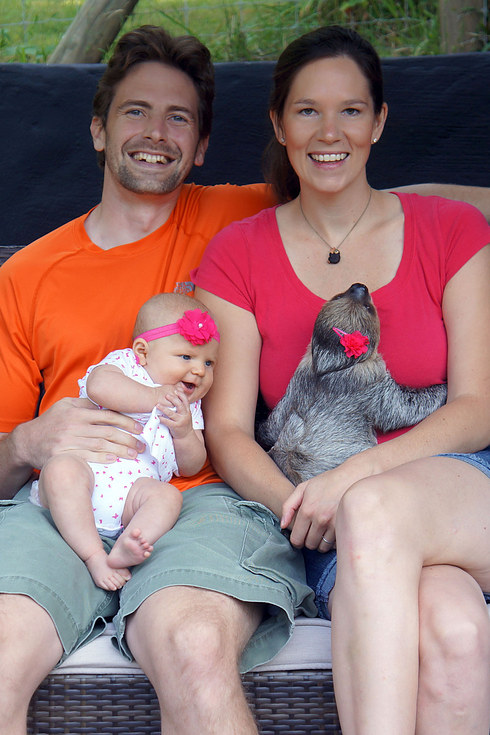
I also find it confusing that people calling themselves “conservationists” can have a sloth as a pet as well (or other exotic animals). Last year I saw some articles and a Buzzfeed list on these guys. First I was annoyed that my friends baby, Daisy, would not be the first baby to meet a Sloth, but then I thought about it and realised that they have a Sloth… as a pet. They are apparently Sloth conservationists by the way but, again, have a pet Sloth. They also seem to like dressing it up in human clothes and making it wear flower hair clips, super natural right? This one makes me sad more than angry, as lovers of Sloths in the wild they should know better. Unless conservation is actually now about taking animals from their natural habitat? As much as I would love to have a Sloth as a snuggle buddy they would a) hate it b) be miserable and c) THEY’RE WILD ANIMALS NOT A TOY! Most of the people who seem to be writing about having a Sloth as a pet and giving people advice, even more worrying, also seem to have no idea about Sloths in the slightest. I came across this beauty earlier who suggests that Sloths love to play peek-a-boo and have parasites. I just…can’t.

nycticebus_tooth_removal_01

Like Slow Loris’s who have their teeth removed for the pet trade often causing infection and death, Sloths also suffer a similar fate. Usually their claws are removed so they don’t hurt their new owners. SLOTH FACT: Sloth claws are actually BONE. They are basically having their fingers removed so they will make cuddly pets. Remember I mentioned that most of the animals will die when transported from the wild so it’s best to ship more? That death rate is around a 80-90% chance of not making it, all so you can have a cool pet.

1d3e6bd2df588d9abeb26cab02edf9536109a2091aa33ac9bb43c015ef7c459a

Please remember that even if you are buying an exotic animal from a breeder that the original ones will ALWAYS have come from the wild. You are literally supporting animals being stolen from their natural habitat just so you can have a status symbol. Spend your dollars on visiting them where they live and seeing them in the wild and not taking them for your own selfish enjoyment and pride. They may be very cute but that doesn’t give you the right to make them an effective prisoner.

Sarah

The Innocence of Ignorance

One of the main things that the members of the ICARUS project want to counter, and eventually eradicate, is the practice of handling and playing with wild animals of all kinds. We, as a group, do not endorse private ownership of wild animals, be they native or exotic, dangerous, or benign. It is a complex subject, but the fundamental keystone of the matter, is that humans should not in any way exploit wild animals. Exploitation of wild animals includes owning one as a pet, paying for the opportunity to hold/play with/swim with/take photographs with an adolescent or adult animal, riding elephants, or owning and utilizing a wild animal for profit, or hunting them for sport or pleasure.

Most of us have either dreamed of getting the chance to directly interact with a wild animal, or have actually done so. As children, there was nothing more magical than the circus, and who hasn’t gone to the zoo? Movies and books only feed this primal desire that humans have to somehow commune with wild animals. The media has always been littered with imagery displaying human/wild animal interactions. But this is an instance in which reality is starkly different from fantasy. Captive wild animals will never be wild the way they were born to be, nor will they ever be truly domesticated. Rather, they exist in a dangerous limbo between the two. The list of how captivity adversely affects wild animals is extensive, and not something to be addressed in this particular post.

Instead, what we want to focus on here, is the fact that directly interacting with captive wild animals is something that has become so ubiquitous that few of us have gotten through life without participating in it in some fashion. The ICARUS team wants to change the way people perceive this problem, and teach them to recognize such interactions as the animal abuse that it is. But that doesn’t mean we condemn anyone who’s ever attended a circus, or held a big cat cub. People make mistakes. That’s how we learn. All of us have made them in the past, but now that we’ve learned better, we try to do better. Mistakes made in innocence can be forgiven. But learning from them is important, because there is a distinct difference between making an innocent mistake, and making an informed excuse.

People who do not understand the depth of suffering that goes on behind the scenes of cub-petting situations, or circuses, or road side attractions cannot be expected to know that they’re participating in a form of animal abuse. But people who have been exposed to the scientific facts behind these situations, and still choose to endorse certain institutions involved with them, are no longer innocent, they are actively supporting the problem.

The goal of the ICARUS team is to teach the public about the differences between beneficial sanctuaries, and damaging ones, but we never want those who follow us to feel guilty or shamed for having visited a harmful institution, or having participated in things like cub-petting or elephant rides. Rather, we want them to be inspired to act in support of animal welfare. There is no debt to repay for making an innocent mistake, but they can now help the animals still suffering by supporting groups like ICARUS who are fighting to remove animals from abusive situations.

A term we like to use in regard to wildlife in general is ‘If you love us, leave us wild.’

It’s simply the best way to protect the animals. Wildlife should never be owned or handled by members of the public, and no reputable sanctuary or rescue institution will participate in activities that allow the public to directly interact their wildlife. It’s vitally important that our children have the opportunity to appreciate wildlife, and embrace the very wildness which makes the animals so special, but there are ways of doing it without supporting things that harm them. GFAS (Global Federation Of Animal Sanctuaries) accredited sanctuaries are the standard to which we refer when we say “accredited sanctuary” and the GFAS guidelines are that to which we prescribe.

The members of team ICARUS are excited to engage the public, young and old, in helping to keep wildlife wild, contact us on our Facebook page, or through Twitter to find out how you can be a part of the movement.

Author: Artemis Grey