Don’t get me wrong I LOVE Costa Rica and it is one of the most beautiful places in the world, but something dodgy is going on. Costa Rica is portrayed as being a green, safe haven for wildlife. But what most people don’t seem to realise is that alongside this protect the world image they are also the number one user of pesticides in the world. It’s not a small number either. Costa Rica use over 50kg of pesticides per ha in comparison to number two on the list, Colombia, who only use 16.7kg per ha. That’s a BIG difference.
Out of all of the producers here in Costa Rica, Chiquita International are probably the worst. Supposedly they are environmentally friendly on 100% of their farms according to The Rainforest Alliance. It seems The Rainforest Alliance must have been high on the fumes from the pesticides they use (or the smell of thousands of dollars) to have given them this status. A dark history has plagued Chiquita International and for good reason. One of their most famous evils was genuinely funding terrorism in Colombia, no I’m being serious, this actually happened. They were even fined $25 million by the US government for doing this and sued by 4000 Colombians whose relatives had been straight up murdered. How is this company even around still let alone one of the main producers in Costa Rica?!
The three producers; Dole, Del Monte and Chiquita have been sued over and over again. Remember me mentioning about the pesticides making their workers infertile? Dole was one such company famously sued for this and ended up paying some of the workers in compensation. Chiquita have been constantly accused of violating it’s workers basic rights and endangering them (also don’t forget the actual mass murder) and just last month a lawsuit has been filed against them for polluting local water sources and then COVERING IT UP.
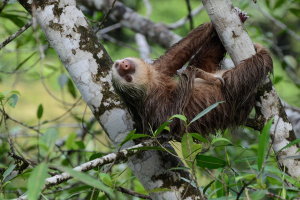
It’s not just the human populace that this is effecting, the animal population is also suffering. Fish are constantly seen floating upside down in droves when it rains and the pesticides flow from the plantations into Costa Rica’s natural water sources. Crocodiles in the local areas have also been noted as being in poor health compared to other areas. To utilise all of that land for banana’s and other fruits also means chopping down a lot of pristine rainforest – not good for the planet or the animals that live there. That brings me round to Sloths (of course), I have seen multiple sloth babies with varying degrees of deformities. Although full research has not been completed on this it’s not a big jump from crop dusting banana plantations and the surrounding area to sloths eating the leaves with pesticides on to babies being born with genetic deformities. It doesn’t take a scientist to work out the correlation. In fact a study last year showed that wild sloths in the area had pesticide residue embedded on their hair, nails, teeth and skin. How does a country that perpetuates itself as being green and a haven for wildlife allow this to happen? Unfortunately a different kind of green $$$ is always more important.
All of this makes me rather sad, Costa Rica is such a wonderful country. It seems that just because all of this isn’t happening in a Western Country no one really seems to give a crap. Out of mind out of sight eh? Well let’s put it another way; the banana’s that YOU are eating from these companies are not only destroying natural habitats, violating people’s basic human rights, polluting water sources and making animals ill are also pumping tons of poison into those yummy banana’s that you eat everyday. Those banana’s are covered in pesticides before they start growing and are then effectively fumigated in the heaviest toxins while they grow for weeks in pesticide bags. How are you feeling about that banana now? To put this into even better perspective for you – Costa Rica isn’t the richest nation in the world, sometimes a truck breaks down full of bananas and they are left by the roadside while it gets fixed. Despite the offer of free food, even the poorest Costa Rican’s will not eat banana’s grown by Dole, Del Monte and Chiquita. They would rather starve than put that poison in their stomachs. And that’s food for thought.
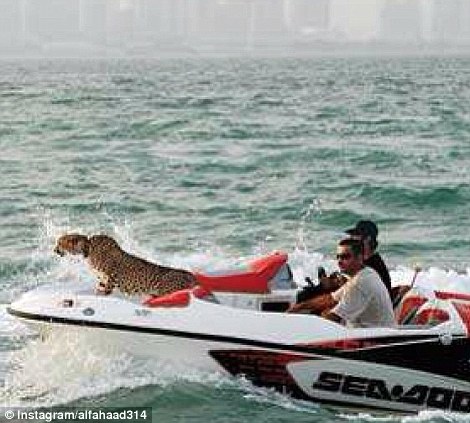
In the Middle East there are plenty of instagram accounts where the Middle Eastern rich have a crazy array of pets. But they are not alone in this, it’s certainly easy over there but in the US it is just as simple (state dependent). In fact you can also get pretty much any pet that you wish for in the good ole Westernised USA too.
Last year I visited Big Cat Rescue in Florida with my good friend and now co-worker Jessica James of ICARUS. If you get a chance to go you should, they are really doing conservation and animal care the right way. One thing I was shocked to learn on my visit there that there are more tigers living in people’s backyards in Florida than in the wild. How is that even a thing?? If your tiger escapes you don’t even have to notify your neighbours!! People have literally woken up with a stray tiger in their back yards. This is just an example of the craziness of the pet trade in America. A tiger…as a pet…
So clearly you can have anything from a tiger to a kangeroo to a sloth as a pet. Nearly all of these will have been stolen from the wild for the pet trade (or for Zoo’s – this still happens!) or they come from dubious ‘breeding programs’. I’m sure I’m not alone in thinking that this is not ok. Either these animals are taken directly from the wild for immediate sale or they are implemented in a breeding program straight off the ship. These places are akin to puppy mills where their young will be taken and sold off at the youngest age possible and then bred again. With Sloth babies you can earn a cool $2000-$5000 per Sloth. Looking at you Oregon “sloth sanctuary” by the way. This delightful place has been researching Sloths for 20 years and yet doesn’t have a single scientific paper to it’s name. Suspicious already. Not only that but they have over FOUR HUNDRED Sloths in their care and allow their guests to have Sloth SLEEPOVERS. Sloths are classed as dangerous mammals in zoos and having worked with both wild and captive Sloths for years I can categorically say that this is not a good idea, not just for the animals but also the people who are paying to do it. The ‘sanctuary’ owner is well known for selling Sloths on forums and considering Sloths are not native to Oregon, guess where they get their Sloths from. Yep, the wild. Most of the animals won’t survive the journey and some will die once they reach the shores of the USA. It amazes me that this country was once seen as a land of freedom, but for these animals it will be a new prison from their old jungle homes. This kind of makes my blood boil, especially as this place is perpetuating itself to be a conservation center.
I also find it confusing that people calling themselves “conservationists” can have a sloth as a pet as well (or other exotic animals). Last year I saw some articles and a Buzzfeed list on these guys. First I was annoyed that my friends baby, Daisy, would not be the first baby to meet a Sloth, but then I thought about it and realised that they have a Sloth… as a pet. They are apparently Sloth conservationists by the way but, again, have a pet Sloth. They also seem to like dressing it up in human clothes and making it wear flower hair clips, super natural right? This one makes me sad more than angry, as lovers of Sloths in the wild they should know better. Unless conservation is actually now about taking animals from their natural habitat? As much as I would love to have a Sloth as a snuggle buddy they would a) hate it b) be miserable and c) THEY’RE WILD ANIMALS NOT A TOY! Most of the people who seem to be writing about having a Sloth as a pet and giving people advice, even more worrying, also seem to have no idea about Sloths in the slightest. I came across this beauty earlier who suggests that Sloths love to play peek-a-boo and have parasites. I just…can’t.
Like Slow Loris’s who have their teeth removed for the pet trade often causing infection and death, Sloths also suffer a similar fate. Usually their claws are removed so they don’t hurt their new owners. SLOTH FACT: Sloth claws are actually BONE. They are basically having their fingers removed so they will make cuddly pets. Remember I mentioned that most of the animals will die when transported from the wild so it’s best to ship more? That death rate is around a 80-90% chance of not making it, all so you can have a cool pet.
Please remember that even if you are buying an exotic animal from a breeder that the original ones will ALWAYS have come from the wild. You are literally supporting animals being stolen from their natural habitat just so you can have a status symbol. Spend your dollars on visiting them where they live and seeing them in the wild and not taking them for your own selfish enjoyment and pride. They may be very cute but that doesn’t give you the right to make them an effective prisoner.
In an earlier post titled ‘Why The End Will Never Justify The Means When It Comes To Conservation’ (which you can read here) ICARUS wordsmith Artemis Grey focused on the issue of ‘hands off’ conservation, particularly citing the world famous ‘Lion Whisperer’ who insists that his main focus is animal advocacy and conservation, even while he, himself, interacts with the lions under his care, and engages in the exact activities that he condemns as animal exploitation in other situations. As expected, we received a great deal of defensive response from fans and supporters of the Lion Whisperer, every one of which contained some version of the statement ‘He does those things, but…’
But he raises awareness. But the animals are well cared for. But he does more good than bad. But he has a special bond. But the only reason you’re attacking him is because secretly, you’re jealous of him. But you can’t compare what he does to ‘real’ cub-petting. But he didn’t breed his lions (up for debate) so it’s not the same. But other experts do it, so it’s not fair to single him out. But, but but….
After consideration, Artemis decided to write a second post on the matter of hands off conservation, expanding it. After all, she did, indeed, focus primarily on the Lion Whisperer, and he isn‘t the only ‘expert conservationist’ who mishandles the animals in their care, and he’s not the only well-known “sanctuary” which fails to qualify for GFAS accreditation because of direct contact with animals.
The ICARUS group maintains a strict policy against handling captive wild animals, except for the purposes of rehabilitation or medical treatment. Have the members of ICARUS made mistakes? Yes, you can read one of the first posts we ever published wherein we acknowledge that we’ve made mistakes, and subsequently learned from them, and strived to do better, here. It’s human to make mistakes. It’s exploitive to continue making those mistakes and label it as conservation.
It might be best to start with the original ‘Father of Lions’ himself, George Adamson. There is virtually no one on earth who hasn’t heard of Elsa the lion, and her offspring, or of Joy and George, the folks who raised Elsa and other lions. What isn’t well known, is that Elsa herself died tragically young (widely believed because of a tick-borne illness, but the truth might have more to do with human predation, though the pressure to cover it up is immense) and all of her offspring also died within a few years, killed either by game wardens for predation on livestock or attacks on humans, or killed by farmers as they were attacking livestock. In addition, one of the very lions used in the making of the famous movie Born Free, injured staff during filming, and was subsequently shot by George himself after mauling a child, and then killing one of George’s assistants, whom the animal had known since birth.
Joy with Elsa, considered ‘Conservation’
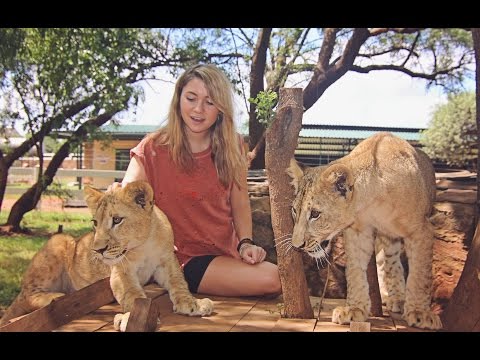
Tourist who paid to play with lions, considered exploitation.
It’s possible that if they were alive now, both George and Joy would have regrets about their inadvertent exploitation of the lions in their care (and of course, GFAS accreditation did not exist while they were alive). Actress Tippi Hedren shared similar experiences with lions as a young woman, but Tippi, now 85, advocates against ever possessing a big cat as a pet or otherwise exploiting them.
The word ‘but’ in regard to conservation is a dangerous, and insidious thing. When you are dealing with a public looking to you for examples of how to protect wild animals, you must make yourself an ideal example. A child who witnesses domestic violence, even if as a child they are told that hitting people is wrong, is at a much higher risk to subsequently abuse their domestic partner. While this statistic does not directly relate to animal abuse, it does represent the scientifically accepted fact that a child who witnesses something they understand to be wrong is more likely to engage in that behavior at some point, than a child who witnesses correct behavior. Applied to conservation, this means that children who idolize adults mishandling animals in their care might understand that the animals shouldn’t be handled that way, and yet still engage in that behavior themselves. It is far better to simply refrain from doing things you don’t want the public at large to do.
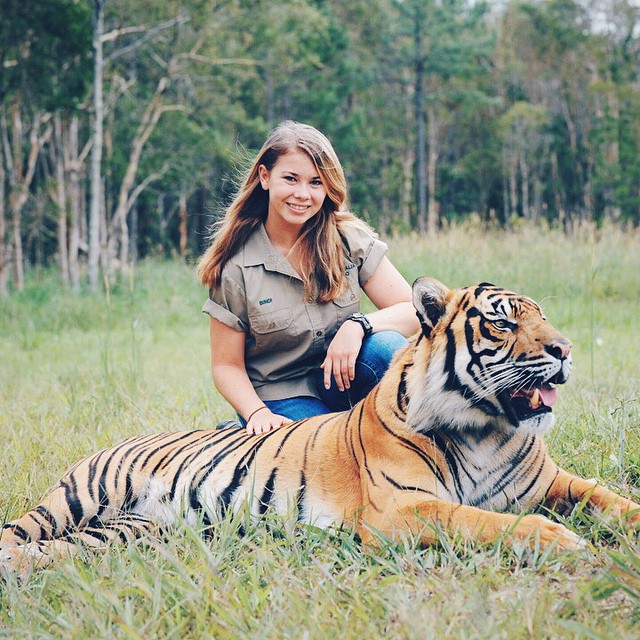
The late Steve Irwin is another example of someone with the best intentions, who did not necessarily set the best example. I adored Steve, I still adore Steve and his family. I think they have the best intentions, and they’ve certainly helped to bring conservation into the limelight. However, Australia Zoo continues to allow the public to walk with, take pictures with, and feed tigers and other wild animals, for a starting price of $400.00. I would never slander Steve. I simply do not condone the behavior of his Australia Zoo.
Bindi, with one of Australia Zoo’s tigers. Bindi remains a leading name in conservation.
Tourist paying to play with an adult tiger, considered exploitation.
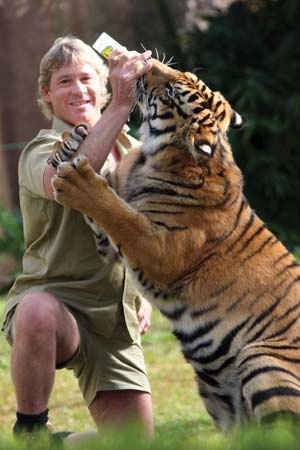
Steve feeding a tiger at conservation-based Australia Zoo
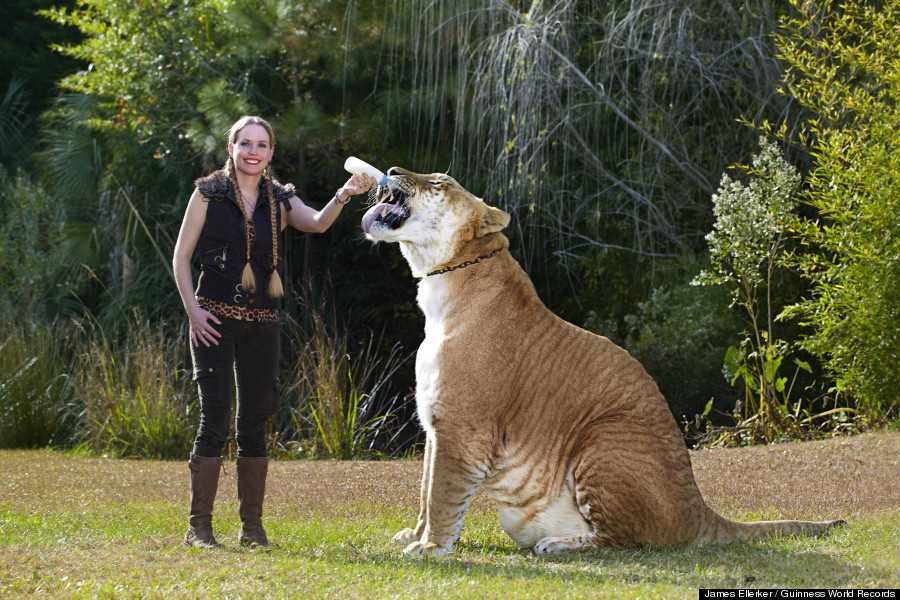
Trainer feeding Hercules (a hybrid animal called a liger) at T.I.G.E.R.S, a group devoted to the conservation and preservation of rare and endangered species
Tourist participating in a pay-to-play scheme.
The human capacity for rationalizing is inexhaustible, much to the detriment of the animals in their care. Often times, ‘experts’ with a comparable amount of experience with their animals are differentiated by how they’re presented, not what they’re actually doing. Humans will rationalize away blatant similarities simply because they like one expert over another, or because they feel that what one expert is doing with their animals is somehow more righteous than what another is doing, when in fact both experts are exploiting their animals.
Siegfried & Roy pose with Pride, the Magical White Lion. Many members of the public feel that Roy finally ‘got what he deserved’ after years of exploiting his big cats in his show.
The Lion Whisperer relaxing with one of his white lions, vehemently defended by his fans as a ‘conservationist with a special bond with his animals’. His television shows depicting such interactions are not considered animal exploitation by his fans, but rather, advocacy.
It is not merely individual highly visible people who engage in this sort of ‘It’s okay for me to do it, I’m an expert’ behavior. Dade City’s Wild Things has been in the media recently after coming under fire for allowing tourists to swim with tiger cubs (for a price) but the park adamantly defends its decision to allow public interaction with its animals as outreach and conservation advocacy that gets the public involved.
Black Jaguar White Tiger Foundation is an extremely recognizable foundation which claims to be a rescue center and a sanctuary. However, while it is a private organization, celebrities are often invited to come visit and play with the many young animals, and it is not a GFAS accredited sanctuary. Despite that the group advertises itself as a conservation center, the animals are uncut and allowed to breed at will. With hundreds of thousands of defending fans, Black Jaguar White Tiger is acclaimed and its founder, Eduardo, is worshiped as a savior of the animals in his possession. The truth is that he permits breeding, and handling, using the massive draw of adored celebrities playing with captive wild animals to provide constant social media exposure. This, in turn, brings in huge donations which he uses to maintain his facility.
Eduardo’s foundation is strictly for conservation and rescue, he claims.
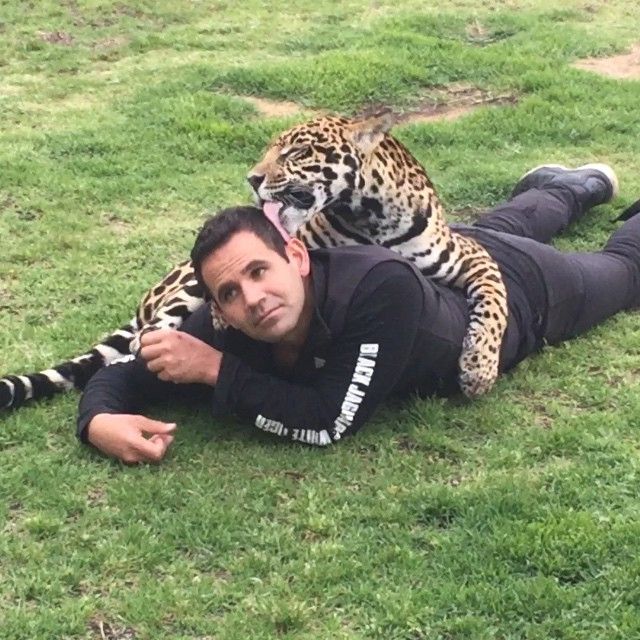
Eduardo, and various celebrities, at the Black Jaguar White Tiger Foundation. The large number of cubs is not maintained through ‘intentional breeding’ Eduardo and his supporters insist, but rather, through ‘allowing nature to take its course’.*
T.I.G.E.R.S. (The Institute of Greatly Endangered and Rare Species) of Myrtle beach fame is another group that runs multiple parks, and multiple opportunities for the public to hold and play with the animals the group is supposedly breeding and raising in the name of conservation. Though their very name insinuates that they deal in endangered and rare species, one of the animals they’re most famous for, Hercules the liger, is not a naturally occurring species at all, but rather, a hybrid created by humans through the forced breeding of a lion and a tiger. Though T.I.G.E.R.S. says it donates a great deal of money to conservation, most of that money is made by allowing the public to play with captive big cats, and there is little evidence that any of it actual goes to conservation. They are also not GFAS accredited, despite their use of the word “sanctuary”.
Hercules, of T.I.G.E.R.S. with a trainer. They advertise themselves as experts helping to preserve endangered and rare species.
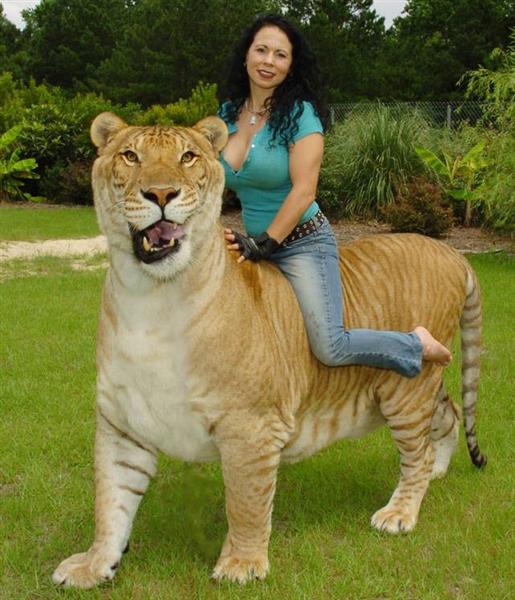
Hercules of T.I.G.E.R.S. with another trainer.
The Lion Whisperer, defended as an expert conservationist with a ‘special bond’ by his fans, riding one of his ‘fellow pride members’.
Tourist participating in a pay-to-play exploitation of big cats.
Lion tamer during his act, something that everyone who supports conservation would condemn as exploitation.
And there are many, many more groups and people who engage in behavior that is damaging to their animals. It would literally be impossible to include every single one in one post. There will always be one more person or group who is ‘worse’ or ‘less responsible’. It remains an uphill battle to speak out against such activities, as fans and followers will always defend those they adore, but the ICARUS group remains firm in their position. It is entirely possible to love a person or group, and yet not condone what they do. It is possible to disagree with their actions openly without slandering them. It is also possible to feed and shelter an animal, and still do it a terrible injustice by exploiting it.
The photographs in this post are designed to highlight the dangerous problem with using the word ‘but’ in regard to the handling of animals by people, experts or otherwise. This is one reason that the ICARUS group is evenhandedly against ever handling captive wild animals aside from giving them medical care, or rehabilitative therapy, and one reason that we chose to embrace the strict guilders of the GFAS. Humans will always attempt to rationalize why it’s acceptable for one person to carry out exploitation while it’s unacceptable for others to do the same. Thus, we take the stand that it is never acceptable. The justification of an expert’s behavior is a slippery slope the ICARUS team refuses to even start down. Instead, we choose to approach conservation and preservation by setting an example of what the public should do in regard to both wild animals, and captive wild animals, rather than showing them what they should not do.
In the words of Thoreau ‘Wildness is the preservation of the world.’
If you love wild animals, keep them wild. Support groups like ICARUS who are working to keep them wild, not treat them like pets in the name of conservation. Actions speak louder than words. If someone is receiving money in exchange for allowing public interaction with captive wild animals, or receiving money in exchange for their own interactions with captive wild animals, then they are not acting in the name of conservation, even if they are speaking about it.
Author: Artemis Grey
*This statement has been removed from the foundation’s website since the publication of this article.
Conservation is a complex issue, with complex answers, and complex situations, and very rarely can matters within it be distilled into a single, rigid policy. However, the single issue on which there is no room for discussion, is the subject of handling, and directly interacting with captive wild exotic animals. Aside from issuing medical attention or for purposes of rehabilitation, there is no benefit for the animal, in having humans handle or touch it. For the members of team ICARUS, this is nonnegotiable.
It is not, under any circumstances, acceptable for anyone, regardless of their supposed expertise, to play with, or directly handle, or socialize with captive exotic animals. This ‘special bond syndrome’ is most prevalent in big cat species, and is the leading reason so many big cats are privately owned by citizens. Every well-meaning owner believes that they have a special bond with their animals. Tragically, this very often results in injuries or death to the owners, or their acquaintances, and subsequently to the big cats themselves, who are nearly always euthanized after being involved in an attack.
Even more disturbing than the private citizens are the highly publicized ‘self-described animal behaviorists’ (traditionally a true animal behaviorist is someone who has obtained a graduate degree in related fields and has obtained a post-graduate certification) who routinely handle and interact with big cats, claiming that they do so through a special bond. The most easily recognized of these is the so-called ‘Lion Whisperer’ of South Africa. One needs only Google the title to find hundreds of pages, all filled with videos of him cheerfully playing with full grown lions or leopards, as well as spotted hyenas. The Lion Whisperer has been hosted on nearly every major network, all of which focused on his ‘amazing bond’ with the lions and animals of his sanctuary. They show a plethora of clips of him interacting with the lions, napping with them, and fondly dictating the story of each one – nearly all of whom he’s raised from either adolescence or cub-hood. It’s always mentioned that his sole purpose is to ‘bring attention to conservation matters’ and to ‘end the cub-petting industry’. The fundamental problem here, is that he’s participating in cub-petting with adult animals.
Conservation is not, and never will be, aided in any way by publicizing the act of playing with an animal. If one goes to Youtube and searches for the Lion Whisperer, they’ll be greeted with pages and pages of him playing with the lions. Where, in all of that dream-worthy special bondness is any conservation of remaining wild lions? All of the animals featured in the programs live on one of his reserves, or in his sanctuaries. Many of those have actually been imported from other places, and were not rescued, or rehabilitated. Not one animal, in the history of his sanctuaries, has ever been released into the wild. They cannot be released because they are thoroughly habituated to human interaction. A habituation that is continually reinforced through daily interactions. The fact that he has, indeed, rescued many animals from deplorable conditions, is completely overlooked by the fans who fixate on his highly publicized videos of playing with the animals.
The Lion Whisperer has thousands of loyal fans and followers who will defend him and his actions vehemently, but for the ICARUS team, actions speak louder than words. Despite all of his claims of being focused on conservation, and the fact that he has actually rescued animals, he also maintains private reserves and sanctuaries, he plays and interacts with the animals in his care, and he trains them for use in movies that he writes and produces. And those actions keep his sanctuary from being GFAS accredited. In this case, the good he does, is vastly overshadowed by the fantastical persona of Lion Whisperer who plays with lions, other big cats and wild animals. It is that persona that the public worships.
If he were a civilian who owned ten big cats and made movies with them, much of the public would consider him to be part of the problem with animal exploitation. However, they embrace the Lion Whisperer and his ‘amazing bond’ with his animals, and seem to find nothing wrong with his behavior because he’s ‘doing it for conservation’. But how many people actually associate the term ‘conservation’ with the term Lion Whisperer? The title Lion Whisperer is synonymous with the image of a man playing with a pride of lions, not with the ongoing plight of Africa’s wild animal population.
You cannot teach people that wild animals are not pets by producing movies wherein you treat wild animals like pets. You cannot teach people that wild animals should not be bred in captivity, or held in captivity, while you stroll through a created pride of captive-bred lions. There are no ‘buts’ in the terms of conservation. Experts do not have the luxury of doing things that they are actively trying to ban the public from doing. If cub-petting feeds canned hunting, and harms big cat conservation, you cannot claim that producing multiple movies that highlight your own adult-petting aids in conservation.
This is why the members of team ICARUS have a strict policy against cub-petting and direct interaction with wild exotic animals, and why we look to the standards for GFAS as a guidline. What Dade City Wild Things is doing by allowing the public to swim with tiger cubs, is no different from the Lion Whisperer swimming with adult lions. In both cases, humans are interacting with captive wild exotic animals not because it benefits the animals, but because it makes the humans feel special.
In the words of Jane Goodall, “What you do makes a difference, and you have to decide what kind of difference you want to make.”
The question is, do you want to create a world where it’s acceptable for certain people to exploit animals in order to bring attention to animal exploitation? Or do you want to create a world wherein there is no animal exploitation at all?
The ICARUS team hopes that you will choose to become the latter. Don’t be dazzled by those who make a name for themselves by using the animals they should be caring for. Don’t allow them to convince you that it’s acceptable for them to treat animals in a way that no one else should, simply because they’re special. Remember, the animals they claim to have a special bond with have been hand-raised from birth, no differently than the cubs in cub-petting schemes. They’ve been conditioned to accept human interaction. The only difference is that while the cub-petting schemes sell their cats into the canned hunting industry, people like the Lion Whisperer simply continue to make money off their adult animals.















 I.C.A.R.U.S Inc.