We Are Legion… If We Decide To Act Like It

Some of you might have seen the headlines in regard to Lumber Liquidators, and the fact that they have now admitted to importing, and subsequently selling, hardwood which was illegally harvested from the habitat of the highly endangered Siberian tigers and Amur Leopards in the far east of Russia. Since I’m in Virginia, which is where the company is headquartered, I’d heard back in the beginning of October that something fishy was going on, but details as to what, exactly, were not yet available. Then, on October 8th PilotOnline.com ran an article on the matter, which shed a little more light on it. You can read that one here. There still wasn’t much National attention on the subject, though.

Now, that’s changing. Multiple news sites like CBS, CNBC, NBC, and The New York Times, are picking up the story and making noise about it. Their coverage ranges from blurbs, to more in depth information. Overall, most people involved seem to be satisfied with the ‘hefty fines’ that Lumber Liquidators has agreed to pay. But the term ‘hefty fine’ means something different to the lawyers, and judges, than it does to me. Or to Lumber Liquidators. Oh, I’m sure that they’re wailing internally, but let’s examine this ‘hefty fine’ in the format of numbers.

The company will pay $13.2 million dollars in fines. Seems legit. Written out, it looks like this:

$13,200,000

But in stark contrast, the company made about $1.05 billion in profits last year, which looks like this:

$1,050,000,000

So basically, the company is giving up just over one percent of the total profits they received in just one year of existence.

Look at it this way: You find a $100 bill, and your big brother takes it from you and gives you a $10 bill instead. Sucks hind tit, right? Now, imagine that your big brother came into your room, stole a bunch of your super hero figurines that you’d been collecting , sold them for $100, and you caught him, and he said he’d give you $10 because he’s sorry. On a very simplified scale, this is what Lumber Liquidators did.

Between 2010 and 2015 they pulled in roughly $5.6 billion dollars in profits. That’s $5,600,000,000. They’re paying only $13.2 million dollars, or $13,200,000 in fines.

And they only have to do it once.

Next year they’re (probably) going to make another $1,000,000,000. And the year after that. And so on and so forth. If the company only stays in business one more year and does well, it’s still going to make over 7 times more than what they paid in fines. Presuming, of course, that they actually pay the fines now, and don’t drag their feet about it. With a hearing not even set until February of 2016, a speedy payment doesn’t seem too likely. But according to the Justice Department, Lumber Liquidators’ fine is the largest financial penalty ever imposed for illegal timber trafficking, and it is a huge success.

This is one of the greatest, and most heartrending issues within the conservation community. Laws, both those of specific countries, and global, are woefully underdeveloped in regard to the current, and continually growing needs of the environmental world. Humans have been recording history for about 5,000 years, but the first American environmental law dedicated to protecting the environment was passed in 1899. We’ve only been legally protecting our world and the animals within it (in America) for 116 years. Just 116 years out of 5,000. And the number one penalty for breaching the laws we do have, is paying a simple fine, and promising not to do it again. As a rule, there is no loss of business licenses, or jail time given, even to those who made the decisions to break the laws in the first place.

Not only is that just not good enough, it doesn’t even work to penalize anyone. After all, why should companies stop cutting corners, and breaking rules when the only consequence of doing so is to make slightly less profit, when their proft line has already been doubled or tripled by skirting or ignoring those rules to start with? In business (and military) terms this is called Acceptable Loss. The term Acceptable Loss is used to indicate casualties or destruction inflicted by the enemy or market situation that is considered minor or tolerable.

Minor and tolerable. For the company who is making money.

There is nothing minor or tolerable for the Siberian tigers, and Amur leopards who lost thousands of acres from an already dwindling habitat. There is nothing minor or tolerable about the fact that of the just 500 Siberian tigers and 57 Amur leopards left in the wild, a portion of them will likely starve, or die in altercations over the meager, and much too small, habitat they ‘re forced to share. Habitat that is now even smaller.

What our law enforcement groups consider to be massive success stories are nothing more than footnotes in the annals of companies’ histories. Acceptable losses within the churning mechanisms of huge corporations who plow onward in their endeavors, continuing to rake in profits hand over fist. So inconsequential are these payouts that most businesses actually set aside money to be used for them if they crop up. They often pay their own lawyers more to render a settlement on their behalf than they pay in the actual settlements themselves.

But we have more power than any court, or judge, or law enforcement agency in any country anywhere in the world. We can bring these companies to their knees, and we don’t even have to exert ourselves in order to manage it. The only thing we, the people who must live under the umbrellas of these inconceivably colossal  entities, need to do in order to tear them apart, is to not give them our money.

It’s not easy to find out exactly where your food comes from, or where all of the products we use in our daily lives come from. No one has time to google their toothpaste, their rice, or juice, or napkins and see how they’re made, and whether or not the mother company is environmental conscientious. Women, you know what it’s like just trying to see if your sanitary products are 100% cotton, instead of full of chemicals and manmade fibers. It’s incredibly hard to sort out the origin of many of the things we use.

However, it is easy to find out about some of the products we use. The internet is full of farms which focus on producing pesticide-free heirloom fruits and vegetables – more than you would ever imagine, if you google your own area. Small farmers are slowly fighting their way back into the market. Reclaimed lumber is now thoroughly in the mainstream, and many companies focus on using it in their building projects. There are log home companies which specialize in environmentally conscious timbering. Organic dairies are springing up everywhere, along with rabbitries and farms which raise hormone-free beef and even bison. By and large, these products don’t cost more than the conglomerate stuff, they’re just not as ‘in our face’ as the former.

We have the power to choose to utilize these things. We have the power to choose to not use the products of huge corporations. At least some of the time. And you know what? Some of the time beats the hell out of none of the time.

If every single person out there decided that buying a little less of something grown, made, or reclaimed within a hundred miles of their residence, was more important than buying more of something that was imported, or made by a large corporation, those corporations would notice. If every single person who’s never done something like try fresh milk from a herdshare, or rabbit meat (better than chicken) or bison meat (leaner than beef) chose to just try something new, instead of going right for the old stand by microwave chicken tenders, it would make a difference.

A huge percentage of the damage done to the wild spaces we have left in this world, and to the wild animals who live in those wild spaces, is done either to create land which will be farmed by corporations, or to render a ‘cheaper, easier’ product for the consumer. And we keep taking the bait.

These incidents of gross negligence, and the disregard of giant corporations will not be stymied by any law, or fine. It’s like throwing rocks into a swift-running creek. The only way to change the course of that much water is to change the landscape it’s running through. We are that landscape. Us.

We are Legion, if we but stand up and unite.

It will not happen all at once, but it will happen. We have the strength and ability to turn the flow of the consumer river in any direction we want. All we have to do is start.


Author: Artemis Grey

Feature Image Credit: Tapiture

True Facts about the Turtle!

12059919_10100307954570380_1839289923_o

At ICARUS we are trying to educate and also uncover the awful truths about the interactions of humans with the animals we share the planet with. Six out of the seven species of sea turtle are on the brink of extinction, in fact their numbers have been reduced by 95% in the last 20 years. Turtle poaching in Costa Rica is a serious issue as it has one of the largest populations in the world and their numbers are being seriously diminished despite conservation efforts. Just last week two ICARUS members attended an illegal food market undercover, where both green sea turtle meat and their eggs were being sold every week. We want to help find solutions and help to prevent the green sea turtle from being hunted into extinction. Although it’s our mission to focus on the advocacy and the conservation, we at ICARUS know that you’ll be more inclined to save the turtle if you know about their quirks and habits. One of the best ways to learn is by having a little fun while doing it. So without further ado our humorous and true facts about the Turtle! (original article posted by ICARUS member Sarah here)

fm2881

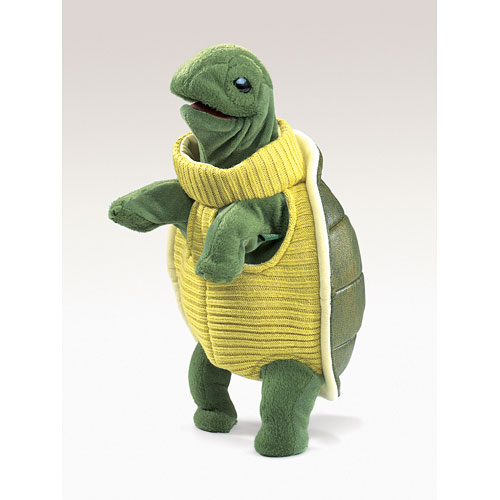
brrrrrr…

1. When turtles are just tiny eggs their sex is determined by the temperature they are incubated at. Warmer temperatures produce more female eggs and the colder it is the more males are born. This sounds a bit like human females who are constantly colder than men, maybe they are just meant to be warm and toasty all the time!

omer_gold_black_wetsuitUntitled

2. Turtles have favourite colours, which according to research are yellow, orange and red. Most of the people who come in to contact with turtles are divers, who often wear black. So clearly for a turtle if you’re not wearing any of their favourite colours when you’re diving then the turtles are openly mocking you and your fashion choices.

3. Turtles do no have ears but they can perceive low pitched sounds. Often when I’m diving I am constantly talking, singing or shouting at person in front of me who has just kicked me in the face. However you should always remember that the turtles can hear you and they’re terrible gossips.

538536_363644523703419_1214323257_n

“Figaro, Figaro, FIGAROOOOOO”

4. Turtles also don’t have vocal cords, but they can make sounds. You may be unaware but turtles are actually avid opera practitioners.

14-lettuce-lovers

“Hey Lettuce, lookin’ good”

5. Turtles select mates by sniffing tails. In fact they have a very good sense of smell, but not so much sight. So if a female climbs over something then the male has often been known to try and mount it. This has been observed in tortoises too as one tried to have sex with a head of lettuce a female had climbed over. Oops. That’s going to be very disappointing!

We hope you have enjoyed our tongue in cheek turtle facts and have picked up some interesting information! We at ICARUS are really passionate about helping to save and protect the turtle. After being part of a turtle release a few weeks ago we can truly appreciate them so much more. We will be releasing a lot more information on that soon, we look forward to sharing the journey with you.

Sarah

The Price of Conservation

Conservation can be many things, and it can occur in many ways. The one constant, however, is that conservation is not free. Maybe you donate time to helping spread public awareness, donate effort in organizing local rallies, or offer both time and effort into joining local protests or pushes for legislation which will protect animals or provide care for animals themselves. Or maybe you choose to donate money to organizations that do all of the above.

ICARUS is a group run by people donating their time, their own money, and all the effort they can muster to help animals all over the world, but we can’t be successful without the help of folks like you. There has been speculation within the comments of some of our posts that we’re somehow affiliated, or funded by Big Cat Rescue. This is not true. We do agree with BCR’s policies of hands-off conservation. However, we have no formal affiliation with them, nor do we receive any funding from them, or any other established conservation organization.

To assert that we’re funded by a group simply because we agree with them and what they do would be to assert that we’re also affiliated with, and funded by, the likes of Leonardo DiCaprio, Ian Somerhalder, Ricky Gervais, Betty White, and countless other celebrities whose conservation efforts we support and agree with. Trust me, if we had funding from such people, you’d know about it because we’d be shouting about it from the rooftops.

The truth is that right now, we’re funding ourselves (much to the agony of our bank accounts) and working by donating time and effort to ICARUS on top of the time and effort devoted to full time jobs elsewhere. Some of us are also balancing other carriers along with full time jobs, and ICARUS work, and the daily care of our own domestic animals. The result is a hectic shell game of time, energy and money that only other animal advocates and owners can understand firsthand. It is worth every moment of struggle, though, to be able to say that what we’re doing is helping animals all over the world. Every movement must start somewhere, with a few steps into the unknown future. Sometimes, you can’t know how things will turn out, but you do know that moving forward is the only way you’ll ever find out the answer.

Such a leap of faith is often the driving force behind conservation projects. It just can’t be the only force behind them. If conservation and animal rescue could be carried out on faith and love alone, then there would never be cases of hoarders or failed rescue centers.

The hard truth is that while conservation efforts can be started with ideals and determination, they must, at some point, also start bringing in monetary support. To this end, the ICARUS project has added a donate button to our blog, and we hope you’ll consider donating to our efforts. Be assured we are seeking funding from many sources, not merely the public but every dollar matters, even if it doesn’t seem like much. Donating just five bucks might mean there’s enough gas to get our field researchers to an undercover animal swap where they can expose illegal activity, or it might mean that they can afford to buy milk replacer for an orphaned baby sloth, bandages for a burned sloth, or it might provide the last money needed to purchase a tracking collar for a to-be-released big cat, the study of which can help with the conservation of that species. No matter how small an amount, any donation will help us continue our research and help animals everywhere.

Rescuing animals is expensive and hard. Often the animals have suffered abuse and neglect. They are difficult, or impossible to handle for bandage changes or medication. You worry about them constantly, and are forced to watch them suffer further during treatment, knowing all the while that they still might die, many times from simple things which were left untreated, things that an animal should never die from. If they do survive, then rehabilitation looms large on the horizon, creating further trials that must be overcome in order to reach true recovery. And I’m just talking about domestic animals. Add the factor of the animal being wild, and completely unaccustomed to human interaction – or accustomed only to abusive interactions – and it takes rescue and rehabilitation to a whole new level of struggle.

These are the kinds of things that the ICARUS field team are dealing with on a daily basis. Watching the suffering of animals, documenting it, and doing what they can to stop it. It wears them down emotionally, physically and mentally, yet the team continues because it’s what they must do in the name of protecting animals all over the world. And along with all of the animal-associated stress they endure, there’s the monetary stress as well, the not knowing if they’ll be supported by others, or if they’ll end up penniless and stranded in a foreign country in the middle of their research. So while twenty-five bucks, or ten bucks might seem pointless to donate, it isn’t. It’s twenty-five dollars that can be used to help save an animal, to help educate those who are exploiting animals, or to help set up communities with options that protect animals, instead of harming them.

Rather than load this post with terrible pictures of suffering animals like those commercials on TV that give us nightmares, I’m using photos from two of my own rescues stories, that of Francesca the miniature Sicilian donkey, and Muffet, the cat. Fran came to us free because the rest of her herd had been sold off and no one wanted her. When she arrived, her condition was a complete shock, and we were forced to choose in a split second whether to turn her away, or take her and pray we could treat her and keep her alive. Muffet was a slightly different story, but both cases involved simple neglect which led to complex medical conditions.

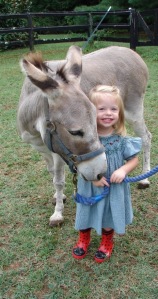
IMG_2074.JPGFran hopped off the trailer about 150 pounds overweight (she stands only about three feet tall at the shoulder) suffering from chronic founder, with feet that had gone untrimmed for years.

IMG_2073.JPG

IMG_2566.JPGOnce her feet had been properly trimmed (all of that growth was ‘dead’ tissue) we had to keep her feet wrapped with dressings. Because the tissue had be grossly stretched, any piece of dirt could travel up into the the depths of her foot, causing an abscess which would then rupture at the juncture of hoof and leg (the coronary band) Each ruptured abscess came with the possibility that the abscess would spread along the coronary band and create an ‘unzipping’ effect that would cause her foot to detach entirely from her leg, a fatal complication. It took over a year of constant dressings on all four feet in order for her feet to grow out and the tissue to resume proper form.

226378_4385109427412_2120300939_nBecause Fran had been neglected, and then put through painful procedures, it took time for her to trust adults again. Children, however, she was instantly drawn to, and protective of. Here she is with my niece, who calls Fran her ‘Donkey-Sister’. The two are inseparable. Fran’s ears are abnormally shaped due to untreated frostbite, and her tail is only a stump as a result of an untreated wire wound, which became infected and caused her tail to fall off. Her ears and tail stump still require maintenance, as she’s susceptible to both sun burn, and frostbite. The black object on Fran’s nose in the header photo is a grazing muzzle which restricts how much grass she can consume. Donkeys are incredibly efficient processors of food, therefore in lush areas like Virginia, artificial restrictions must be used in order to prevent them from overeating, and foundering. This can mean keeping them in a dirt lot, or utilizing a grazing muzzle which only allows her to consume small quantities at a time.
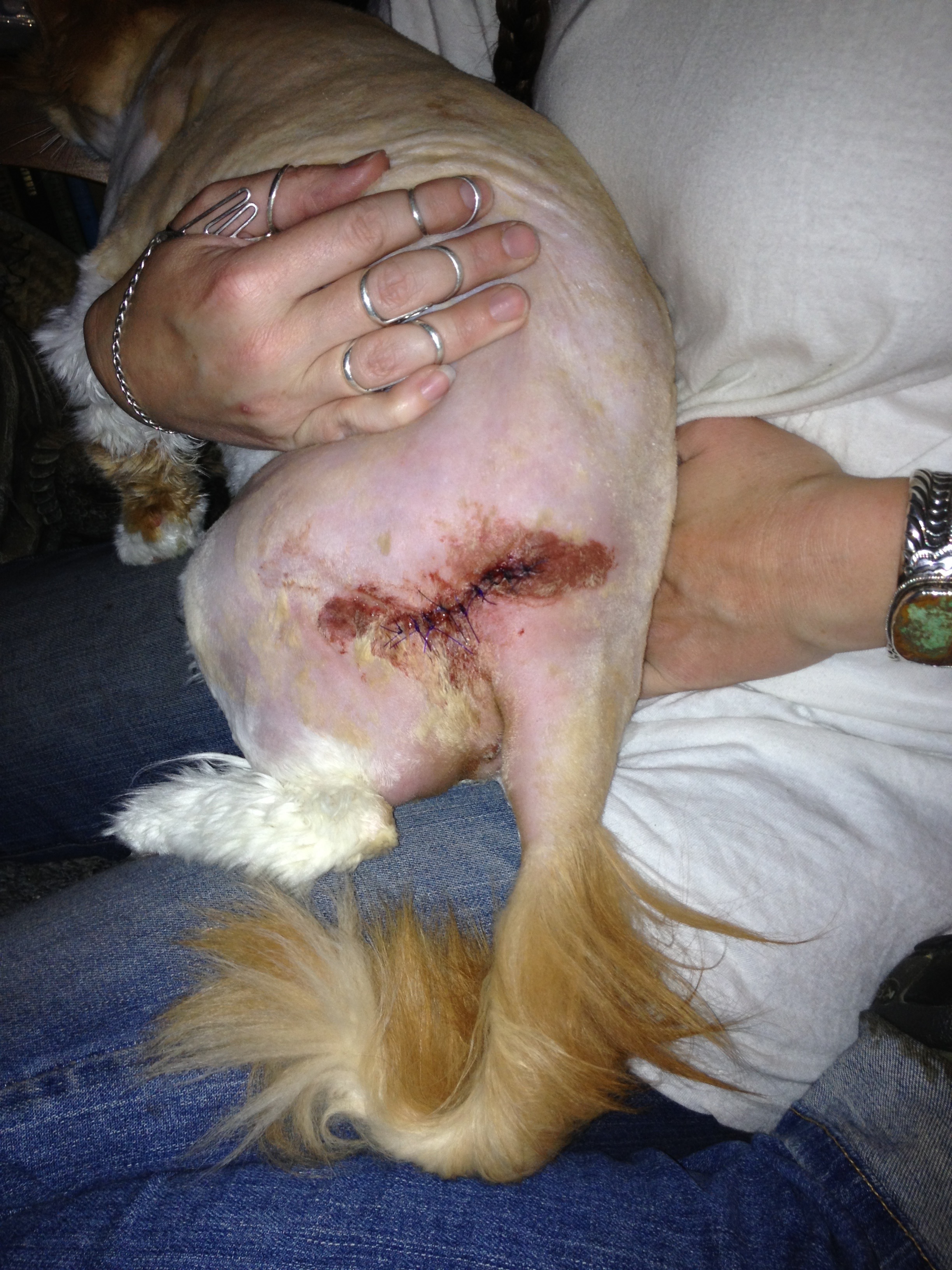
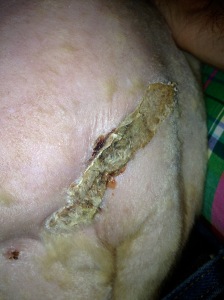
IMG_8733Muffet was another case of simply not caring. She at some point received a minor injury, possibly just a scratch, which became infected.

IMG_7354.JPGWithout treatment, this infection created an abscess which then became infested with maggots. Over a thousand were removed from the wound.

IMG_7498.JPGHere’s the site several days after the initial debridement and suturing. The skin required careful monitoring as it healed.
IMG_7443.JPGThough suffering, Muffet was much easier to treat than Fran, as she was at least accustomed to human interactions, whereas Fran had been abandoned in a large field and left to fend for herself for several years.

Both of these cases of neglect cost thousands of dollars to treat and months/years of attention, and the cost would have been higher if I didn’t have the skills to perform tasks like dressing changes and suture removal. Now, imagine relatively simple situations like this with wild animals who cannot even be touched without sedation. Imagine the time, and effort and skill required to treat wild animals.

Yes, conservation carries a high price, both literally, and figuratively. We hope that you will help the ICARUS group by donating to our research and conservation efforts, no matter the size of the donation, and then share our page, and help spread the word. It is our hope that in the future, there will be no need for anyone to donate to conservation, because we hope that conservation itself will become obsolete, and that care for the natural world will become the norm. Until then, we need your help so that we can help animals in need all over the world.

Author: Artemis Grey

The Hollywood Walk of Shame/Fame – The Oscars for the Best Animal Celebrities & The Worst

tumblr_inline_np2rsgRgYj1ttkbno_540

But first….lemme take a selfie! 

Let’s face it, whether we like it or not, the world is obsessed with celebrities. They therefore have the power to do amazing good with the attention they receive or cause a great deal of damage. A good example of this is that tons of celebrities have recently taken pictures with baby tigers, lions etc and the response has been HUGE. Unfortunately that response has been “OMG. WHERE CAN I SNUGGLE A BABY TIGER??!!”, “This is so cool! Jealous!”… etc. This is an incredible example of the bad things celebrities can do for conservation and animal welfare. We have covered why cub petting is so abhorrent and the unfortunate truth is celebrities are just furthering this abusive practice and worse, making it look cool to millions of people.

403803_710790140710_1386962983_n

Yep, that’s me with a baby tiger

Now, we are not here to vilify these ‘bad’ celebrities, every single person of the ICARUS team has done something they were not proud of in regards to animal welfare. I personally have, swam with dolphins in a tiny pool, spent hours at SeaWorld feeding dolphins and been to the infamous Tiger Temple in Thailand and played with baby tigers. I doubt there is a person on this planet that hasn’t done something like that. The important thing is to learn from your mistakes and instead of enabling these practices you should speak out against them. So without further ado here is our version of the Razzie awards for celebrities causing animal crimes and also the Oscars for celebrities doing amazing things for our fluffy friends.

THE RAZZIE’S

Worst ensemble: The Kardashians

Keeping-Up-with-the-Kardashians-HD-Wallpapers8

Where should we start with the Kardashians? Well Kim loves her fur and wouldn’t even give it up even after Khloe became a PETA advocate. Kylie and Kendall have had numerous pictures cub petting at Black Jaguar White Tiger and Khloe, the most disappointing one, is also a huge fan of selfies with baby big cats and a fully grown Jaguar. Not cool ladies.

Worst Dressed: Beyonce

980x

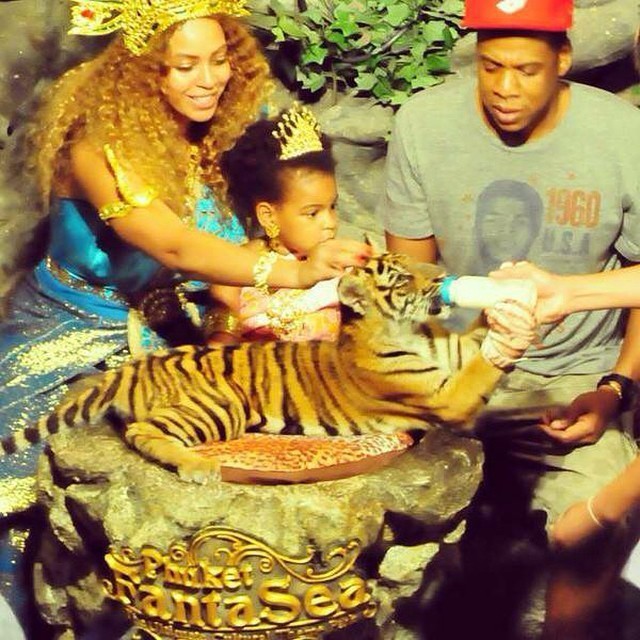
Oh Beyonce, we do love and admire you, but man do you do some silly things sometimes. Getting your tiny daughter to play with baby tigers whilst also wearing the most insane headdress?! As we all know, Beyonce has an incredible following and has taught millions of people that this kind of activity is not only cool but also a good thing. And this is someone who has a vegan line people.

Worst use of props: Justin Bieber

Justin Bieber and monkey on Instagram

Justin Bieber certainly has quite the record for doing upsetting things with animals; cub petting, handing over live hamsters to screaming fans and also abandoning his adopted pet monkey at a German border when he couldn’t take it with him. This is like Adam Sandlers career in comedy – getting worse & worse. However recently Justin has been doing some work with PETA so maybe he’ll turn it around. We sure hope so!

Worst Styling for a Movie: The Trump Family

2AF709B600000578-0-image-a-2_1438268837759

Where do we start with the Trump Family, let’s face it, they are probably irredeemable. The sons are massive trophy hunters and Donald literally said, they like to hunt. Personally I don’t think that’s a good enough excuse, this man is running for president and he clearly has no issue with crimes against animals, as well as, lets face it, crimes against humanity (and toupes).

Worst Performance: Bindi Irwin

FL78761

I am not the biggest Steve Irwin fan, I think he did a lot for conservation but he also had a career of basically pestering animals. His daughter decided to help the animals by becoming an ambassador for SeaWorld, basically one of the worst places on the planet. Biggest disappointment ever. I really hope she can turn this around, she’s young, beautiful and clearly cares for animals. She certainly has the tools and compassion to do it.

The Oscars:

Thankfully there are so many wonderful celebrities trying to do good for the animals, we had a hard time choosing who to list!

Best On-Screen Couple: Ian Somerhalder & Nikki Reed

rs_600x600-141008145651-600.Ian-Somerhalder-Nikki-Reed-Instagram.ms.100814 (1)

Along with being, let’s face it, one of the most attractive couples ever, Nikki & Ian are doing TONS for animals. Ian even has his own foundation – The Ian Somerhalder Foundation to educate the public. They’re pretty damn cool. He even called out his ex & co-star, Nina Dobrev, on Twitter after she posted pictures feeding baby tigers. That had to be awkward at work the next day…

Best Dressed – Glenn Close

Untitled

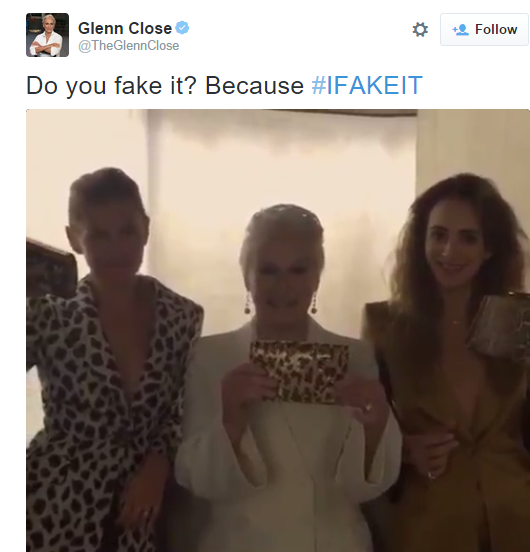
No I’m not talking about the time she played Cruella de Vil! Along with being a general badass, Glenn Close has advocated against ivory poaching, getting service dogs for American Veterans of War and recently helped to support and promote the #IFAKEIT campaign for organisation Panthera. You go, Glenn Coco.

Best Breakout: Maisie Williams

jldolphin08e

I actually love Maisie Williams. She’s spunky, has protested with tons of people in London against dolphins in captivity/the dolphin hunts in Japan and also did a skydive to bring the spotlight on to this cause. Legend.

Best Action Sequence: Steve-O

steve-o-stunt-2

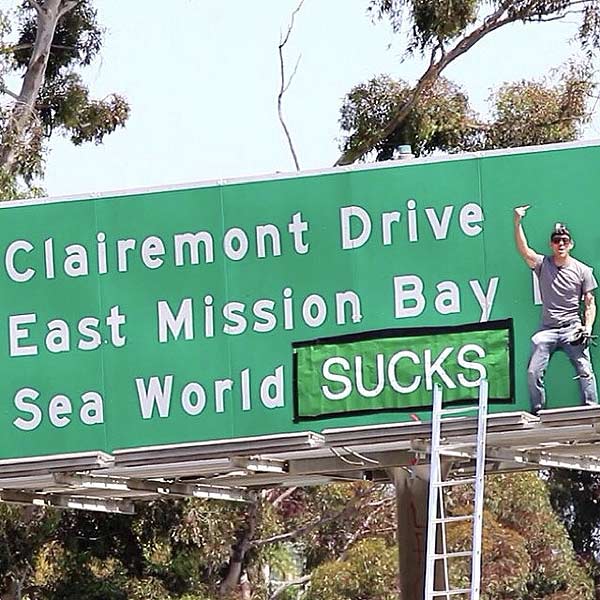
Steve-O has been bringing great attention against SeaWorld recently and has definitely suffered the consequences! He has been arrested twice for performing “inconvenient” stunts that have resulted in fire rescue services and the police having to be called out. They call it time wasting, I call it genius. Steve-O we salute you and your services.

Best Comedic Performance: Ricky Gervais

Rebecca Francis Extreme Huntress Rebecca Francis targeted online for hunting pictures Francis, who grew up in Utah and in 2010 won a US-based reality television show competition called Extreme Huntress, says she learned to hunt from an early age and wants to

Among other animal causes, Ricky’s fights against trophy hunters have been down right hilarious as well as it resulting in a HUGE awareness for this cause. He’s witty, sarcastic and gets these hunters all riled up and defensive. It’s sheer brilliance. ­­

Lifetime Achievement Awards:

FotorCreated

Bob Barker, Harrison Ford & Pamela Anderson

There were so many people we wanted to put in for this, which is why we ended up with 3!

Pamela has been a huge supporter of PETA for a long time as well as advocating politicians for animal rights and campaigning in the field for Sea Shepherd. Boobs and Brains! (and she’s gorgeous!)

Bob Barker, where do we start! He has given millions of dollars to various universities with animal welfare programs and is one of the key people to stop animals in the circus and probably the most well-known. His work has been influential.

Have you heard the quote: When the buying stops then the killing can too? Well that was the wonderful Harrison Ford who first said that. He has done so much in terms of trying to stop the illegal sales of tiger parts as well as many other causes.

In Memorium: Sam Simon

26f03b5053f378a05fabcba3a8cfd927

I was actually really sad when Sam Simon died. Not only was he a huge part of creating laughter for millions of people with, The Simpsons, but when he was diagnosed with colon cancer he spent his last months on Earth saving tons of animals. He also bequthead his millions to various animal charities when he died. So instead of spending his last few months of life on a last jolly round the planet he spent his time and money on saving animals. An honest to God wonderful man.

Reformed Performers: Proof that you can turn it around

ric_cutting_fence

Ric O’Barry: Ric started his career as a dolphin trainer for TV show Flipper. But when one of his trained dolphins died in his arms he did a complete 180 and is now probably the top advocate for ending the dolphin hunts in Japan and dolphins in captivity. He is a brilliant man.

2B35C2E100000578-0-image-m-42_1439059350954

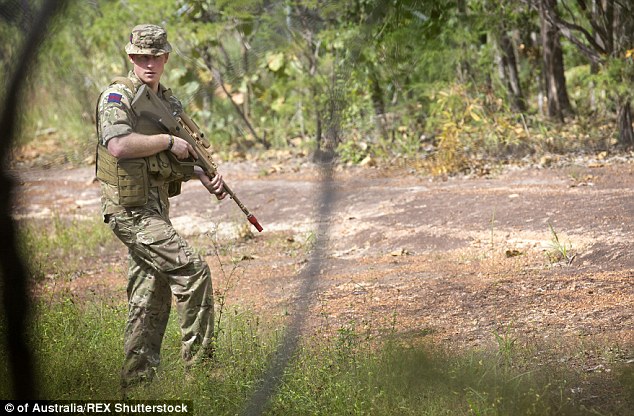
Prince Harry: Last year Prince Harry was outed for hunting big game, today he is out in Africa, in the field, stopping poachers. That’s pretty special.

1413586080788_Image_galleryImage_Mandatory_Credit_Photo_by

Tippi Hedren: Once an owner of a male lion, Neil, letting it completely into their family and even letting him sleep in her daughters bed, Tippi is now a HUGE advocate against owning big cats as pets. She has a big cat sanctuary and is lobbying congress to stop them being bred for pets. That’s definitely a big turnaround.

Honorable Mentions – too many to list in entirety but here are some favourites: Ellen, John Stewart, Jared Leto, Johnny Depp, Maggie Q, Jason Biggs, Hayden Panettiere, Leonardo DiCaprio, Betty White, Lupita Nyong’o and many many more! Thanks guys for everything you do!

Dishonorable Mentions: Kristin Davis, Kellan Lutz, Paris Hilton, Kanye West, Jonathan Rhys-Meyers, Lady Gaga, Madonna, Katy Perry, Sarah Jessica Parker, Shaquille O’Neal, Mike Tyson, Nina Dobrev and so on!

Sarah

What do airplane bathrooms, Donald Trump and Wildlife Conservation have in Common?

DSC_0093

I never imagined that the start of our first ICARUS Project journey would find me trapped in an airplane bathroom at a cruising altitude of 35,000 ft. To be fair, I don’t think anyone imagines that in any scenario, but there I was clinging to the sink and praying for the travel gods to take mercy on my weak stomach. In that moment I said to myself, “And so it begins”.

IMG_5267

It’s a common problem, creating a viable thesis, students all over the world spend late nights crying over their laptops and wishing for the end of days. Me personally, I just ignored it for as long as possible. No really, I spent the last two years in the field trying to avoid the subject. Luckily, that’s how it found me. I knew, in theory, the difficulty in tackling something as broad as wildlife crime. To expose individuals and organizations that traffic, possess, breed and abuse the wildlife that is imperative to keeping our ecosystem balanced. Not only do they keep our planet in check, but keep its human inhabitants grounded and humble. Our animal cohabitants remind us that we do not in fact own everything around us. When it comes to marking territory, it’s humans that feel the need to piss on every tree.

379311_10152411956065632_848104194_n

So how did I get here, in this cramped, putrid plane toilet? How does a grown woman of 36 find herself with a one way ticket out of America, all her belongings packed in her tired old chevy and headed to Costa Rica, and hoping to save some animals.

SP_Oct11_1-3-680x452

In a nutshell, I’ve got nothing to lose. At the age of thirty I found myself bankrupt and jobless (after losing a job as the manager of a posh horse farm due to a horrific bout of meningitis). I spent two long years shelving videos at Blockbuster (yes, it was THAT long ago) and wondering when my bright future had snuffed out. At some point you put up or shut up, so I emptied my bank account, a whole whopping 500 bucks, rented a Uhaul and headed to NYC to sort it all out.

269070_1919775483186_392084_n

Long story short, the concrete jungle was not my mecca, but it did lead me to an opportunity through my school to travel abroad to Africa, Namibia to be specific. An opportunity to work with wildlife, specifically big cats, for the first time. Perhaps, Namibia was my mecca and the cheetahs my saviors. There was no turning back after that. I left NY and gave impoverished internship living a shot. From the diversity of the rescues at The Black Beauty Ranch in Texas, to the majesty of the North American wildlife at The Wildlife Center of Virginia and then the ferocity of the Big Cat Rescue residents in balmy Tampa, Florida. I finally found my purpose. Not only did I learn to understand the biology and behavior of the animals that inspired me to live off of peanut butter and toast, but I was exposed to the suffering and neglect that these sentient creatures fell victim to, not only in the countries spotlighted by the media, but also in the pseudo sanctuaries, roadside zoos, canned hunt farms and backyards of America. That’s when I found my purpose. That’s how ICARUS came to be. No matter how idealistic, I believe this project can effectuate great positive change and my ICARUS cohorts share my crazy mission.

DSC_0096

Flash forward to the misery of my airplane bathroom captivity. In the fetal position and my head between my knees, I had no idea this was only the beginning of my nearly 24 hour journey into the jungle. When fellow ICARUS member Sarah and friend Becky picked me up at a bustling and slightly overwhelming San Jose airport we couldn’t forsee that we were climbing into a car that would drop its clutch just before the mountain pass, resulting in a 500 dollar garage bill. We would then find ourselves throwing Sarah’s credit card into the pot and doing a hail Mary, in the hopes that we would have just enough to rent a car and get us over the pass on a dark and rainy night. Somehow we managed to get back on the road and three women, a ton of luggage and a failed scat dog named Cody, barreled over what is perhaps the shiftiest mountain road my poor stomach has ever encountered. Despite any emotional, mechanical or financial obstacles we arrived at our destination alive and well, thankfully!

IMG_5262

So, here we are, in Puerto Viejo. We are currently living in a house (The Love Shack) with a leaking gas cooker, fans that probably started the Ebola epidemic and floors that are slowly becoming holes beneath our feet. This is apparently what happens when you embark on an epic journey with absolutely nothing in your bank account! Within my first 72 hours in Puerto Viejo I found myself advocating against turtle poaching, the sale of endangered animal meat and … wait, cock fighting…really? All of which is apparently occurring right here now. Sadly, this was just with the American residents. I even found myself trapped in a supermarket queue while a preening, peacock of a man preached to a local woman that she needed to look past Donald Trump’s inane racist comments to find the true value he has as a presidential candidate. I momentarily questioned if I was indeed in Costa Rica or perhaps trapped in the Twilight Zone. This was right before I evaluated how much time I would spend in a Central American prison if I stapled this man’s mouth shut. I decided not to risk it.

DSC_0110

So, here it begins. We hope that you will join us as ICARUS embarks on a journey to pool together the greatest minds in animal welfare, to create resources that we can all draw from no matter our race, religion or creed. To gather the good and expose and bring an end to the corrupt. To use global unity to begin to repair global wildlife issues. Human Beings are the root cause of wildlife devastation, but we are also capable of its salvation.

=

The Mercurial Affair of Animal Advocacy

Many people hear the words ‘animal advocacy’ and picture picket lines, or protests in the street, or petitions to ban trophy hunting, whale kills, or the sale of animal body parts, but the truth is that animal advocacy is so much more.

One great way to advocate for animals is through art. One project that ICARUS is currently involved with, and extremely excited about, includes multiple forms of art. Namely, photography, and body painting. We’ve been incredibly blessed to have photographer Melinda Caubarreaux and body painter extraordinaire Brittney Pelloquin join our cause. They’ve teamed up with our founder, Jessica James, as well as hair stylist Lindsey LeBlanc and several talented models, like Alyson Clark, for a project that is going to take both the art world, and the advocacy world by storm! Beneath Perceptions: The manacles the fleshed create to subdue the furred is shaping up to be an amazing experience. All of the artists involved have donated their time and hard work simply for the sake of the animal, and in the name of advocacy. I’m not at liberty to say too much just yet, but trust me, it’s going to be amazing! Until then, check out the these sneak peaks.

11920352_10153506514566605_1483425180_n                                  11951047_10153506611831605_110183041_n

i7YKmC38npaknTg5JS0QA4Qp8qkxFnyE7xaXGCKsP4M,KnryD_tSDOC_QSajJ22cNaHiGG4nIDneMHRbBAO-_S4,Fr6yx8tS5YKTWKekXHKHYEQfSeFzbNC9mFYzlpmj650,weikOqILm-U7ziFWgWQ77zglKRD-6WP0IKYXVDMkOOY

ytVSVddRRDCmV1_1-JN2S9MByjORSefwqWLV2Vb6AFY,_uQgMfRjIpzgabNYBA0dYHb2WvprP28sH7qVO1uAqfM

We’ll also be looking for a special someone to help us by lending their voice to our cause to help with a PSA which will be part of Beyond Perceptions. A voice is an incredibly recognizable and moving thing, and we would be immensely grateful if someone of note  was willing to help us by allowing us to ‘borrow’ theirs in the name of animal advocacy!

People have the ability to advocate for animals in virtually everything that they do. It’s simply a matter of how you do something, or, in some cases, of going just one extra step in order to make animal advocation a part of whatever you’re doing. It can be as simple as supporting groups like ICARUS, whom you already follow on social media, by sharing their page on your wall and inviting your friends to like them and share their posts. You can also donate money to support research, like that being carried out by members of the ICARUS team. Or, if you don’t have a lot of money to spare (and many of us don’t these days) you can help in other ways, like by donating sky miles. That’s what Melissa Olivadoti did recently. Because of Melissa’s generous gift of sky miles, the ICARUS research team is that much closer to the start of their journey toward better conservation! So if you’ve got sky miles lying around about to expire, consider following Melissa’s lead, and donating them to ICAURS. Supporting groups who advocate for animals is a great way to participate in advocacy. We couldn’t do what we do without the help of folks like you.

If you want to advocate for animals in a more direct fashion, there are plenty of ways to do so. When purchasing products, look to see if the companies from which you’re buying support conservation. Vacation in places where tourism helps to support conservation, but be careful that it supports it in a way that doesn’t exploit animals. Some groups which offer the chance to pet or hold wild animals under the guise of conservation when really, they’re just supporting themselves through animal exploitation. Sanctuaries, or rescue centers that do not allow the public to play with their animals are ideal. Or photo safaris can be immensely fun.

Some people prefer to work conservation into what they already do. For me, that’s writing. By joining the ICARUS team as the resident  wordsmith, I can aid conservation by donating my time and effort to writing blog posts for the group, or drafting letters or other written media. Even my novels tend to have advocacy worked into them, conveyed through the actions of the characters.

Stay tune for more updates about Beneath Perceptions! Until then, share our posts and spread the word about ICARUS, and be sure to check out the websites and pages of our incredibly talented cohorts in conservation, Melinda Caubarreaux and Brittney Pelloquin!

Author: Artemis Grey

Why The End Will Never Justify The Means When It Comes To Conservation

Conservation is a complex issue, with complex answers, and complex situations, and very rarely can matters within it be distilled into a single, rigid policy. However, the single issue on which there is no room for discussion, is the subject of handling, and directly interacting with captive wild exotic animals. Aside from issuing medical attention or for purposes of rehabilitation, there is no benefit for the animal, in having humans handle or touch it. For the members of team ICARUS, this is nonnegotiable.

It is not, under any circumstances, acceptable for anyone, regardless of their supposed expertise, to play with, or directly handle, or socialize with captive exotic animals. This ‘special bond syndrome’ is most prevalent in big cat species, and is the leading reason so many big cats are privately owned by citizens. Every well-meaning owner believes that they have a special bond with their animals. Tragically, this very often results in injuries or death to the owners, or their acquaintances, and subsequently to the big cats themselves, who are nearly always euthanized after being involved in an attack.

Even more disturbing than the private citizens are the highly publicized ‘self-described animal behaviorists’ (traditionally a true animal behaviorist is someone who has obtained a graduate degree in related fields and has obtained a post-graduate certification) who routinely handle and interact with big cats, claiming that they do so through a special bond. The most easily recognized of these is the so-called ‘Lion Whisperer’ of South Africa. One needs only Google the title to find hundreds of pages, all filled with videos of him cheerfully playing with full grown lions or leopards, as well as spotted hyenas. The Lion Whisperer has been hosted on nearly every major network, all of which focused on his ‘amazing bond’ with the lions and animals of his sanctuary. They show a plethora of clips of him interacting with the lions, napping with them, and fondly dictating the story of each one – nearly all of whom he’s raised from either adolescence or cub-hood. It’s always mentioned that his sole purpose is to ‘bring attention to conservation matters’ and to ‘end the cub-petting industry’. The fundamental problem here, is that he’s participating in cub-petting with adult animals.

Conservation is not, and never will be, aided in any way by publicizing the act of playing with an animal. If one goes to Youtube and searches for the Lion Whisperer, they’ll be greeted with pages and pages of him playing with the lions. Where, in all of that dream-worthy special bondness is any conservation of remaining wild lions? All of the animals featured in the programs live on one of his reserves, or in his sanctuaries. Many of those have actually been imported from other places, and were not rescued, or rehabilitated. Not one animal, in the history of his sanctuaries, has ever been released into the wild. They cannot be released because they are thoroughly habituated to human interaction. A habituation that is continually reinforced through daily interactions. The fact that he has, indeed, rescued many animals from deplorable conditions, is completely overlooked by the fans who fixate on his highly publicized videos of playing with the animals.

The Lion Whisperer has thousands of loyal fans and followers who will defend him and his actions vehemently, but for the ICARUS team, actions speak louder than words. Despite all of his claims of being focused on conservation, and the fact that he has actually rescued animals, he also maintains private reserves and sanctuaries, he plays and interacts with the animals in his care, and he trains them for use in movies that he writes and produces. And those actions keep his sanctuary from being GFAS accredited. In this case, the good he does, is vastly overshadowed by the fantastical persona of Lion Whisperer who plays with lions, other big cats and wild animals. It is that persona that the public worships.

If he were a civilian who owned ten big cats and made movies with them, much of the public would consider him to be part of the problem with animal exploitation. However, they embrace the Lion Whisperer and his ‘amazing bond’ with his animals, and seem to find nothing wrong with his behavior because he’s ‘doing it for conservation’. But how many people actually associate the term ‘conservation’ with the term Lion Whisperer? The title Lion Whisperer is synonymous with the image of a man playing with a pride of lions, not with the ongoing plight of Africa’s wild animal population.

You cannot teach people that wild animals are not pets by producing movies wherein you treat wild animals like pets. You cannot teach people that wild animals should not be bred in captivity, or held in captivity, while you stroll through a created pride of captive-bred lions. There are no ‘buts’ in the terms of conservation. Experts do not have the luxury of doing things that they are actively trying to ban the public from doing. If cub-petting feeds canned hunting, and harms big cat conservation, you cannot claim that producing multiple movies that highlight your own adult-petting aids in conservation.

This is why the members of team ICARUS have a strict policy against cub-petting and direct interaction with wild exotic animals, and why we look to the standards for GFAS as a guidline. What Dade City Wild Things is doing by allowing the public to swim with tiger cubs, is no different from the Lion Whisperer swimming with adult lions. In both cases, humans are interacting with captive wild exotic animals not because it benefits the animals, but because it makes the humans feel special.

In the words of Jane Goodall, “What you do makes a difference, and you have to decide what kind of difference you want to make.”

The question is, do you want to create a world where it’s acceptable for certain people to exploit animals in order to bring attention to animal exploitation? Or do you want to create a world wherein there is no animal exploitation at all?

The ICARUS team hopes that you will choose to become the latter. Don’t be dazzled by those who make a name for themselves by using the animals they should be caring for. Don’t allow them to convince you that it’s acceptable for them to treat animals in a way that no one else should, simply because they’re special. Remember, the animals they claim to have a special bond with have been hand-raised from birth, no differently than the cubs in cub-petting schemes. They’ve been conditioned to accept human interaction. The only difference is that while the cub-petting schemes sell their cats into the canned hunting industry, people like the Lion Whisperer simply continue to make money off their adult animals.

Author: Artemis Grey